37
@37beverly
Pat my understanding is that the flange was increased in thickness during production along with the wheel rims. My Cord 810 1586 A still had the "Original" thin hubs.
Crack testing my rear wheel hubs showed up a lot of cracks where the flange meets the tubular hub. I didn't bother getting the front hubs crack tested as they were going to be replaced with new drive shaft assemblies.
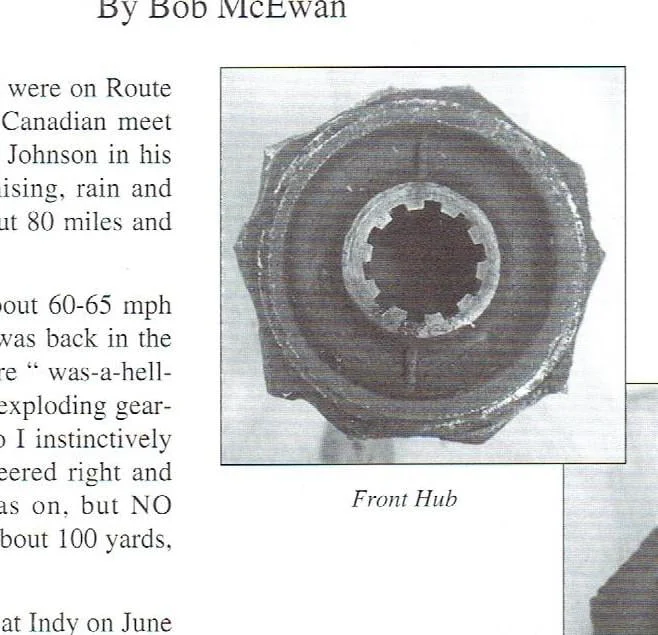
Bob McEwan had a front hub flange break up which appeared to be from cyclic loading. See the attached picture.
In newsletter No 6, 1999 Jackson Brooks told the story of how he had his front hubs crack tested after reading about Bob McEwan's hub failure. The testing showed up invisible hairline, half moon shaped cracks inside all of the raised stud bolt bosses. He then went on to show how his hubs were repaired.
In Bob McEwan's story numerous hub failures were mentioned.
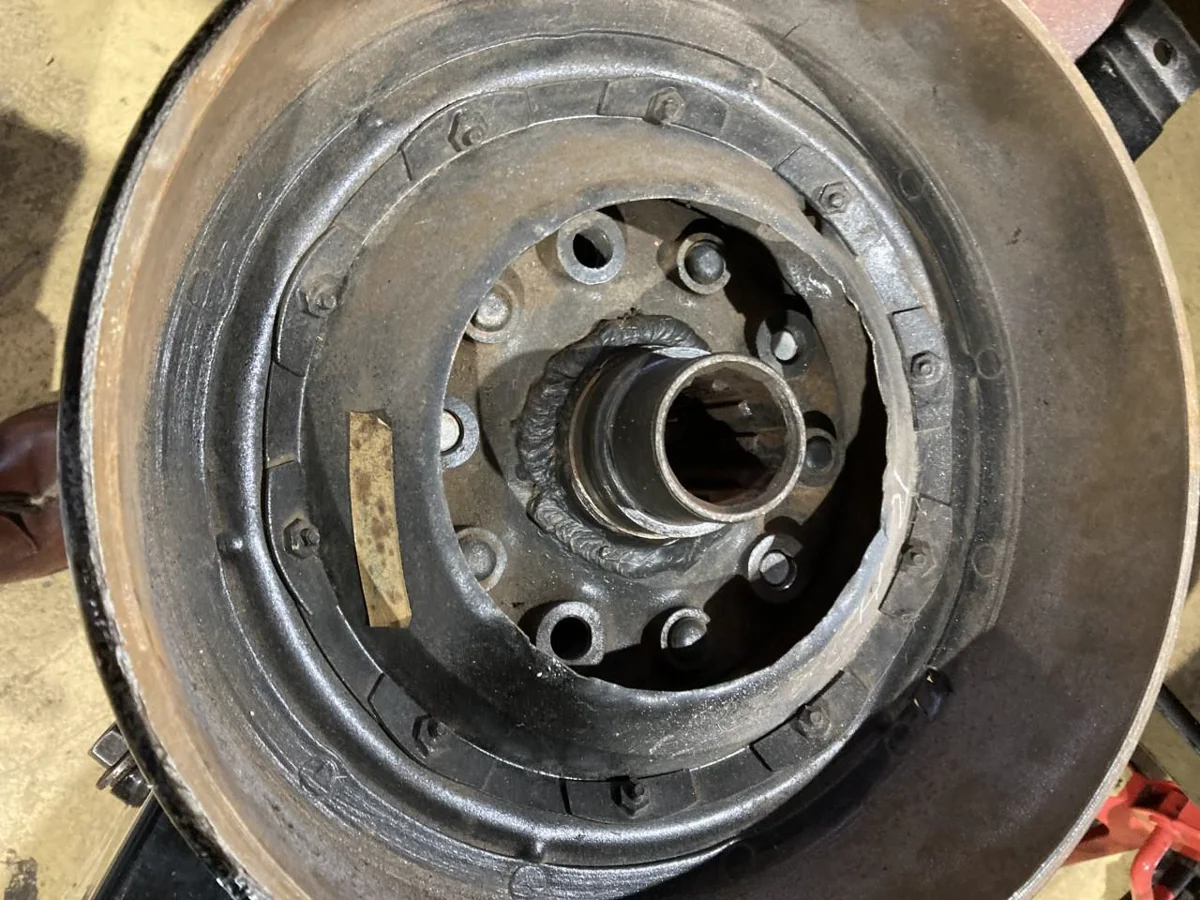
One of the RHD Cords sold here in Australia had a catastrophic hub failures in the dim past. One had been "repaired" but the other had only been welded on one side. See the attached pictures.
Last year I hit a pot hole which was in the shadows at 50 mph with the RHS front wheel. It frightened the heck out of me with the sudden crashing noises. Turning around I found the "quarry" was two feet in diameter, 2" deep at the entry point and 3" deep at the exit. Thank God I had steel hubs all round. Later I discovered the upper bump stop had been split from the bottom to the top.
Personally if you have a Cord that is a driver, the best policy is to replace all four wheel hubs with new hubs machined from a good quality steel and the flanges are all full thickness.
The late Don Wohlwend had new rear hubs made in steel, I bought a pair. I also fitted a set of Richardson's drive shafts before yours became available.
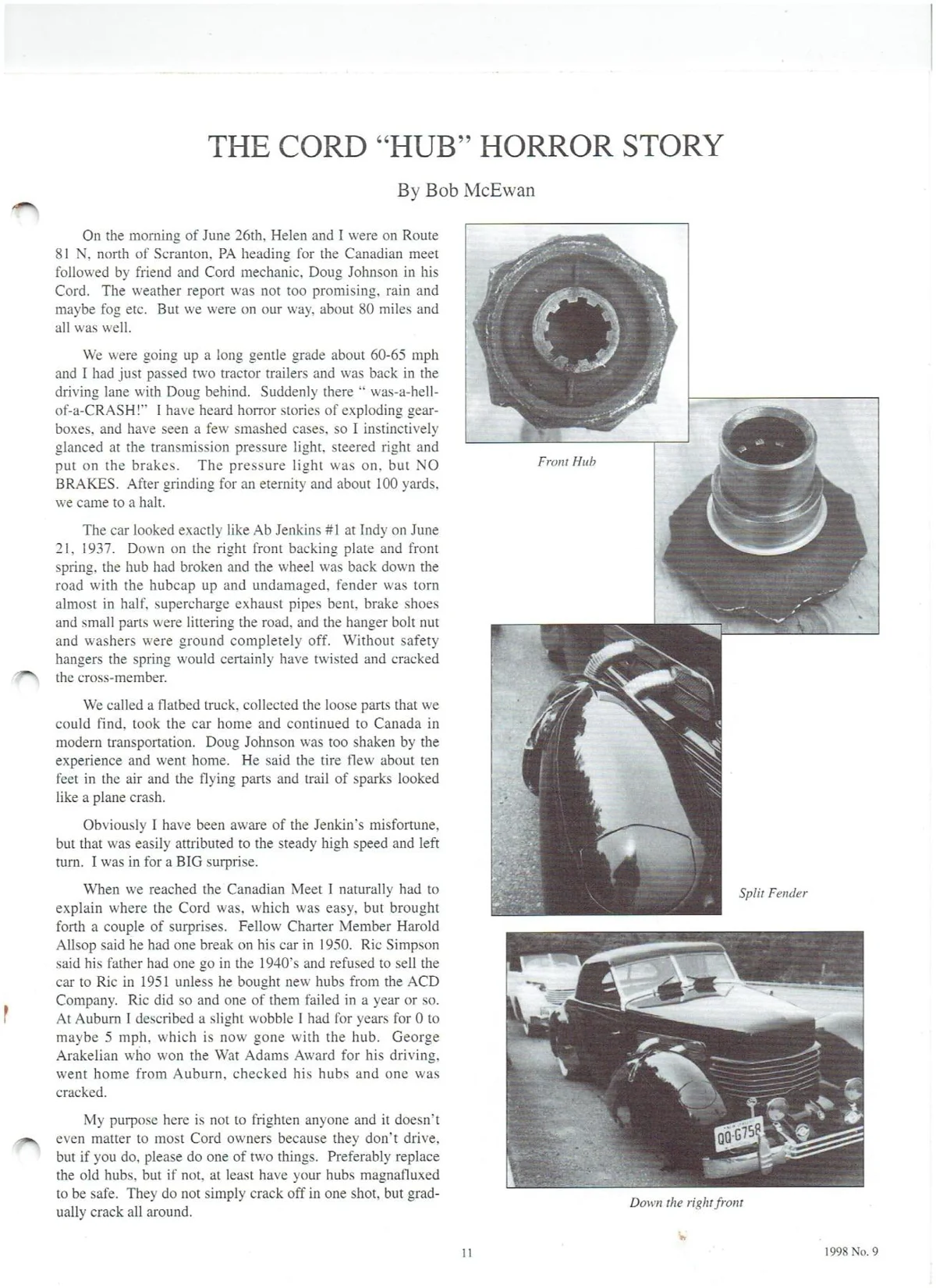
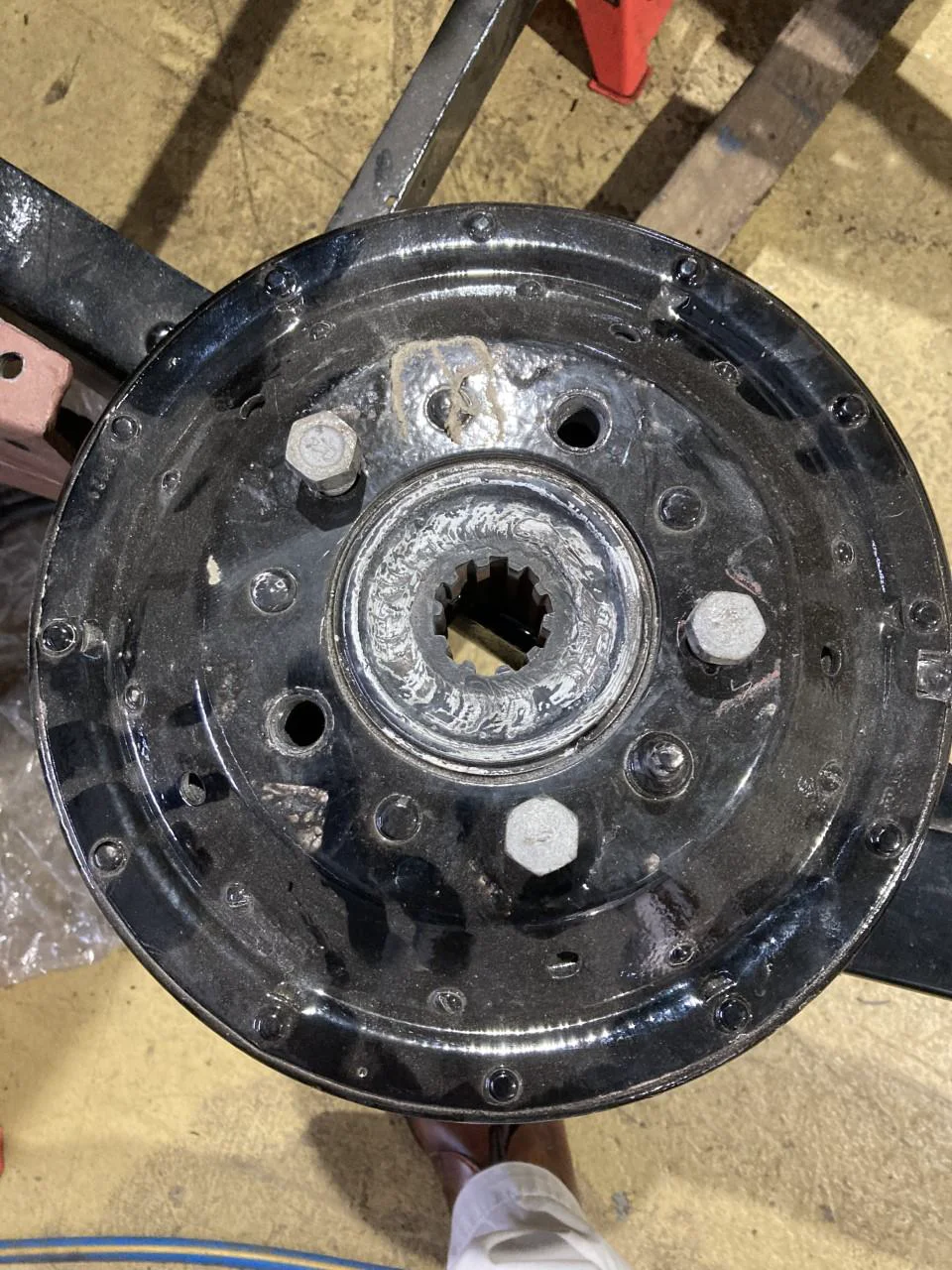
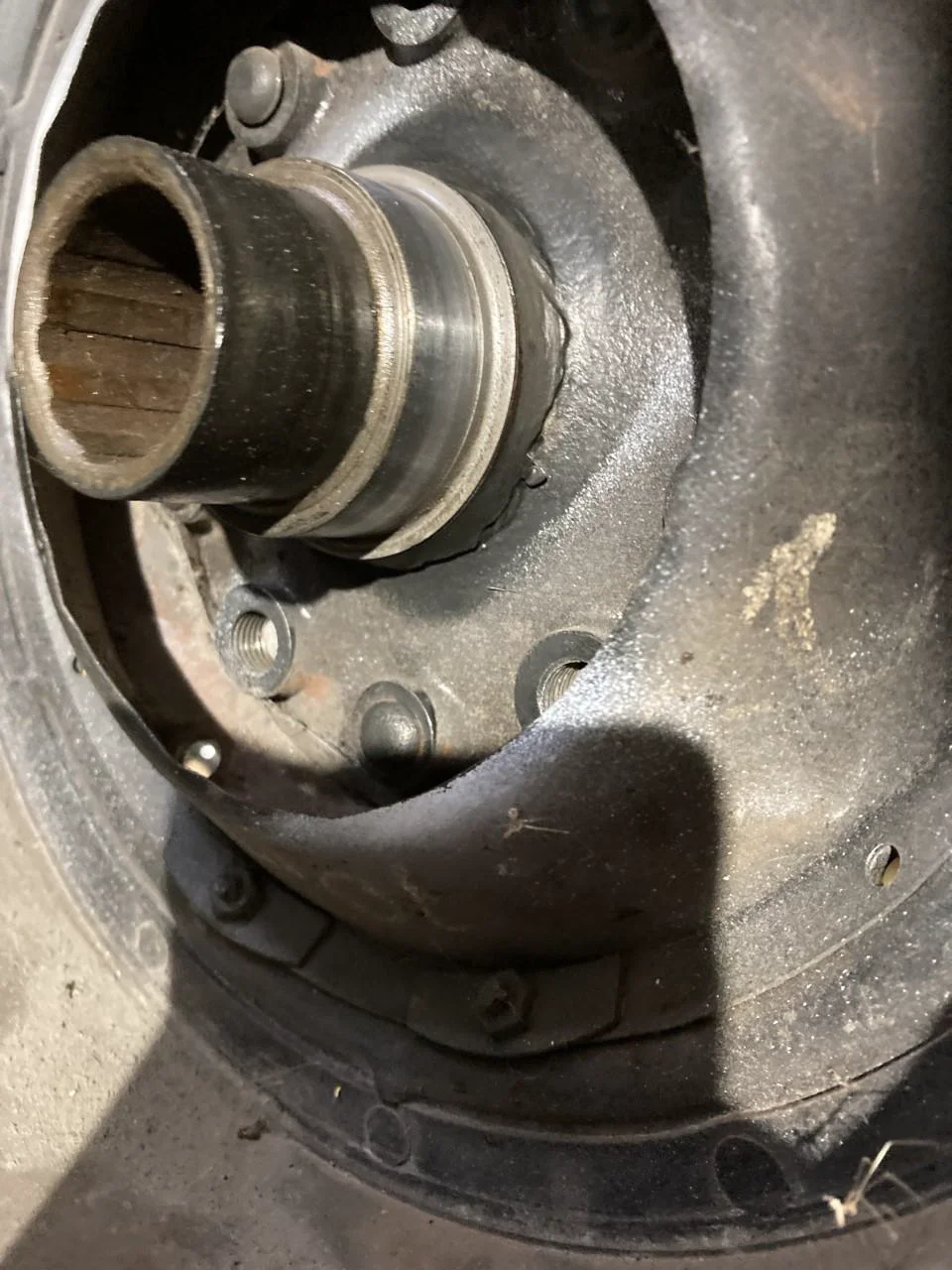
Thanks Pat and Terry. Now I have "one more thing" to be looking into before I finish my car. I did have evidence of something happening to the passenger front side of my Cord. Part of the brake backing plate was ground down and the ends of the front springs were also ground down. Looking closely at this mess I found the spring thru bolts had been welded as if you keep the nuts from unloosening. But not I have to look at everything again with this new information.
Gary Parsons
Hi Gary. The design of the wheel hubs especially the front ones was without much of a Safety Factor. The main aim of the design was to minimize unsprung weight. Auburns from 1935 had a similar flange with a tapered cross section and bosses for the wheel bolts. In the case of Our Cords not enough testing was done. Watching a documentary on the WW2 Liberty Ships recently the commentator stated that engineers didn't understand metal fatigue .................. so I guess less was known in the 30s.
As a mater of interest what is the Serial Number of your Cord?
I will be posting more pictures on the front wheel hub failure soon.
What is real strange is that the original Cord hub was cast iron. It has raised portions for wheel bolts and drum rivets. Why didn't they cast the hub with that as full thickness about 1/2". Seems like it would have been easier than the raised boss areas only. Modern hubs are a steel forged alloy (very hard).
Pat Leahy
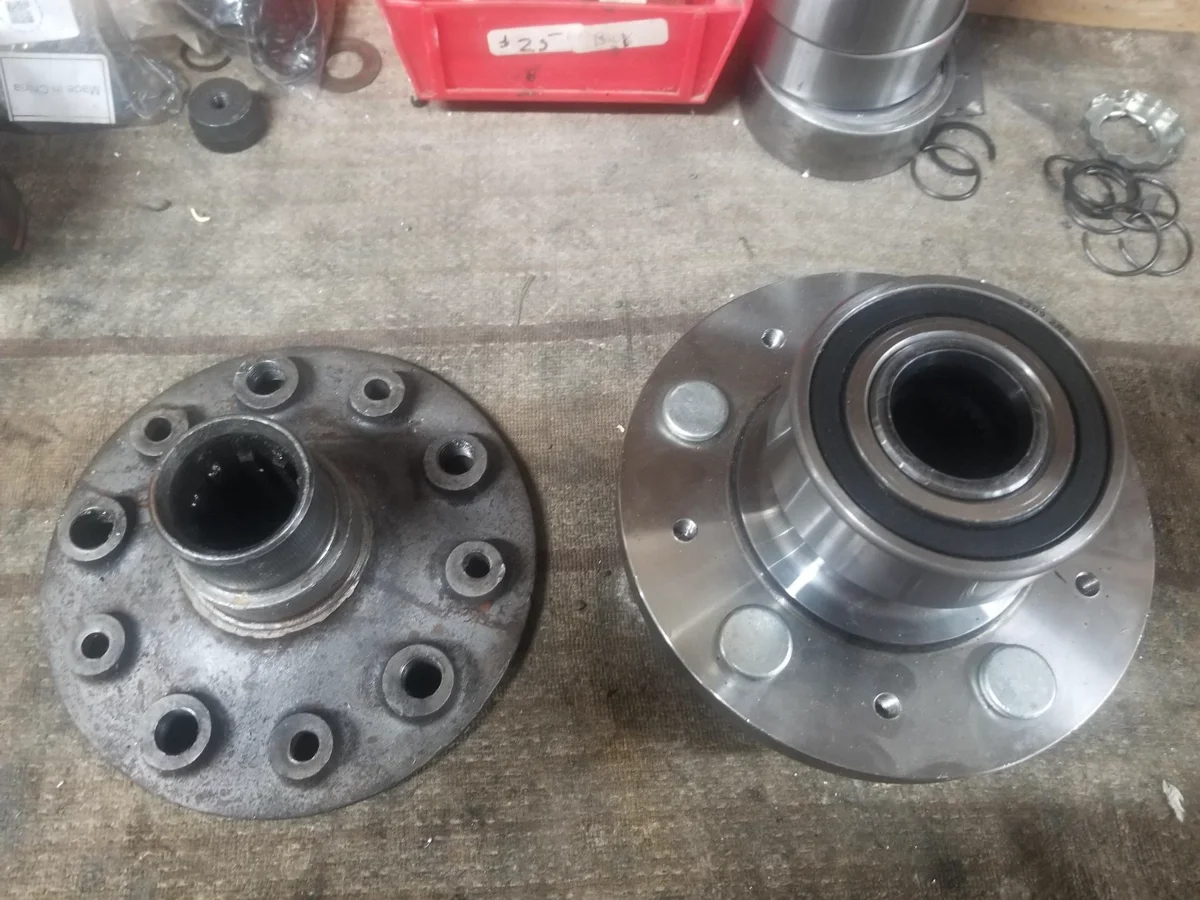
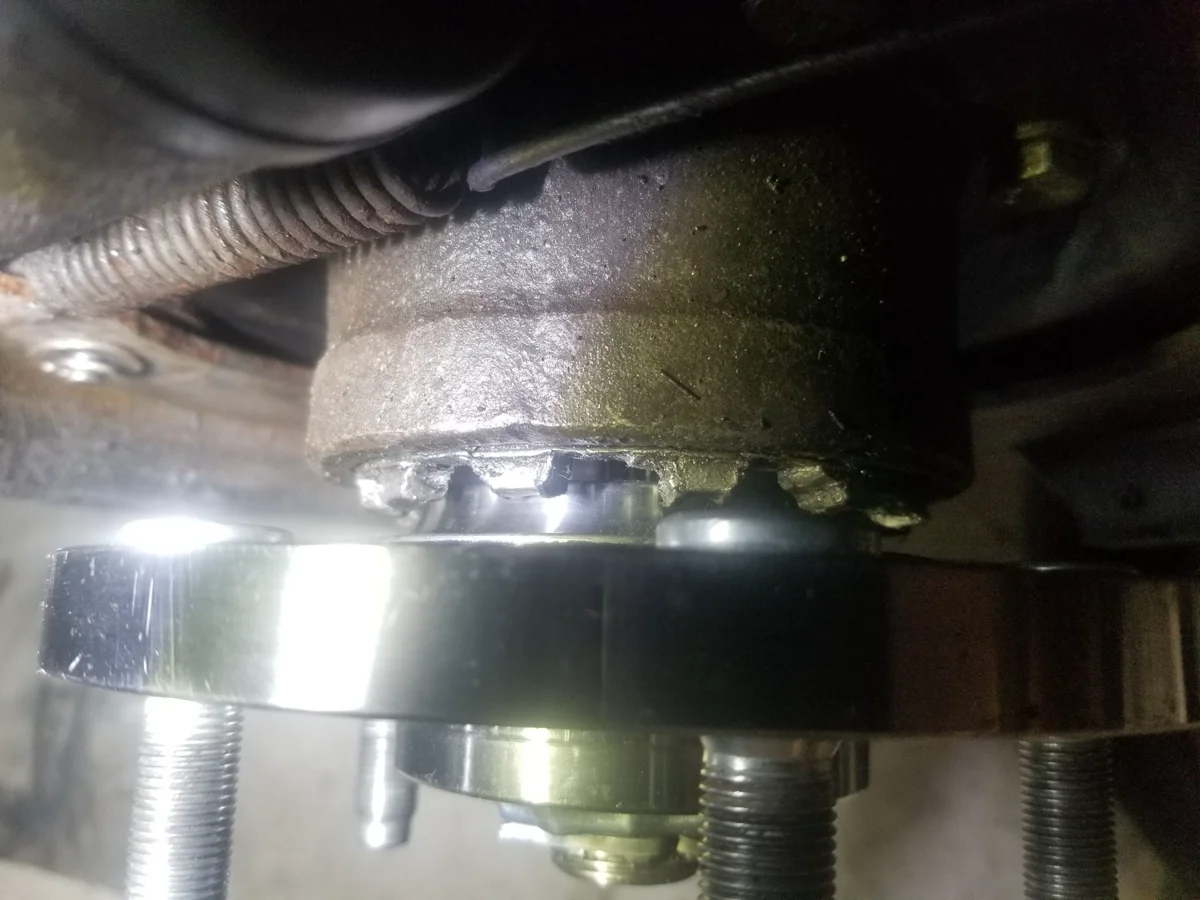
Pat the material was cast steel and certainly not cast iron. The design was a carry over from Auburn wheel hubs. The main idea was to minimize Unsprung Weight.
The original hubs work well. I think they underestimated the forces and stress under certain conditions, such as hard cornering. One of the early hub failures was during the Stevens trophy run and was a result of the hard cornering in the turns. In the 1930's stress analysis was very basic if any.
Also metallurgy was still very basic. Most advancement came during World War 2.
Terry - the problem with the Liberty ships was not metal fatigue. It was Fracture Toughness (an unknown material property at that time) Stress concentration also played a factor that made things worse. Next time you are in Auburn ask me about it and I can give you good explanation. The way they found it is really unique!
Jim I cannot understand how you can say "The original hubs work well", did you read the page above on Bob McEwan's The Cord Hub Horror Story???
Four failures were listed. Bob McEwan, Harold Allsop, Ric Simpson's father's Cord in the 1940s and then Ric Simpson.
George Arakelian had his crack tested and found cracks.
I guess it would be safe to assume other failures took place and the drivers may have been killed in the dim past.
There is not much of a safety factor with these hubs. I mentioned hitting a big pot hole at 50 mph which split the bump stop rubber. Luckily the Richardson's drive shafts saved the day.
Owning a Cord worth between $100,000 and $200,000 plus is a privilege and to protect the investment I feel it is prudent to replace the front hubs with modern steel replacements. Why take the risk??
I know a lot of people have trailer queens that only get driven in parades but the cars eventually get passed on to new owners.
Bill McLaughlin had a wheel center break up on his Cord on the way home from Auburn. That wheel should never have been on the car as it had been welded up by a previous owner.
Bill was very lucky the event didn't end in a real disaster
I have been to Auburn four times and may not ever return although I would like to. I had a look at another film on the Liberty Ships which covered the failures in more detail. The failures occurred during winter which alerted me to the type of failure you mentioned, Fracture Toughness. This was eventually discovered by an English metallurgist by the name of Constance Tipper. The first film I had watched mentioned metal fatigue only and starting at places like the square hatch corners. Constance Tipper must have caused quite a stir in finding the cause of the failure in a Man's World.
Another very clever English woman by the name of Beatrice "Tilly" Shilling who was an aeronautical engineer solved a major problem that plagued the operation of the Merlin engines during WW2 when the MEN could not find a solution. "Hat's off to the women" I say.
Terry, Yes there have been failures (just like almost every other part), if you consider the number of miles that Cords have been driven the hub failures have been very few. Yes a failure can be catastrophic, as in Bob's case, most of the failures give the driver plenty of warning. With inspections and paying attention when you drive you should catch the cracking long before it becomes a problem.
On the liberty Ships, my metallurgy professor in College was on the team that investigated the issues with fracture toughness and ways to minimize the problem. I didn't know then that I would deal with fracture toughness issues in my career.
Jim, I vaguely remember an Izod impact testing machine at college being used with test samples at different temperatures. The lecturer was a young Einstein type with out of control hair. He smoked a pipe which was carried in pocket of his pants. Smoke could be seen rising from the pocket. In his other pants pocket he carried a lump of cheese which he would nibble on from time to time. He was quite a character and an excellent lecturer/ teacher of material science. All so long ago.
To join in the conversation, you must be a club member.
You’re welcome to read and like every post. Members can reply and start topics of their own.