
RL
@Rlamb10769
Rlamb10769Dec 8, 2025 On a classic car such as a L29 which is an open cooling system, can the water flow through the radiator to fast not to cool being there is no thermostat to restrict the flow? We know on a closed system a thermostat does restrict the flow.
Richard
No!
Are you sure there is no thermostat?
Check the parts manual, if you have one, and confirm there is no listing for a thermostat.
Open cooling system does not mean there is no thermostat; both open and closed systems use them.
The L29 Lycoming is very similar to that in my 31 Auburn whose parts manual lists a thermostat. Auburn also has a machined recess in the head water outlet to accept one. Any thermostat up to 180 should be fine.
Thermostats are often removed on these cars to fix cooling issues that have nothing to do with either thermostats or radiators.
Both engines originally had a water distribution plate that was welded to the back of the water jacket cover . If yours is missing ( and most are after 100 years - rusted out and disbursed through the block and radiator!) the water pump discharge, being in the center of that cover, becomes focused instead of disbursed which means that most of the water only circulates past the front four cylinders. Your back cylinders are not getting the full benefit of the coolant.
Can't speak for Cords, but on Auburns the temp gauge fitting is, you guessed it, right at the #8 cylinder where a missing distribution plate is going to have the greatest effect.
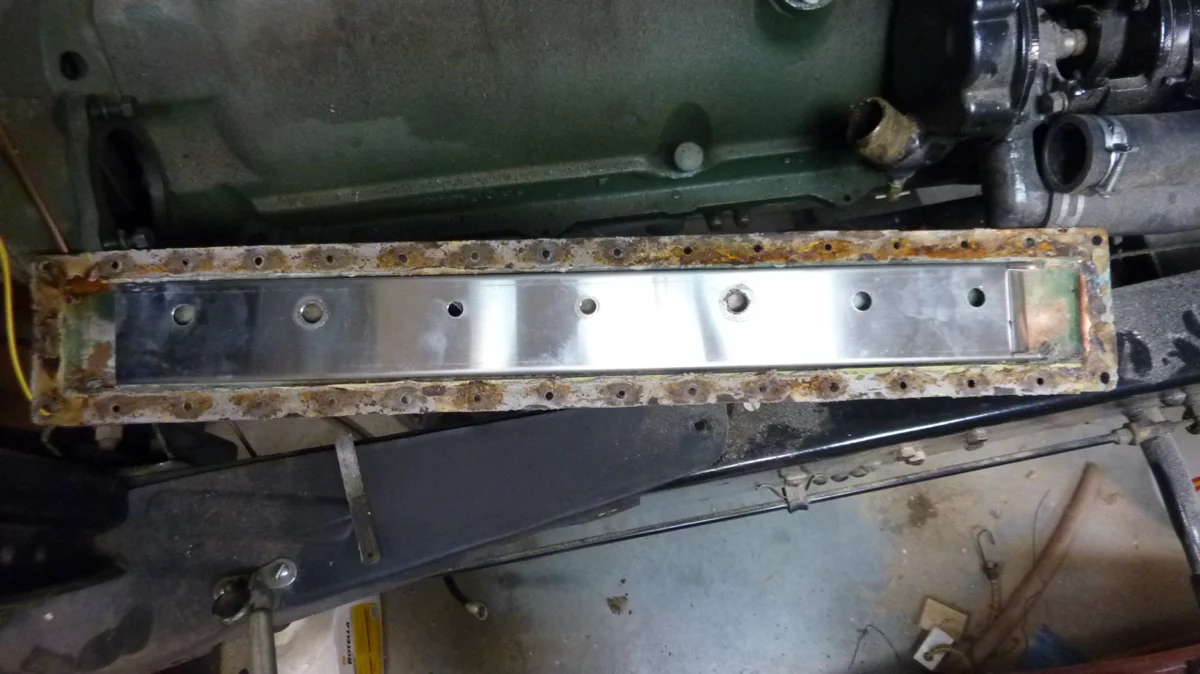
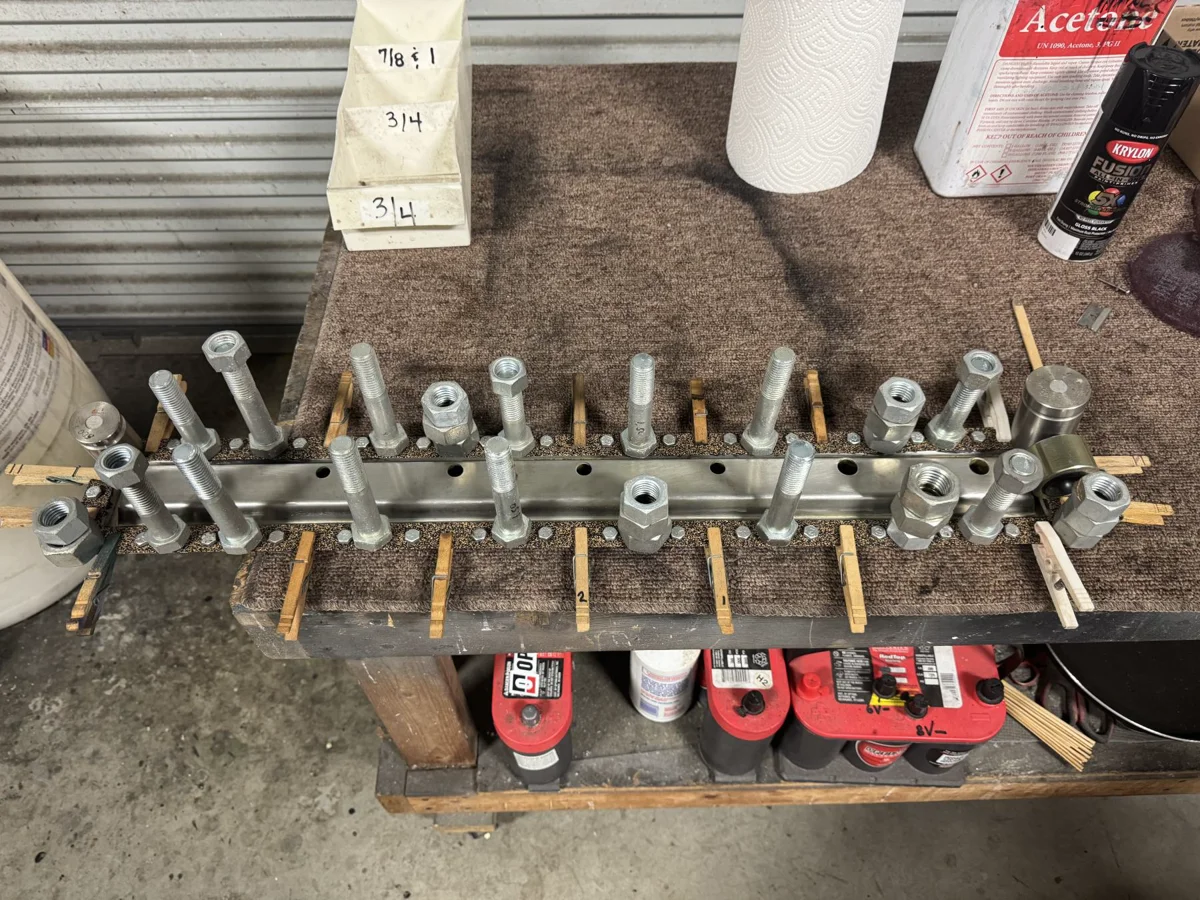
I made a new plate out of stainless using the photo in the attached article in the ACD newsletter. Note the different sized holes ( smallest where the pump discharges) and the somewhat pinched off ends.
I agree with Ben that the increased water flow from a missing thermostat won't otherwise affect cooling - if the system is in its original configuration.
A side note, one of the hazards of running without the distribution plate in place is the the pump discharge may cause accelerated wear of the cylinder walls , see attached photo of how mine looks and it becomes evident where the discharge is right between #5+6. The increased wear caused by the point discharge and maybe some cavitation from running only water as coolant is substantial enough that one cylinder had to be sleeved.
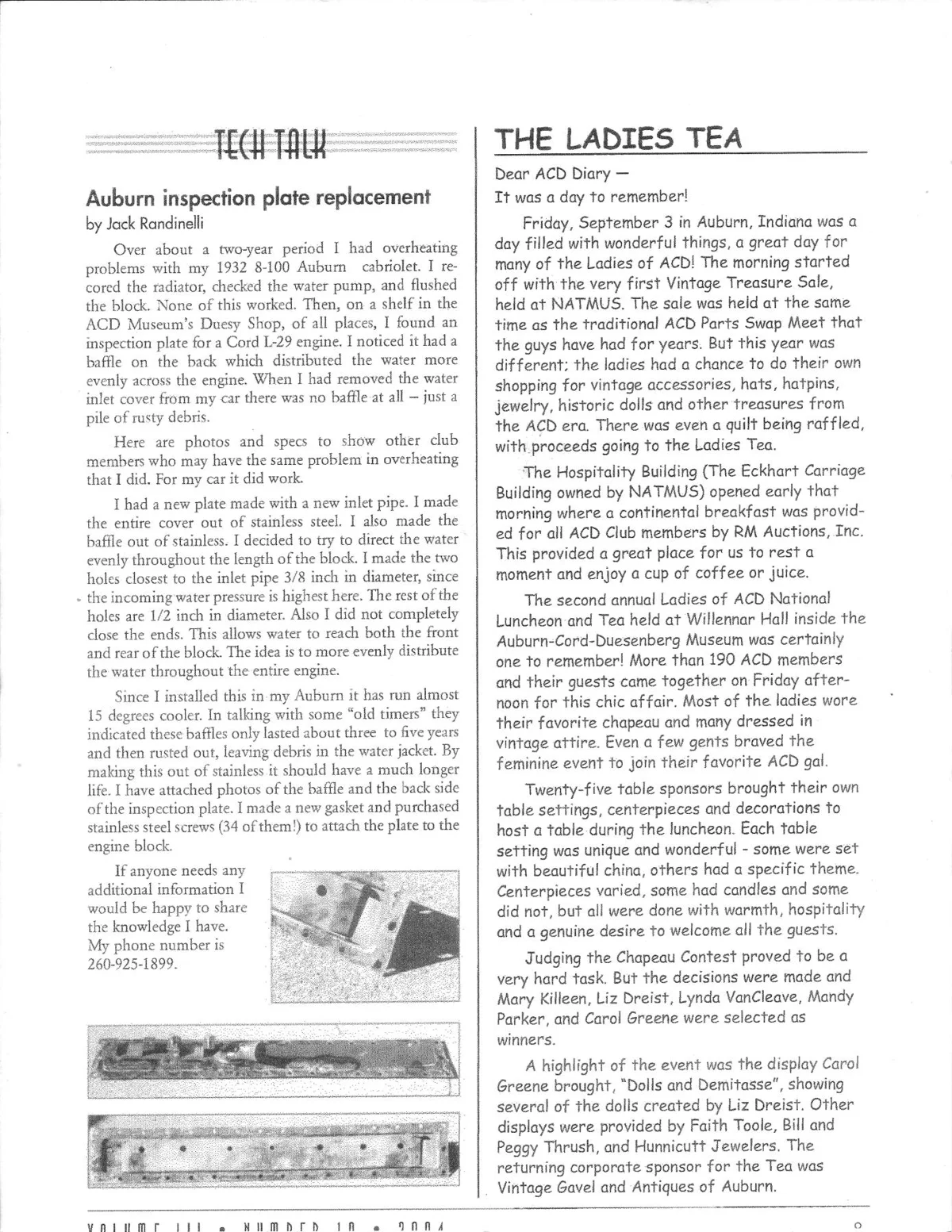
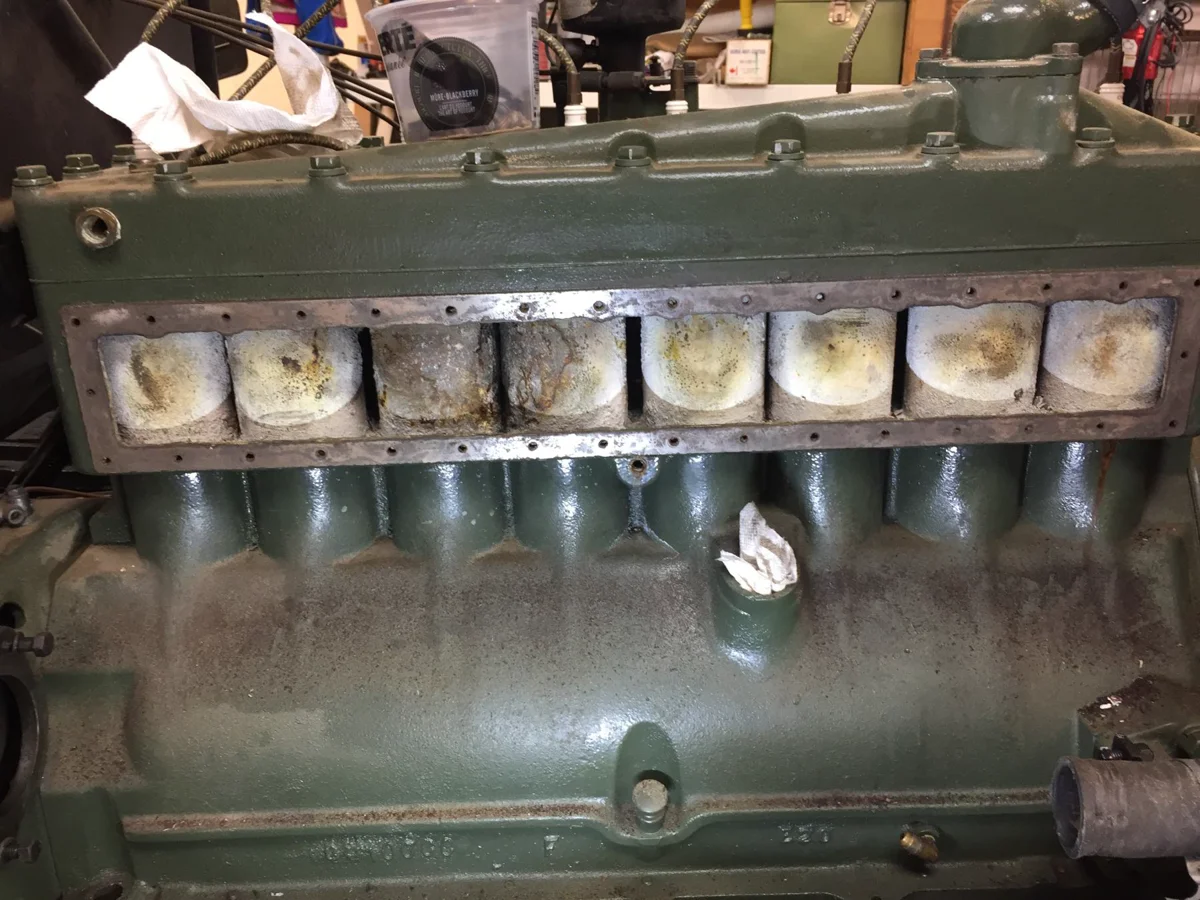

It has thermostatically controlled radiator shutters. So there probably is not a thermostat.
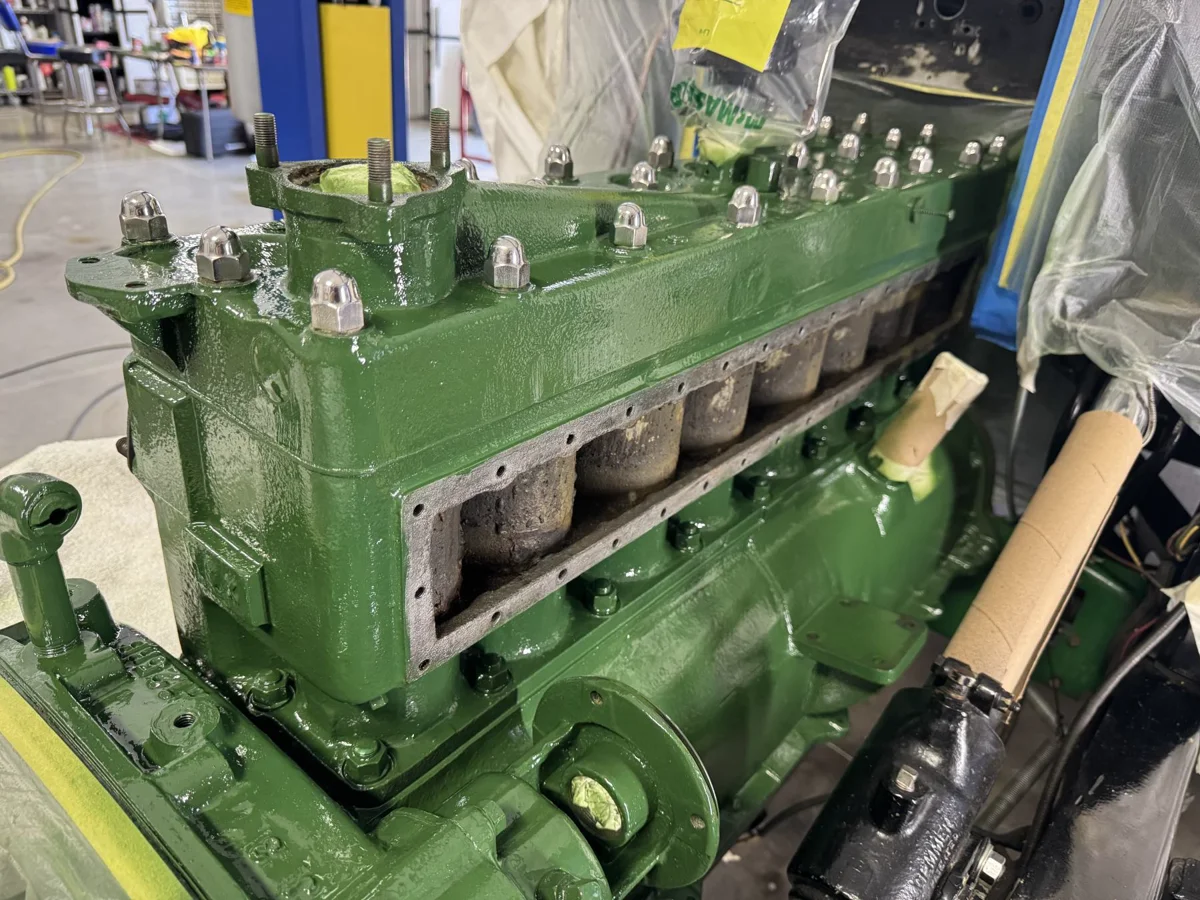
Thanks for the reply, I enclosed two photos one shows no thermometer and the other shows my distribution plate. This is the only one I had with me weighing it down to seal the gasket. It only heats up when driving at speed and the shutters are open. I am in the process of running rad cleaner because I think it might be a flow problem. Thinking possibly the carb may be running to lean also.
Thanks,
1929 L29
Richard

Ben Bruce aka First BornDec 8, 2025 No!
I beg to differ. The water can flow too fast to properly cool. Also in the early days of running street cars on a race track the old timers used to cut the fins on the water pumps to reduce the flow.
Also check your timing for an overheating problem as well as the lean carb.
My 2 cents worth
plkDec 9, 2025 I beg to differ. The water can flow too fast to properly cool. Also in the early days of running street cars on a race track the old timers used to cut the fins on the water pumps to reduce the flow.
Also check your timing for an overheating problem as well as the lean carb.
My 2 cents worth
LOL. I expected to hear that myth AGAIN.
Distribution plate looks good!
Was it overheating with the distribution plate installed or is that something you are in the process of installing?. If it was acting up after, it sure sounds like the radiator might well be your problem. Do a search for flow testing a radiator on this forum , I think Edinmass had some suggestions.
Brad
Yes Bradsan and I have been flushing the radiator and checking timing. I will figure it out .
Thanks,
Richard
Out of curiosity, is your temp gauge sensor at the back of the engine ( I mean close to the firewall to avoid any backwards L29 confusion!). Did you try an infrared heat gun to confirm whether the entire engine was the same temp vs a specific area of the engine? Just a thought as it might enable you to pinpoint a problem.
Here is a link to a discussion on flow testing and a simple setup you can make just to convince yourself to stop looking for other problems!.
The way I figure it, even spending $30 on some fittings and a bucket and a couple of hours of my time saves me $300 of shop time and doesn't leave me second guessing anybody. Creatively, you might even set something up to do it 'in car' . You know stepladders and sketchy ropes/pulleys. There is always fun to be had and lessons to be learned, especially if it keeps the rest of us entertained!ƒÿâ
https://forums.aaca.org/topic/371177-1938-radiator-flow-specification/page/2/
Also, you cold flow test the radiator. We have a thread on here somewhere with the flow rates for different cars of the era. To generalize, most engine problems are ignition and most overheating issues are the radiator. Not always of course.
The sensor is located between number 5 and 6. I think I have solved the problem I hope. The timing was way to far advanced, going to take a ride and see.
Thanks to everyone for all the suggestions.
Richard
There is a thermastat! Should be 160. Fits below the water neck. The radiater tanks are thicker than the orig. core towards the front. A good solution for the L-29 overheating problems is to put in a thicker core in to fill the tank. This extra thickness is toward the front of the radiator and does not show. Make sure you have a L-29 Dist. They turn counter clockwise while Auburn Big eight turns clockwise. Be sure your rotor has a arrow going CCW and you don't have a big eight rotor. Points should be syncronized at 45 degrees. Make sure you are getting mechanical advance. This and syn. can best be checked on Dist. machine. I have driven many miles and the temp runs at 160 unless it get above 95 Degrees and then it climbs toward 180.
CORDially Mike
Hello Mike,
Thanks for the information, the timing was not the solution. Do you know the Stant or Balkamp number on the thermostat?
CanÔÇÖt do anything now on the radiator tank. Will see if all is correct in the distributor, will compare my rotor with the one in my L29 parts book.
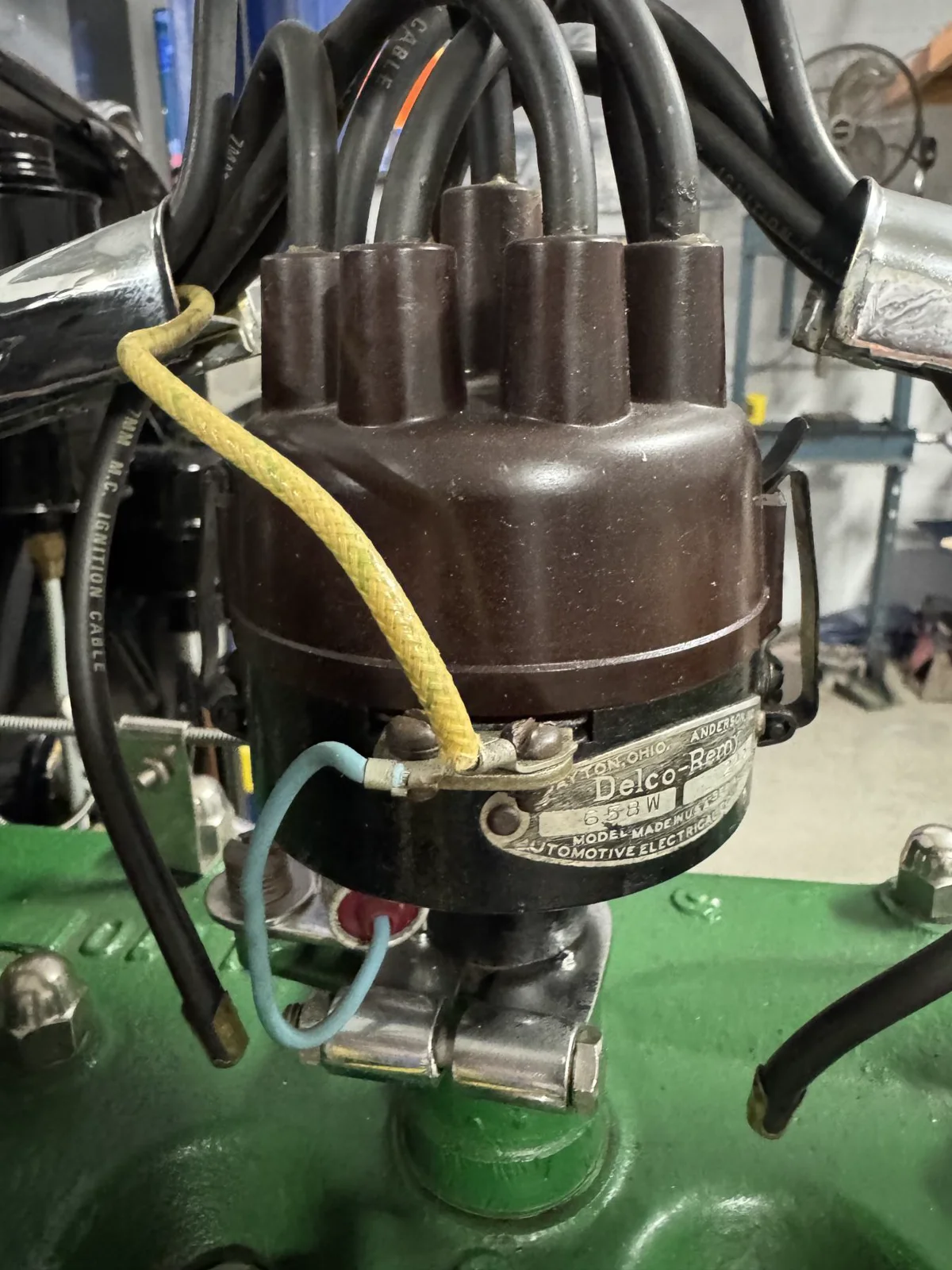
Distributor photo attached.
Thanks,
Richard
Stant has been bought by Motorad which is owned by a European conglomerate of some sort.
I'm presuming that is why all of the specs attached to their products are now in mm with no clear flange diameter measurement listed!
At one time, I had sleuthed a thermostat for my 31 Auburn but I can no longer find the trail as to how I got there or the receipt for it .
I'm guessing that the Cord uses the same 2.5" thermostat head recess as the Auburn, shouldn't be hard to find.
If you go on the Gates website, they at least have a filter you can set for flange diameter.
This 160 degree one shows up at 2.49" and has the jiggle pin to avoid having to drill the 1/8 hole. There shouldn't be any vertical clearance issues above or below !
Here is a discussion on the topic from awhile back
Thanks Bradsan, good information.
Richard

Here's what I did and it worked very well. My L29 always ran hot, and I could tell that there wasn't good flow through the radiator, and I assumed that the block was crusty too. When it would get hot, it would spit coolant out of the radiator cap and it would get on the hood, the windshield and the top. The paint was all nicely finished, including a bunch of painted bolt heads, so I really didn't want to pull the radiator out, or pull the motor apart and damage the paint.
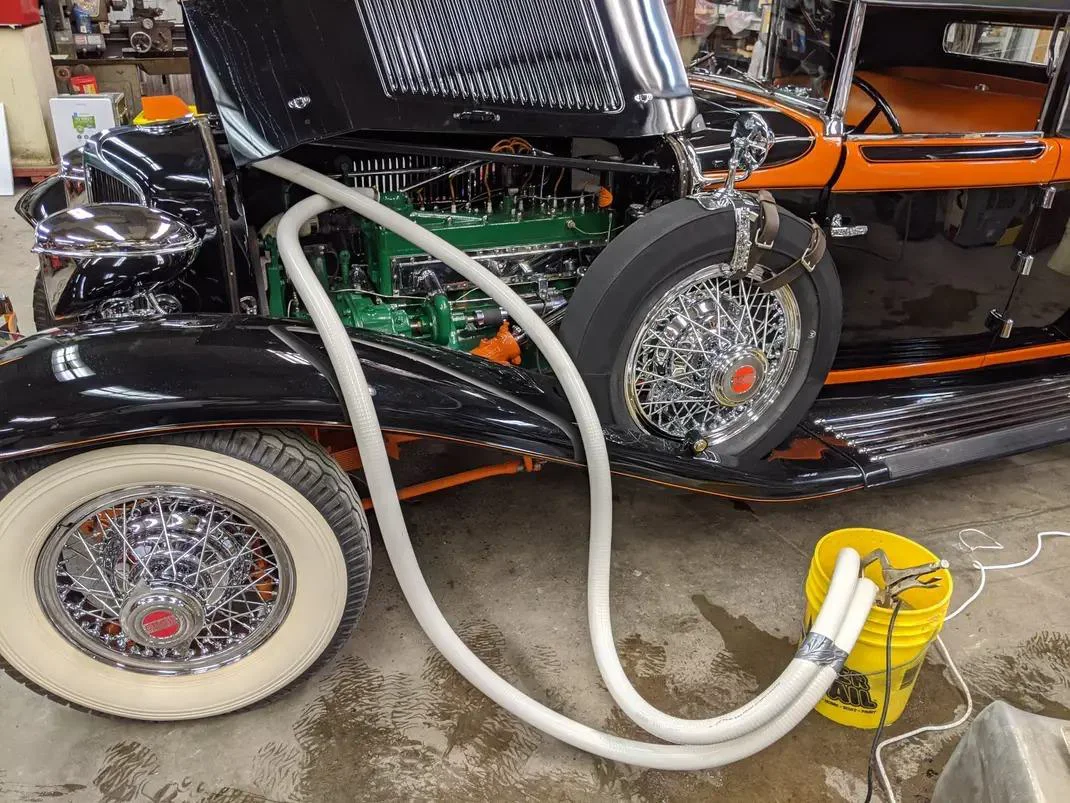
So I pulled off the upper radiator hose, and let all of the antifreeze solution drain out. I bought two 10-ft lengths of inch and a half rubber hose at the lumber yard, and I connected one of them to an electric submersible pump on one end, radiator on the other end, then I set the pump in a 5-gallon bucket. The other inch and a half hose got connected to the water outlet neck on the head, with the loose end sitting inside the 5-gallon bucket. Then with the engine off, I poured water into the bucket and turned on the pump so it was circulating water through the radiator, the water pump, and the block. I changed out the water a few times until it was running clear. Then I started mixing in sulfamic acid powder. I don't remember exactly how much I put in, but there was some instructions somewhere. I think I put in a couple of cups. That sulfamic acid really cleaned it up good. It is especially good at dissolving mineral deposits. I let that circulate through everything for about 2 or 3 hours. Then I rinsed it all with clear water, then neutralized it with a solution of baking soda and water. Then fresh water again. After that the car ran perfectly cool, even in hot weather. I also found that the sheet metal that forms the top of the radiator was kind of bent and deformed right where the radiator cap twists onto it. So I messed with it a little bit to get it straighter, then I made another radiator cap gasket out of 3/32" thick foam weather stripping material and installed that to help seal the cap down to the radiator. No more spray on the hood!
Great information, thanks
Hi Joel, I presume you ment sulfuric acid? Will a standard submersable pump handle Sulfuric acid?
CORDially Mike
I doubt it. Sulfamic acid is sold as a powder to mix with water and remove mineral deposits from masonry. I've done something similar. My guess is that Hemi Joel's method works a lot better than what I did.
mikespeed35Feb 27, 2026 Hi Joel, I presume you ment sulfuric acid? Will a standard submersable pump handle Sulfuric acid?
CORDially Mike
Hi Mike. No, not sulfuric, sulfamic. This is a copy/paste from the internet: Sulfamic acid is less reactive and less corrosive, making it safer for use on metals, ceramics, and in household applications. It does not produce harmful fumes and is compatible with stainless steel without causing chloride-induced stress corrosion cracking.
Sulfuric acid is highly reactive and corrosive, posing significant safety risks. It can cause severe burns and is hazardous to handle, requiring special storage and protective equipment.
To join in the conversation, you must be a club member.
You’re welcome to read and like every post. Members can reply and start topics of their own.