HD
@HDVETTE
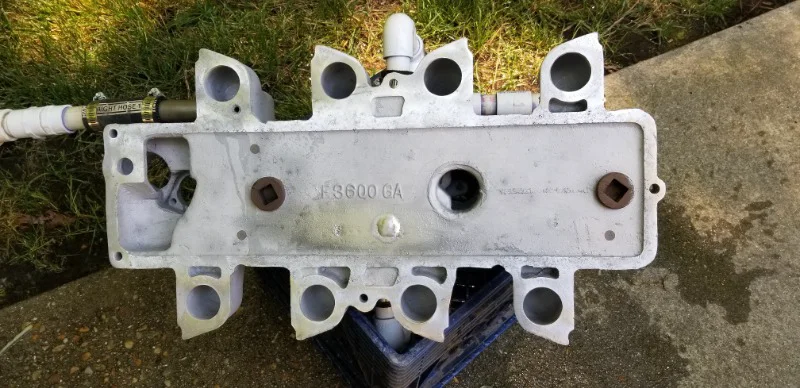
The little hole under the letters GA has been caused by corrosion.
The other small hole near the inlet port is a vent that connects with the block.
It is standard practice these days to eliminate coolant from the inlet manifold by blocking it off and just having the coolant run through the heads.
You will have to fit plugs to the side connections below the carburettor and a plug in the pipe connecting with the water pump. A machined disc inside the hoses then clamped with a hose clip usually works ok.
Also you will have to fit a tapered plug into the top of the block. Tap the hole fit a screw in plug then cut and file it flush. You will have to do this like key hole surgery to stop metal debris getting into the rest of the engine.
It would be a good idea to get the small hole near the letters GA seal welded but it may grow with the corrosion inside.
Good luck.
Terry, your suggestions are greatly appreciated. I have read before that there are advantages to blocking the flow of water into the intake manifold. My concern with blocking all of the openings is the effect on the water pump. It would appear that the "vent" hole is to provide water to the pump (from the block) when the thermostats are open and not providing water through the manifold. I want to make sure there is no adverse effect if ALL of the passages in the intake manifold are sealed.
Scott
Scott I have done the modifications I listed to my Cord which was on the road for 5 years and covered around 10,000 miles before I decided to completely restore it.
EL is probably correct in saying there is a plug missing near the letters GA. I just figured it was a small hole caused by corosion. I didn't take any pictures of the underside of my inlet manifold.
The idea is to remove the possibility of internal leakage of coolant into the sump. The engine will work fine with the coolant passing through the heads. The inlet manifold was heated by the engine coolant to stop iceing up. The cooling system will work more efficently with the inlect manifold isolated.
There will be no problems with the water pump doing these modifications.
One word of caution - Normal water flow when cold is from the cylinder heads to the intake manifold to the water pump and back to the engine block then to the heads. As the thermostats open up they shut off the water flow to the intake manifold and send the water to the radiator then to the water pump.
 
If you block off the intake manifold you will be dead heading the water pump before the thermostats open up. This may result in the pump cavatating and damaging the impeller and housing. Also when the thermostats are closed there is no vent when filling the system.
 
AS long as the rest of the manifold is in good shape, for the hole under the GA just drill and tap the hole and LocTite a set screw in there. I would not try welding up the hole. The metalurgy was not real good back the 1930's. I have had good luck welding up some Aluminum pieces and I have had some that could not be welded no matter what you do, you just blow large holes in it.
 
If you need another intake manifold let me know, I have several spares.
Terry, Thanks again for your suggestions. I think I will block all the passages to ensure no water is in the intake. I will have the small hole welded just to seal it from the valve train galley.
Scott
Scott and Jim I forgot to mention the thermostats.
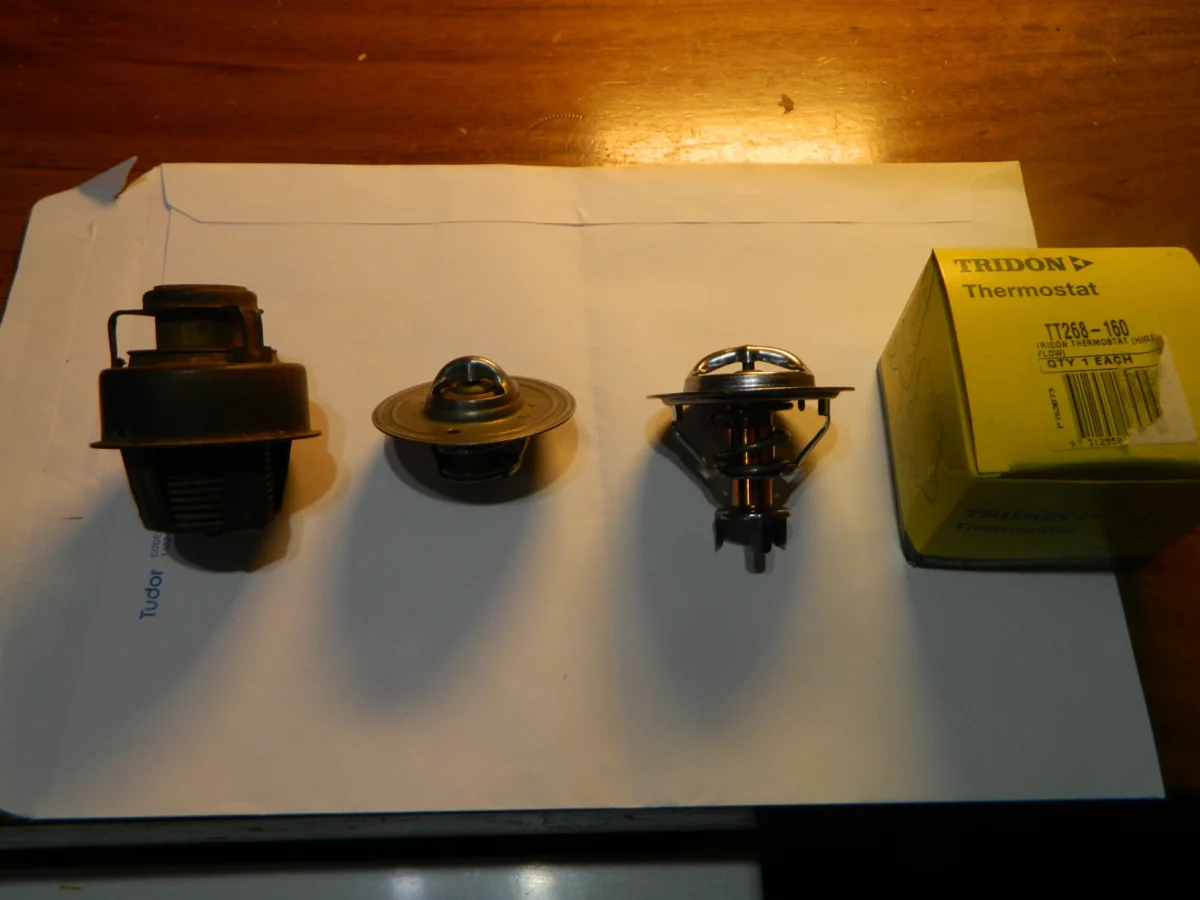
I have modern high flow thermostats fitted that have a large open throat and do not hinder the flow. The thermostat I am using is at the RHS of the picture. They have a vent built into them.
It has a 160 deg F setting
You end up getting a better result when more people add comments. 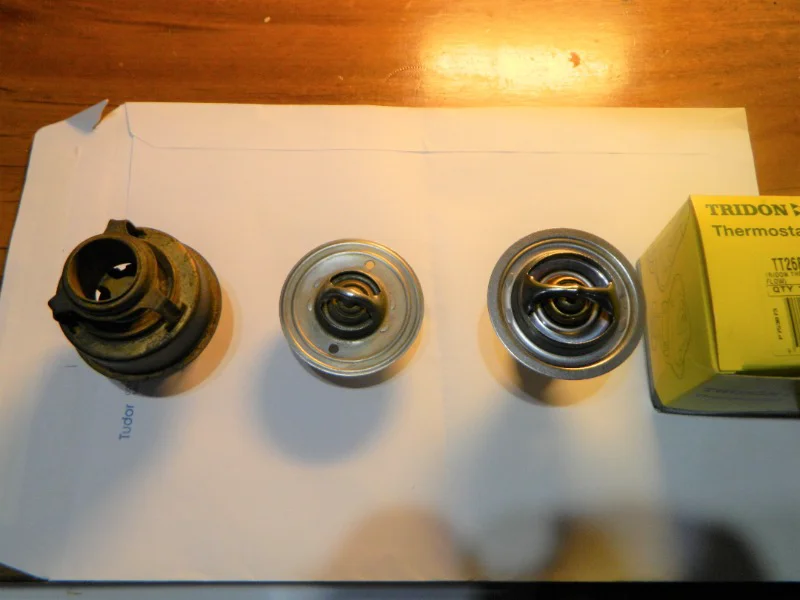
Scott - The hole between the intake and the block is mainly to allow the intake to drain when you drain the block (however after years of service the hole is usually plugged).
 
Terry - you have to watch those modern thermostats. With the original thermostat there is always water flow - either through the intake manifold or through the radiator. With the modern thermostats there is no flow until the thermostat opens up. Also there is no way to vent the air when you fill the system. Unless you drill a vouple of vent holes in the thermostat as you did in the center one in the photo (at lest that is what it looks like.)
 
Jim
Problem solved. My local machine shop was able to weld the hole. I think for now I will build the engine stock and see how it does. Thanks to all for the input and advice.
Scott
Hi Adam I should have included the Part Number in the earlier posting.Trident Part No TT 268 - 160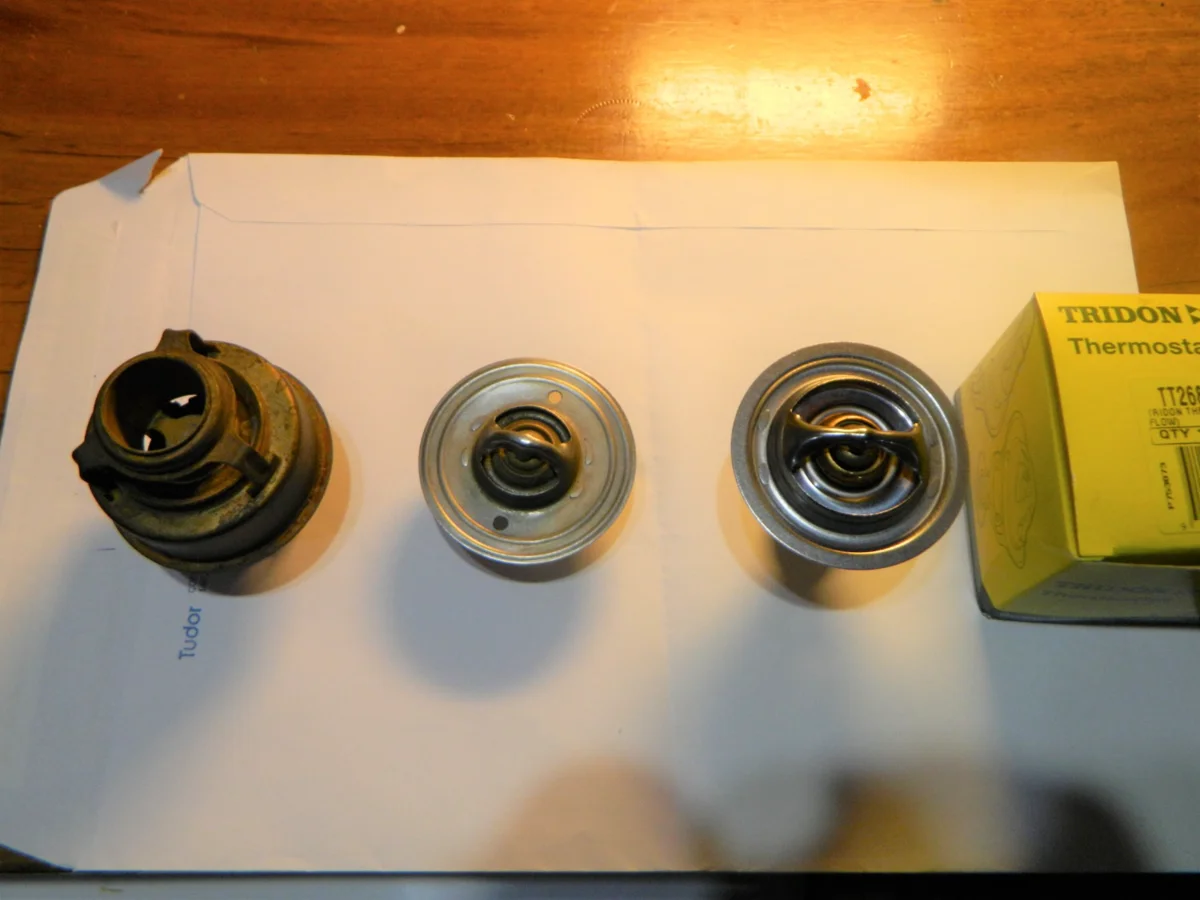
To join in the conversation, you must be a club member.
You’re welcome to read and like every post. Members can reply and start topics of their own.