WC
@wcoye
Hi Bill,
It all depends on where you measure the pressure. The only place that really counts is at the carburetor. For the needle valve to work right you want about 2 to 3 psi. Sometimes you can get away with 3.5 to 4 psi but I wouldn't try it.
 
Some of the modern electric pumps put out 6 to 8 psi in which case you need a pressure regulator in there somewhere.
Jim
Hi Jim,
I'm thinking my pressure may be too high. Last evening I was toodling along and the engine suddenly cut out. No coughs or shutters.
I tried to restart, nothing. Popped the hood and found gas pouring out of the carb . I couldn't find any obvious problem. This morning she started right up. I idled her for a good 20 minutes trying to recreate the problem. Runs like a charm . Figure the needle valve was jammed. Gonna install a pressure regulator as a precaution
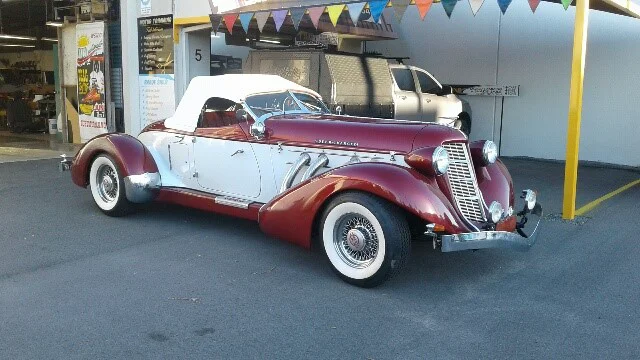
Bill you are very lucky she didn't go up in flames. One of the members out here with a fibreglass speedster replica had a fire start under the hood that quickly spread and destroyed the whole car. He almost lost his house but was able to push the blazing inferno out of the garage which is located under his house. He put it down to a possible split fuel line.

Could have been a stuck float.
CORDiallyMike
Hi Bill,
I have two Model A Fords running Stromberg 81 carburetors and I am using a Holley low pressure fuel regulator on both. Following is a link:
 
 
I have had good success with these with electric fuel pumps. My Cord Phaeton has a regulator on it as well, I will check to see what model when I get home from work.
 
Bill
Hi Bill,
 
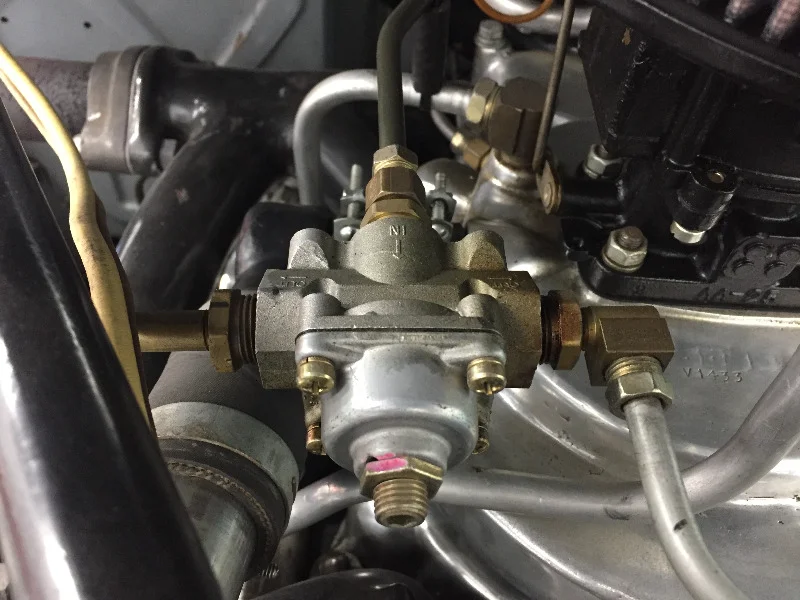
I just checked my 812 S/C Phaeton and the answer is unanimous, it has the Holley fuel pressure regulator as well. I have also found it very useful to have a fuel pressure gauge on the system as well although the Holley regulator says that it comes preset at 2.8 psi which should be perfect. Attached are some pictures of the installation on my 812.
Good luck.
Bill 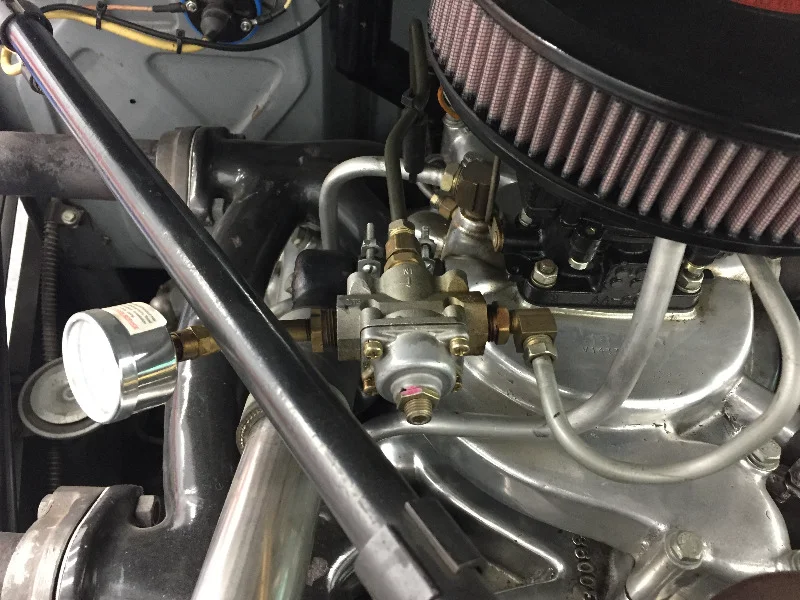
Additional pictures that I intended to add. 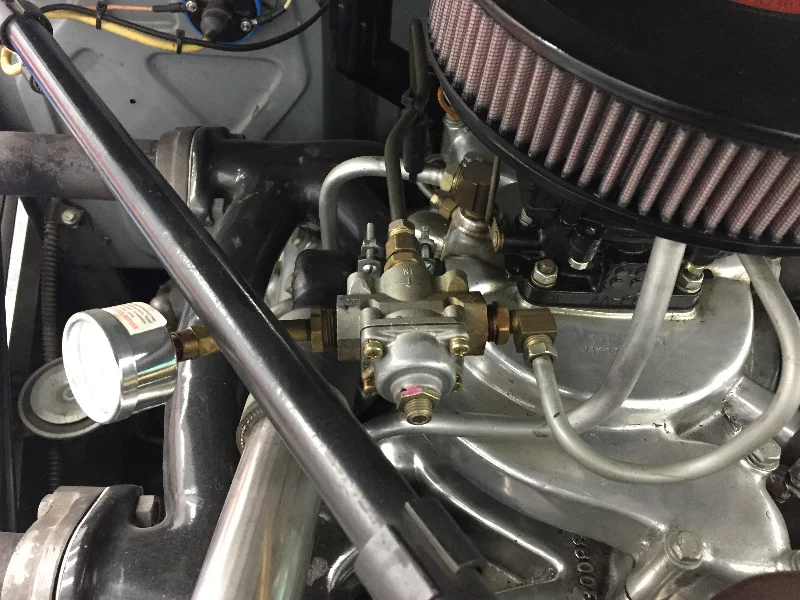
Bill are you running with just the mechanical pump or do you have an electric pump as well?
The electric pumps are supplied in two types, either low pressure or high pressure.
Obviously low pressure is the way to go. I use mine for priming the engine and on steep hills at speed when the engine starts to run a bit erratically. It will be very interesting to see how she performs after the complete rebuild.
Thanks Goerge for the great tip. My tank has been cleaned out by a shop Randy Ema suggested. They did a great job too. My tank had a bad gas leak at the fill tube area where it connects to the tank. The flange design was horrible. You can't secure it around about 40% of the flange due to the design. So somebody before me soldiered the flange to the tank leaving the screws still in the flange. It still leaked badly because they did a por job og soldier. Getting those screws that were covered in soldier removed was pure hell. I did a writeup on how I used 2 gallons of water and three lbs of dry ice to create a carbon dioxide blanket in the tank to keep it from exploding when I used my torch to remove all the fittings. The suction line I found was soldiered to the bottom drain plug flange too. I have no idea how that was done because of the baffles and tanks design. I plan now to cad plate the inside and outside of my tank. Then re install the fittings.
 
 
Gary Parsons
I notice it says max inlet pres. 7 psi. You might check Summit Racing for better price.
CORDiallyMike
Mike makes a good point about the 7 psi maximum inlet pressure for the regulator, if you go with an electric fuel pump make sure that it does not exceed that rating. 7 psi seems to be a common rating for 12V pumps, I have not looked into 6V pumps but would expect they would be similar. I purchased my regulators from Summit however they seem to be the same price of $33.20.
 
Terry, I believe that my 812 is actually running completely on the electric fuel pump. I purchased the car from Gail Shaw and when I bought the car he told me that the mechanical pump is disabled and only for looks. I believe that he cut out the diaphragm so that gas pumped by the electric pump just passes through. I have not checked to see what type of electric pump I have on the 812, it is located under the car near the back. If anyone is interested please let me know and I will crawl under the car and take a look.
 
All of the comments about junk from the gas tank clogging the needle valve or sticking the float are right on. A discretely (or not) placed fuel filter can do a world of good.
 
Bill
I drive an 89 F-350 diesel that came with a mechanical fuel lift pump. I belong to a diesel forum and many have found that an electric lift pump works so much better but.. We can't run them in tandem because the fuel pressure of 6 lbs will rupture the mechanical lift pump diaphragm. Then you engine oil is flooded with diesel. If not caught early you ruin the bearings running fuel diluted oil..So we remove the mechanical pump and run only the electric pump. About removing the diaphragm and using our mechanical lift pumps for show is suspect to me.I think that would allow the fuel to flood our Cord engines.I will be checking on this because my Cord mechanical lift pump is apart on my work bench waiting a rebuilt kit. I'm all for electric fuel pumps over the mechanical pumps because we can install them to start pumping when the ignition is switched on. It also keeps pressurized fuel from the tank all the way to the carb helping to stop the fuel from boiling during vapor lock coming to our engines.I have seen all kinds of different fuel line routing on Cords and sometimes wonder what an owner was thinking running the lines so close to the exhaust manifolds.
 
 
Gary Parsons
To join in the conversation, you must be a club member.
You’re welcome to read and like every post. Members can reply and start topics of their own.