JO
@John Meredith
Hi John. Custom Berlines are super rare. You would be extremely lucky to have another in your local area. Good hunting on that.
Doug Pray restored one that was on loan in the Museum in Auburn. It may still be there. That would probably be your best bet to see and examine.
The best I have to offer is please document EVERYTHING you remove from this car.... Reason I mention this is so many items end up as the "where did this go" part... ....i began removing parts long before cell phones were invented. Back in 1975 we just removed parts. Also having a picture of what's been removed can help when it gets installed later. The ACD news letter has a great article of a Cord sedan being restored by Wyn  Laidig. He has paid particular attention to the leather interior removal. He has proven the leather was original from the factory. Very rare for a sedan. The wood frames have only one nail hole so this proves it's original. Nobody would remove an interior and all the wood only to install another interior.
 
 
Gary Parsons
Hi Gary.
One set of nail or tack holes should be conclusive proof that the fabric was original. Tom Wilcock in Canada has a Cord phaeton that has a known provenance back to the 1940s. The interior was done in a non standard waterproof material and there is only one set of tack holes. We are told that only leather or woolen broadcloth was available. Recording such variations needs to be done for future generations.
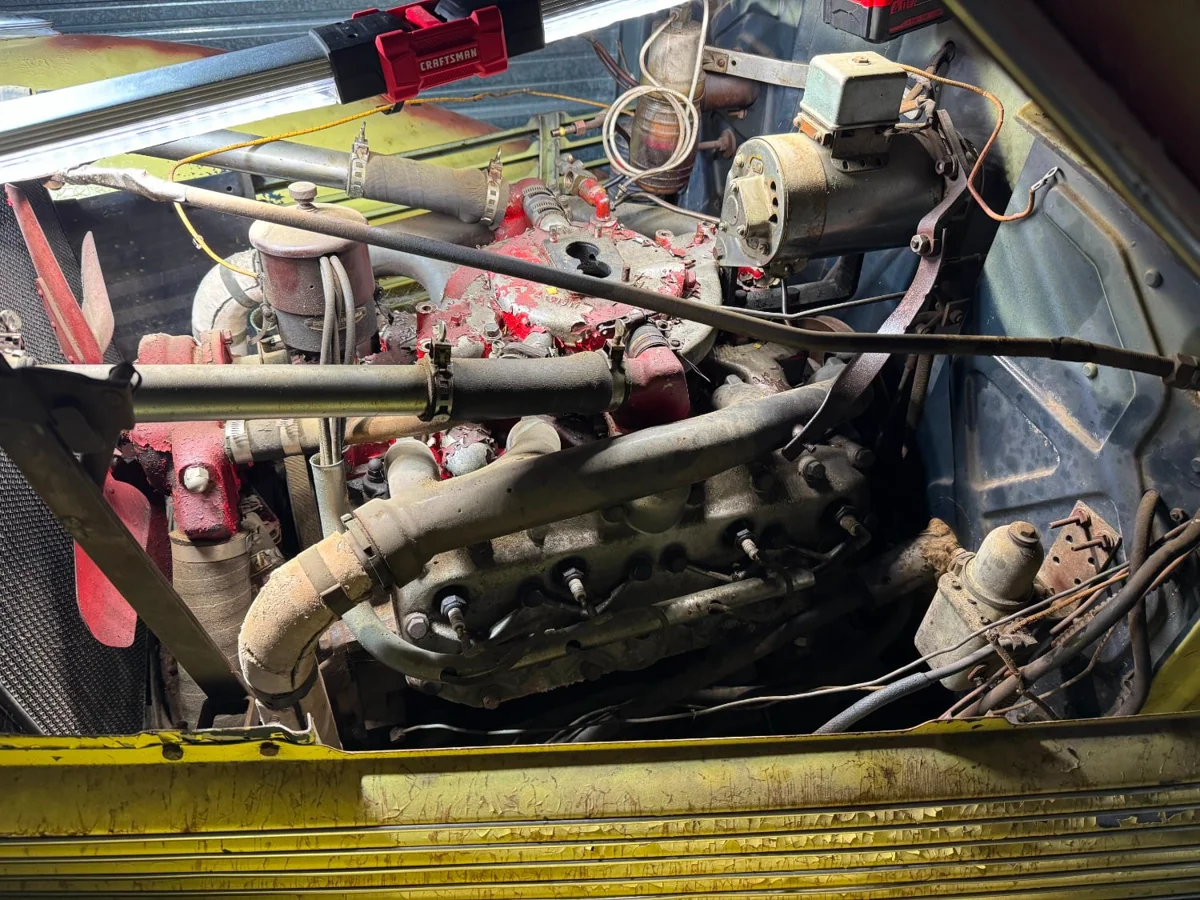
I am photographing everything as I start to remove nonstandard parts.  If you take a look at the attached photo of the engine bay with the horns removed, there is a firewall mounted fuel pump, a large oiler to the supercharger, and a very large blue, firewall mounted ignition coil.  All these are not original.  Also, the distributor is an Autolite GR 4028.  The supercharger did have an AA-25 carburetor on it.  Incidentally, there is another electric fuel pump in the trunk in series with the one on the firewall.  This is the original engine and it is an FB, non-supercharged engine.  There is a lot on this Cord that has been added over the years.  I have the history of this Cord traced back to 1939.  It was manufactured in Jan 1937.  The items of most concern are the interior.  The window surrounds are all chrome plated and so are the glove box doors.  There was a Piper Club speedometer (auxiliary speedometer) attached to the steering column with the pitot tubes sticking out of the front grill.  I'll try sending photos of the interior for comments.  Cordially,John
Hi John,
I'm not planning on being in NC in the near future but if you come up to PA I have 4 Cords here in various states you are welcome to look at.
What is the serial number of your car? 
The photo of your engine compartment is very interesting. First off the Supercharged engine with internal exhaust is not common, I've only seen one other. The red color is also interesting and indicated the engine has been rebuilt at some point in the past - this may have been done when they added the supercharger. The fuel pump may be original, I'll have to look back in my notes but that is the approx. location and may be the type they used. The generator is an early type with a very interesting mount - again probably done when they added the S/C. The large oiler appears to be a top oiler which were common aftermarket back in the day. You also appear to have the original insulation on the exhaust in good shape which is very rare to still be there considering the extensive work done in the engine compartment.
 
The chrome plating on the door windows and glove box doors was common back in the 1960's - 1970's. They liked to chrome everything.
The history on the car would be very interesting to see. 
Does the interior have the divider window in it?
 
Jim
 
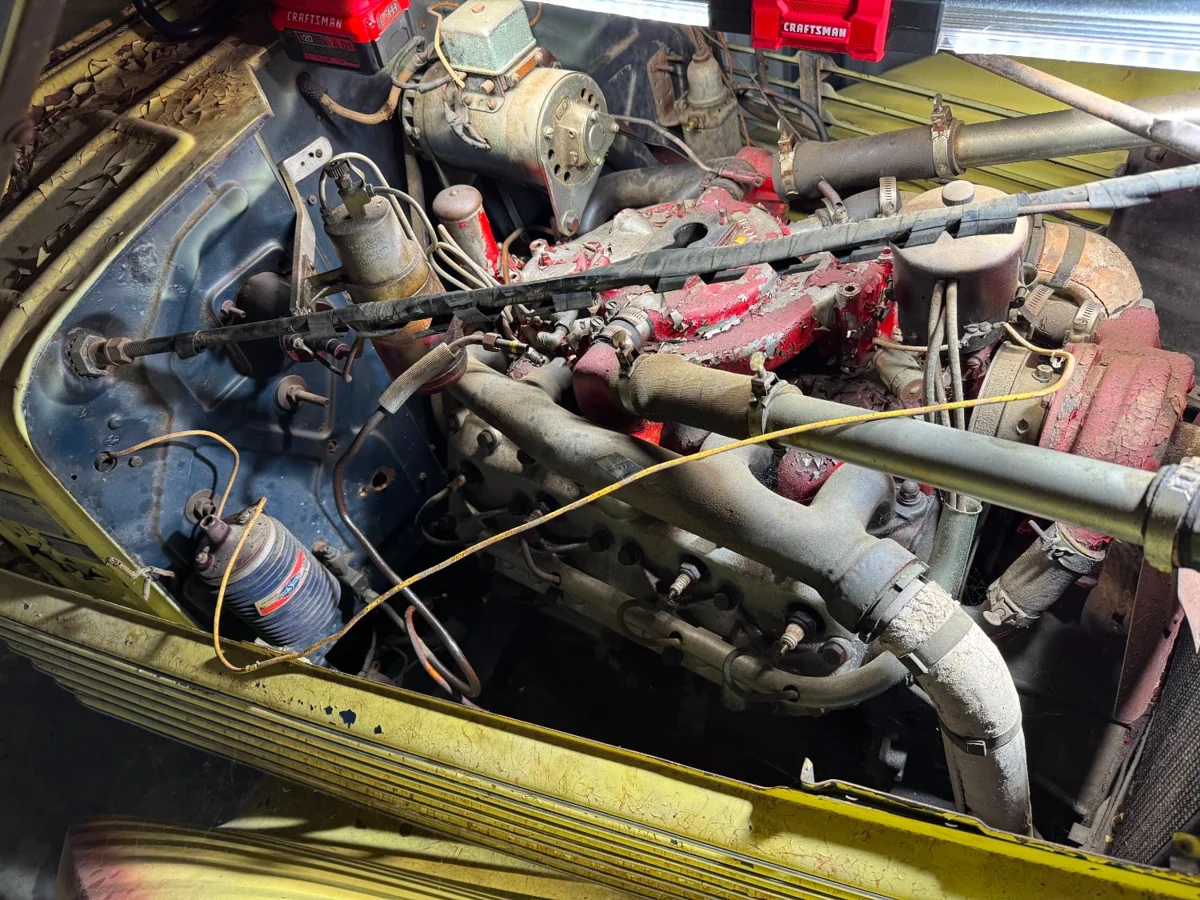
Glad you are taking pictures. It documents everything as found and sure helps when you return it to original condition. I see what appears to be an Autopluse electric fuel pump on the drivers side firewall but something is also on the passenger side. Is that the coil you mentioned? I also see how the three brush generator was modified to fit. It appears this was a modification because probably the required GCO4804-A generator was not available. I have never seen a generator installed with these double adjusters on it either. Probably done long ago because the correct generator belt was not available. The engine not being  an original FC supercharged block is interesting. The FB was the non supercharged blocks but they could be modified by drilling holes for the oil passages and the supercharger mounts. I was reading about owners doing that some time back. Having inside exhaust was a special order from what I recall. Normally all supercharged cars had outside exhaust. I also noticed the exhaust header pipes still retain the original asbestos insulation wraps. Be cautious working around this. If you want to remove it please use some dishwashing detergent mixed in water to spray it down before touching it. Keeping it wet stops much of the dust that causes horrible lung issues. Its the dust particles you can't see that do the most harm. I worked in power plants where EVERYTHING was insulated with asbestos pipe insulation. The plant was shaking all the time from the units running. In the late 1990s air tests were done by OSHA. They found the air contaminated with the asbestos dust we could not see. Finally outside contractors were brought in to remove every piece of asbestos. But those of us exposed over the decades are at risk now. Asbestos is a terrible way to pass on.
 Please keep adding pictures of how this car is progressing. It has me very interested is what you find.
 
 
Gary Parsons
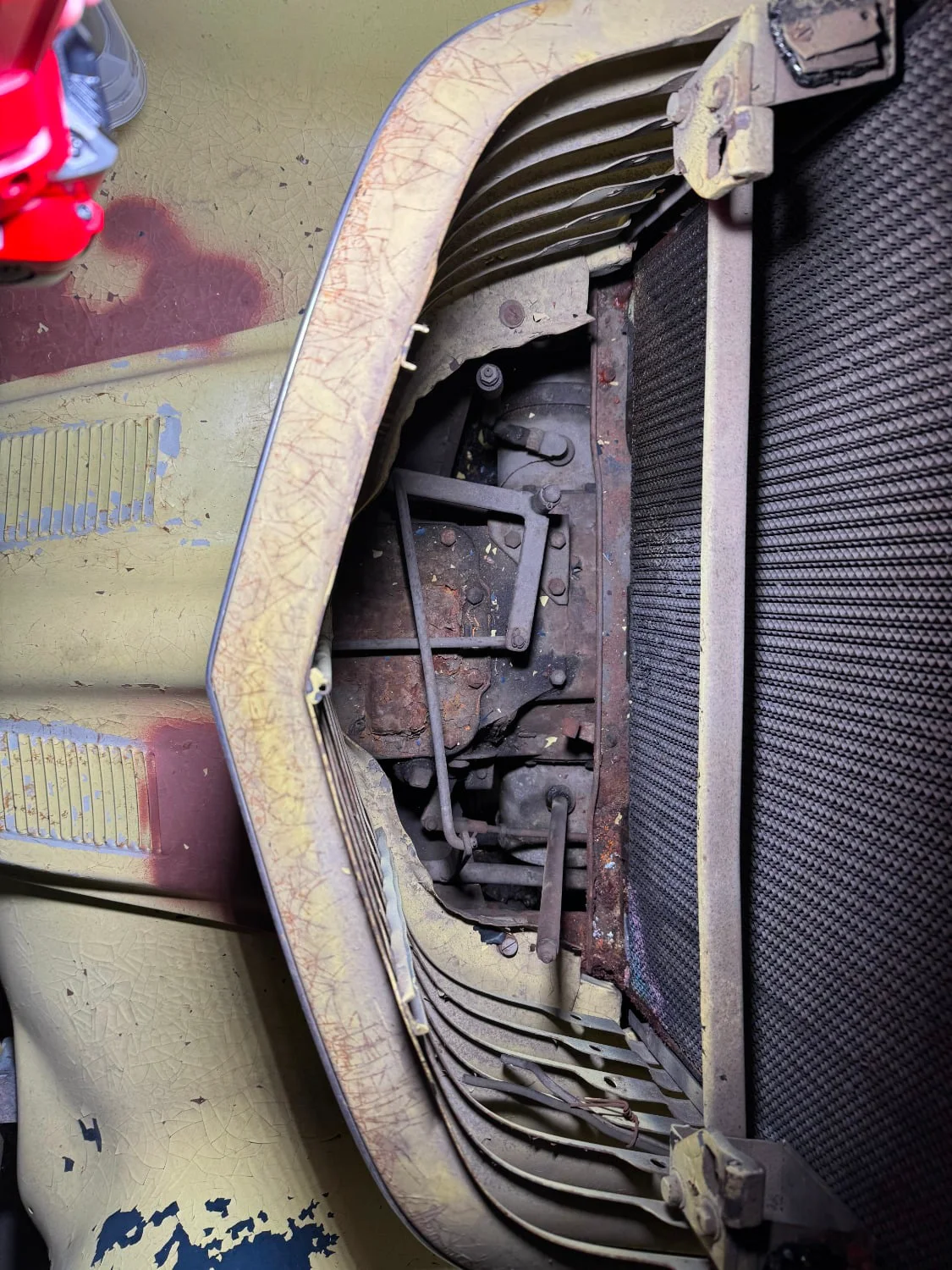
Okay, a few more photos:Photo 1886 is the right hand side of the engine bay.  The large ignition coil and oiler are seen.  Yes, the generator is coming off too.  It isn't original and have the correct one available.Photo 1887 is looking down at the transmission.  Hmmmmmm, something is missing!  I understand that back in the early 1950's, Popular Mechanics had an article about how to convert a Cord to a standard shift, three on the tree, shifter.  This is the example!  I have not found that particular Popular Mechanics article and if anyone has it, could you please send me a copy.  Is there anything else known about this conversion?  If you look closely at the bottom of the photo, you will see two pitot pipes for the Piper Club airspeed indicator that was mounted on the steering column. Photos 1888 and 1889 show the front seat and part of the divider window.  Any thoughts on whether the upholstery pattern is original or not?I think the fuel pumps were an addition as the mount itself isn't to CORD standards.  I'll send more photos in time.  Still have to work these days!Cordially,John
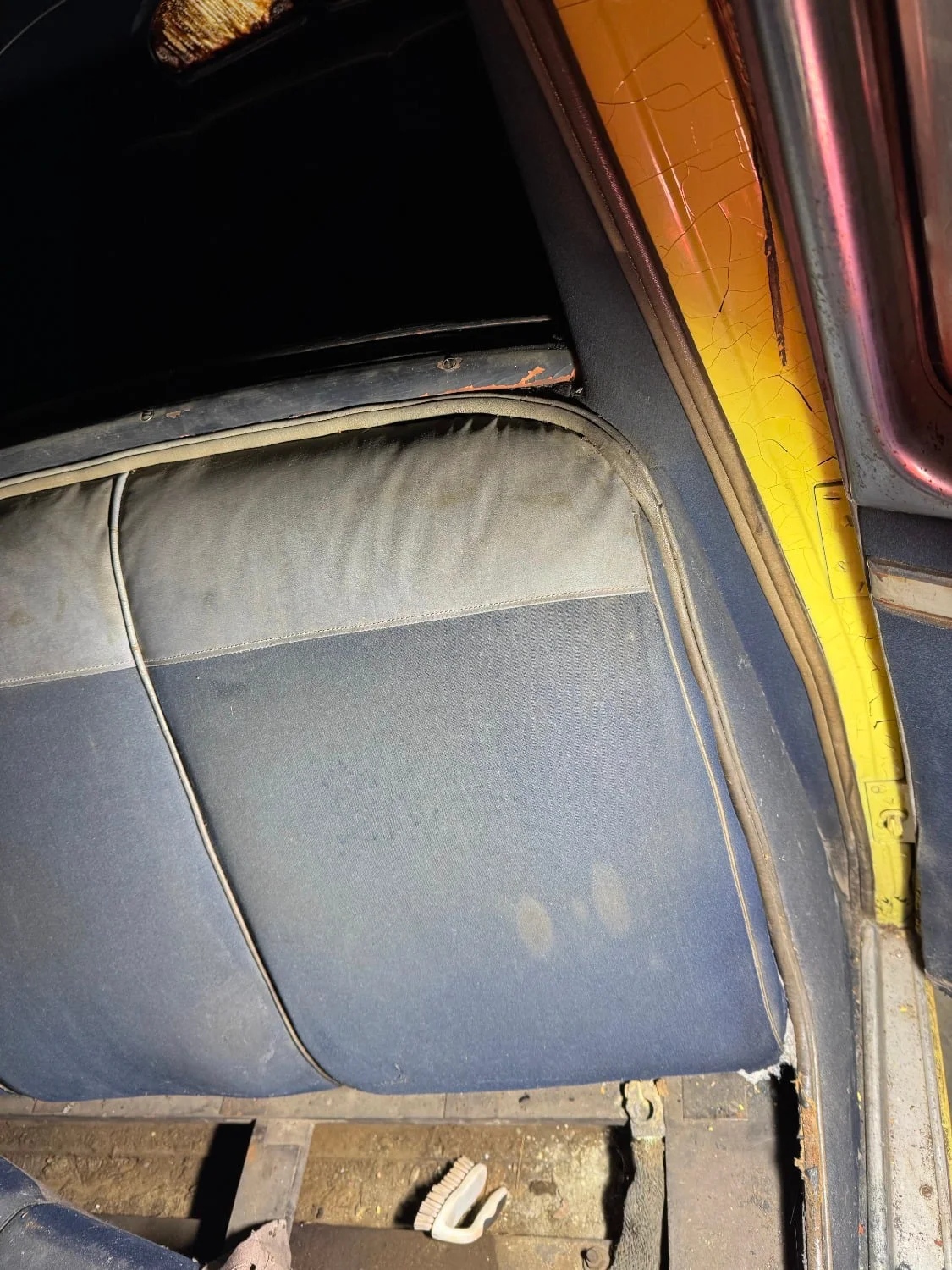
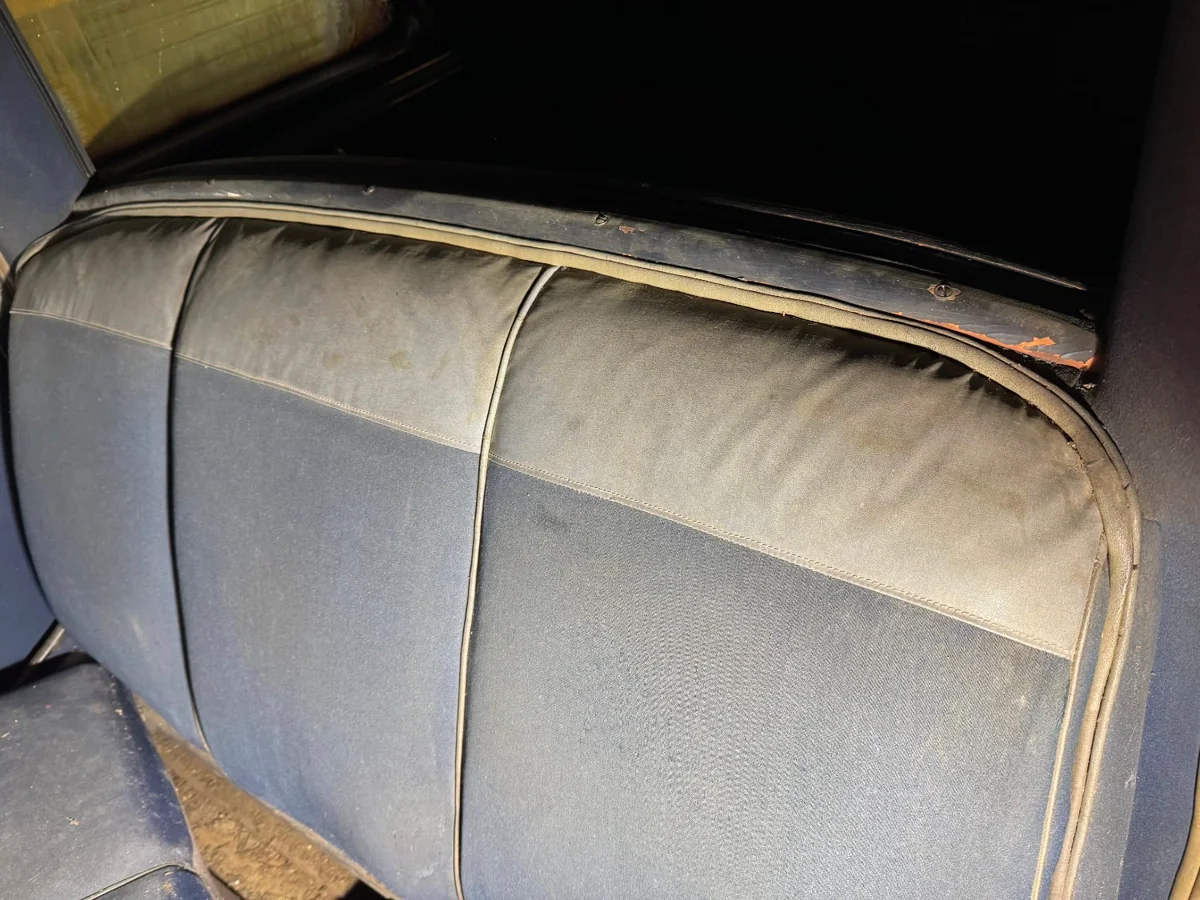
Hi John,
 
I had just gone back and looked at the pictures that you posted in January 2022 and noticed the manual shift lever mechanism on your car when you made this post.  Roger Von Bergen has a manual shift setup in one of his phaetons, I will share the pictures with him and get his comments.  If you can provide some more detailed pictures of the linkage it would be helpful.
 
Best regards,
Bill
Hi John,
Thanks for the photos. Are you sure the generator is the wrong one? The cutout is correct but looks like it was mounted incorrectly as is the generator. 
There were several manual shift set-ups used on a Cord and this could be any one of them.
The interior is the wrong pattern.
Yes the original electric fuel pumps were in addition to the mechanical pumps. However since someone added a S/C to a standard engine there is no longer a mechanical pump so you would have to run off the electric pump.
 
Jim
 
Great additional pictures. My 37 Beverly came with what you pictured of the mechanical shifting linkage. I never was able to make mine connect. I believe some parts were missing. My Dad and his business partner purchased the Cord in box after box of parts. I even found a Tucker ash tray in my spare parts thanks to Randy Ema looking at what I had. As Jim has posted concerning the generator the factory did offer a three brush in the later cars but todays standards recognize the two brush GCO4804-A with the firewall mounted voltage regulator. If you can post up pictures of the cutout regulator and the generator name plate I can look them up and tell you what they belong on. The 36 and 37 Cord cars had 4 different generators. The 36 had ONLY the three brush two charge type but the 37 cars had the two and the three brush. I got this generator information mostly from Bob Neer some time back when I was looking to purchase a GCO generator. Up until that time I only knew of the 36 three brush GAR4630 generator and the 37 GCO two brush. I'm actually working on making the GCO generators now. Casting the metal has been a difficult task but I'm close to making the temps required in my foundry. It has been nearly a 5 year program researching and building and making molds but I'm very close......
 
 
Gary Parsons 
Gary,
The judging standards allow both the 2 brush and 3 brush generators.
Jim
Jim, later production FB engines were fitted with a mechanical driven fuel pump at the lower RHS of the block. My 36 Westchester is fitted with one of these engines from a Custom Beverly. The number is FB 3213.
John, what is the number of your engine?
It may have a cover plate over the side of the block.
John I remembered seeing a Custom Berline in Auburn back in 2011.Attached are some pictures of the interior.I have lightened them up a bit.I have some suitable grill cloth for the speaker for sale as approved by Rick Hulett.
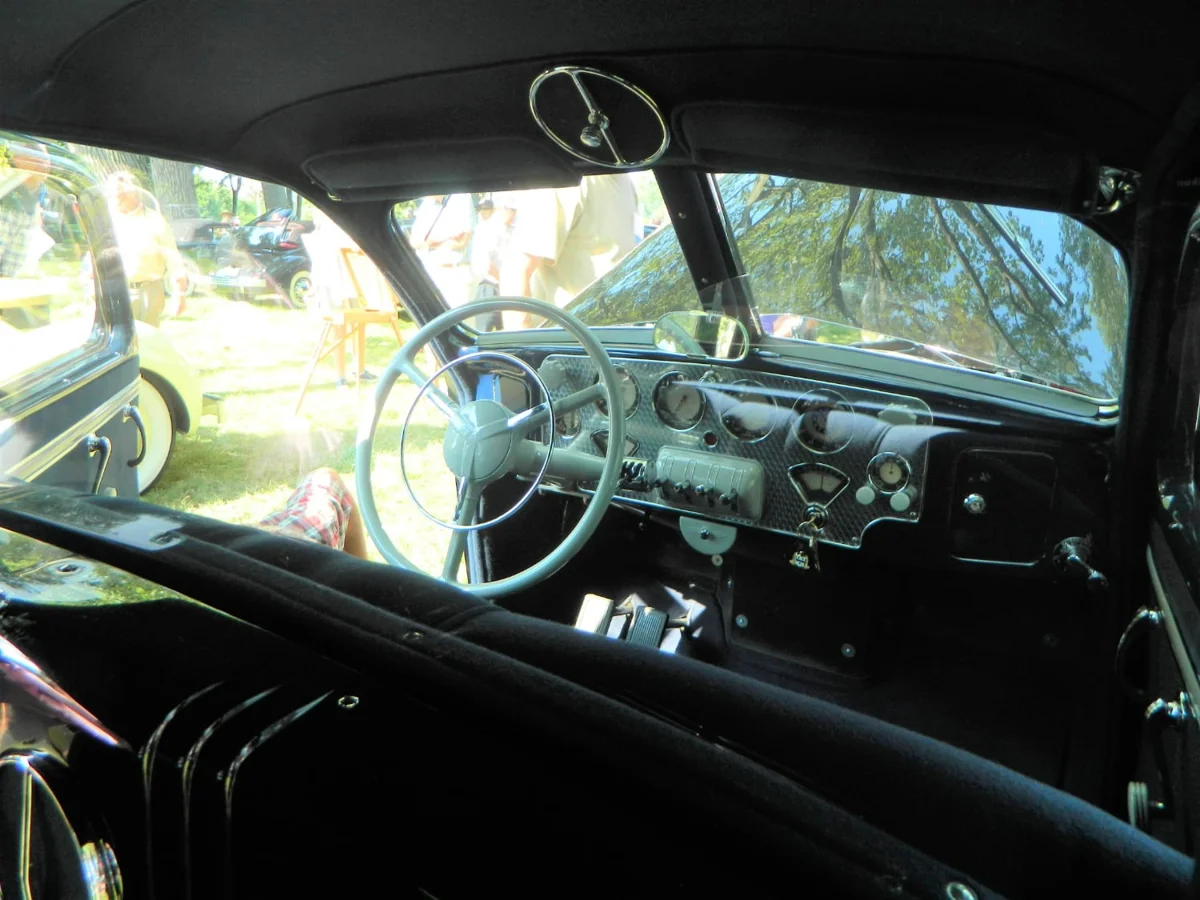
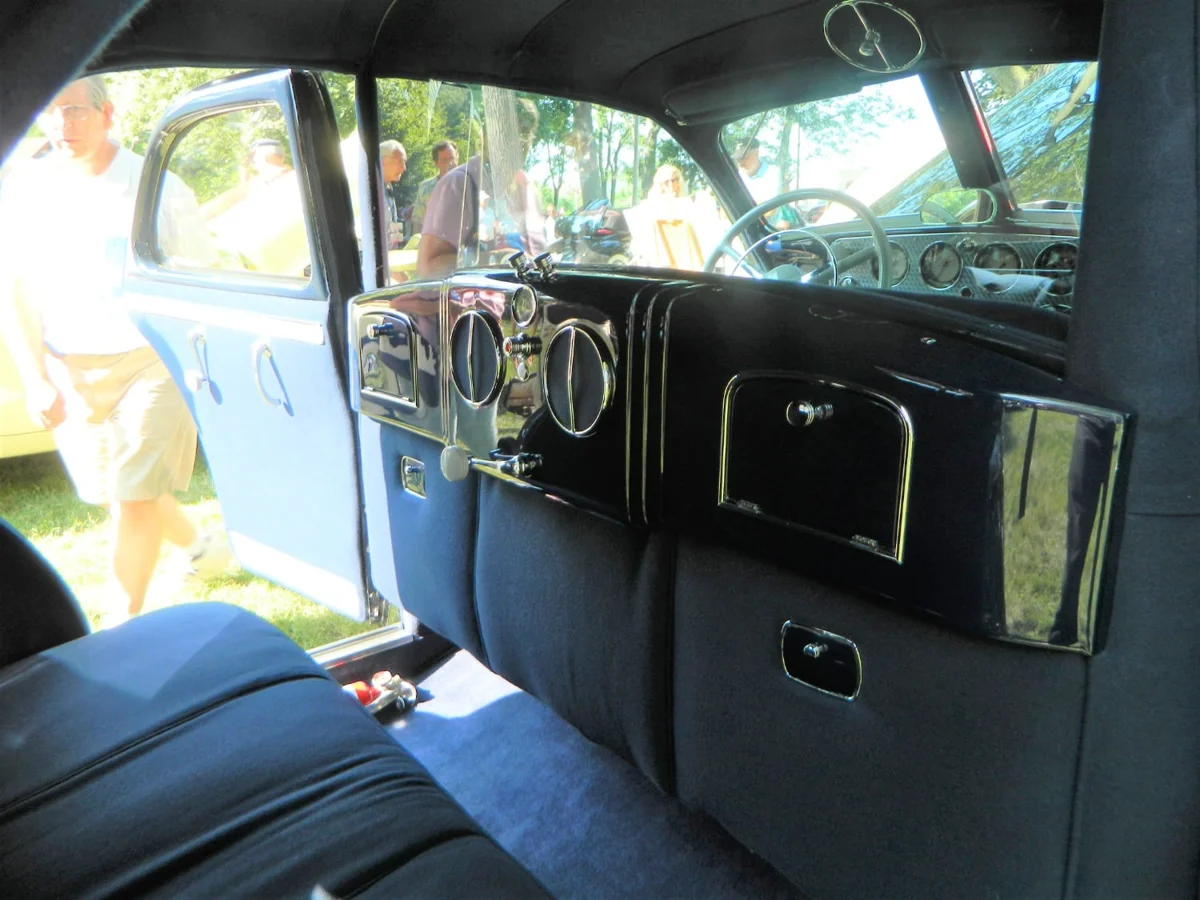
The engine serial number is FB 2346 ans is stamped on the block and the Berline's id tage.
Serial number 100 398
C 108  119
 
Hope this helps more later.
 
Cheers,
 
John
I don't know when the fuel pump was relocated to the side of the engines. This will probably be found in the Engineering Change Notes.
I had a look at the Long Wheelbase cars listed in The Timeless Classic
Your Serial Number has too many digits. The first is 10006 and the highest is 10280. The other group starts with 310
There is something odd about the Body Number too as they are listed starting with either C 105 or C 103
Maybe somebody made mistakes stamping the ID plate.
According to the Engineering Changes on page 32 it says "Start use of motors with Fuel Pump on right hand side."
2/8/37 # 1794 & # 10076
 
Looks like if you car was manufactured in January 1937 it had the fuel pump on the top of the engine as Jim said.
Okay, I think this is correct and I made a mistake with misplacing a "B" with "8".
Numbers:
FB 2346
C103 119
10039B
Hope this helps.
To join in the conversation, you must be a club member.
You’re welcome to read and like every post. Members can reply and start topics of their own.