
@Ptoncarguy
Where exactly is the crack?
Some incredible repairs can be done these days. The attached pictures show what happened to a Cord engine when it froze as no anti freeze was in the cooling system.
Also if the cylinders have been taken out to the maximum oversize they can be re-sleeved.
Cracks depending upon where they are can also be repaired by drilling and screwing in overlapping plugs ............. not sure what they are called.
Good luck.
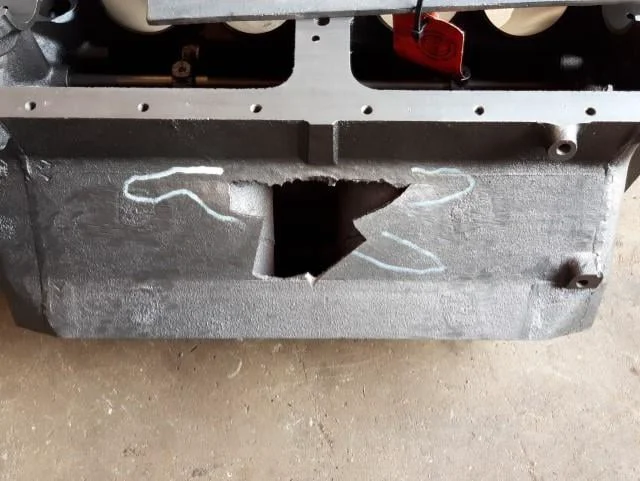
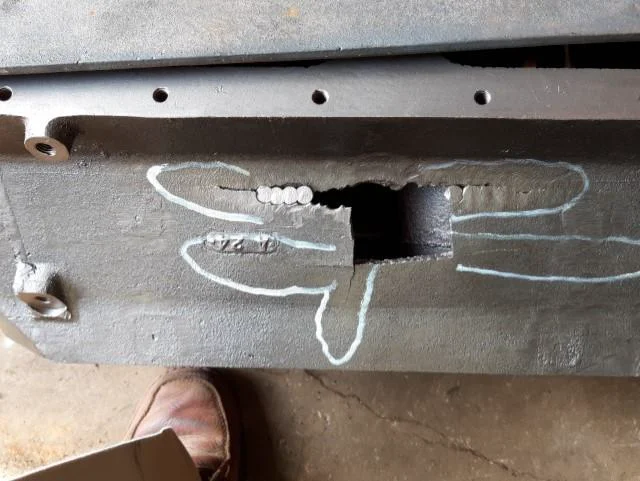
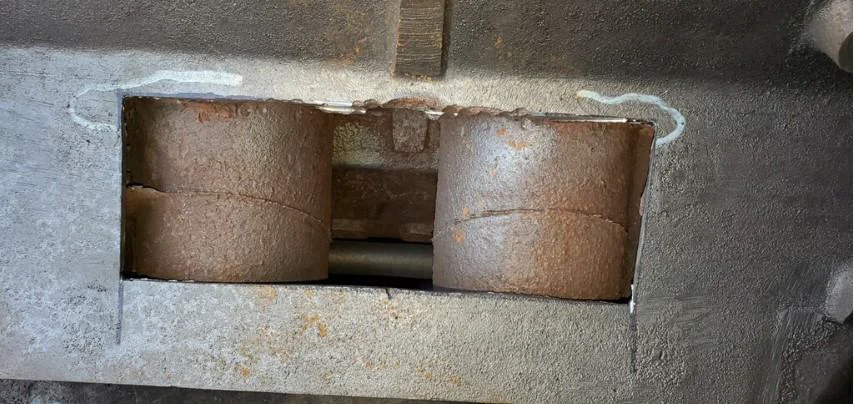
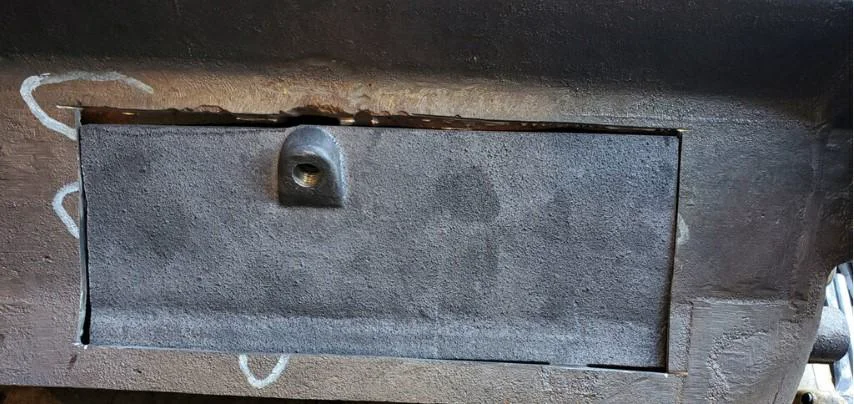
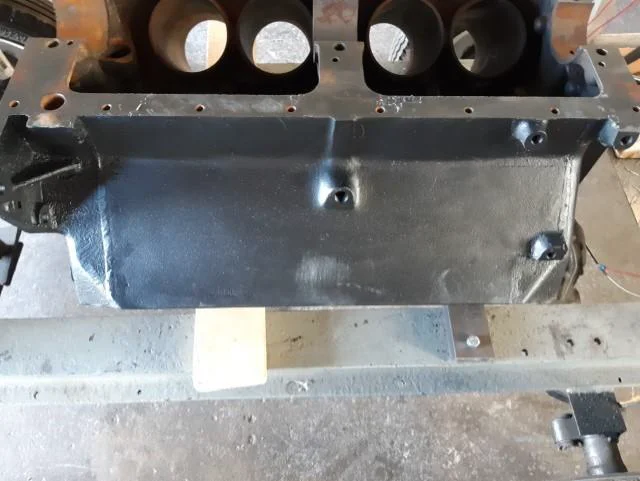
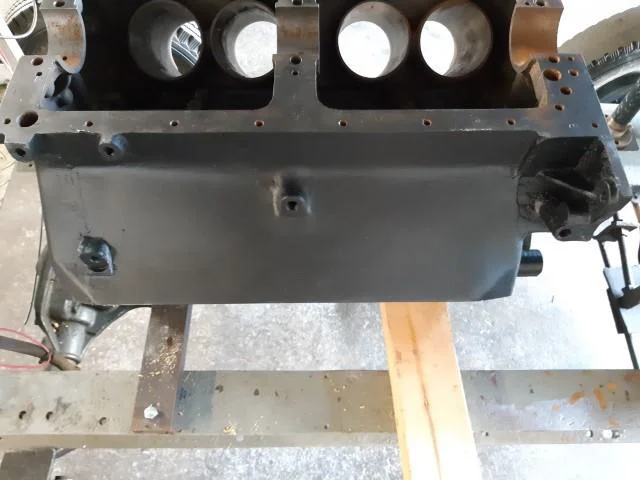
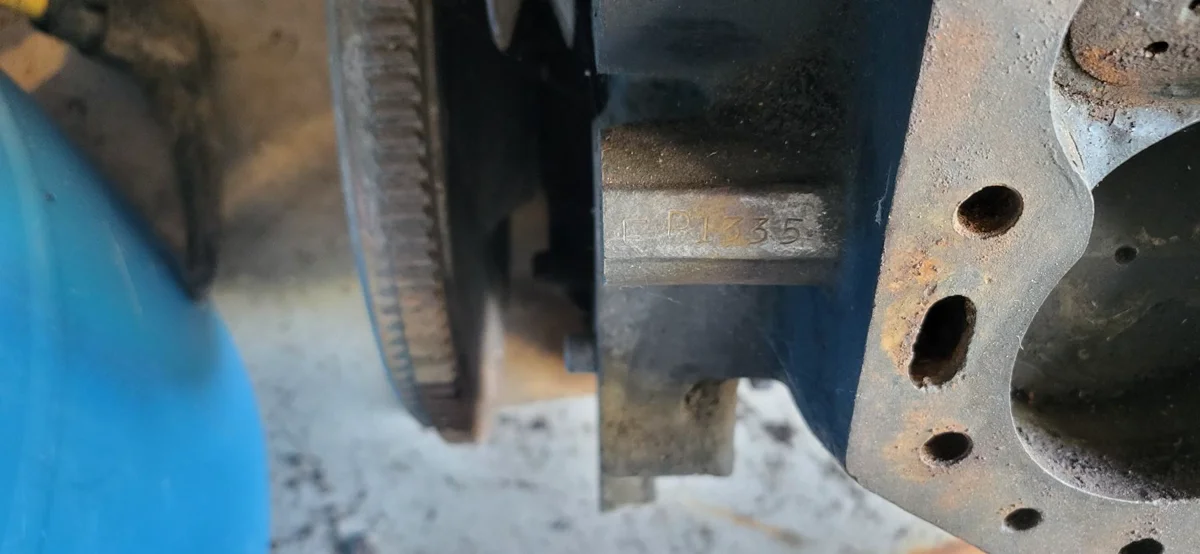
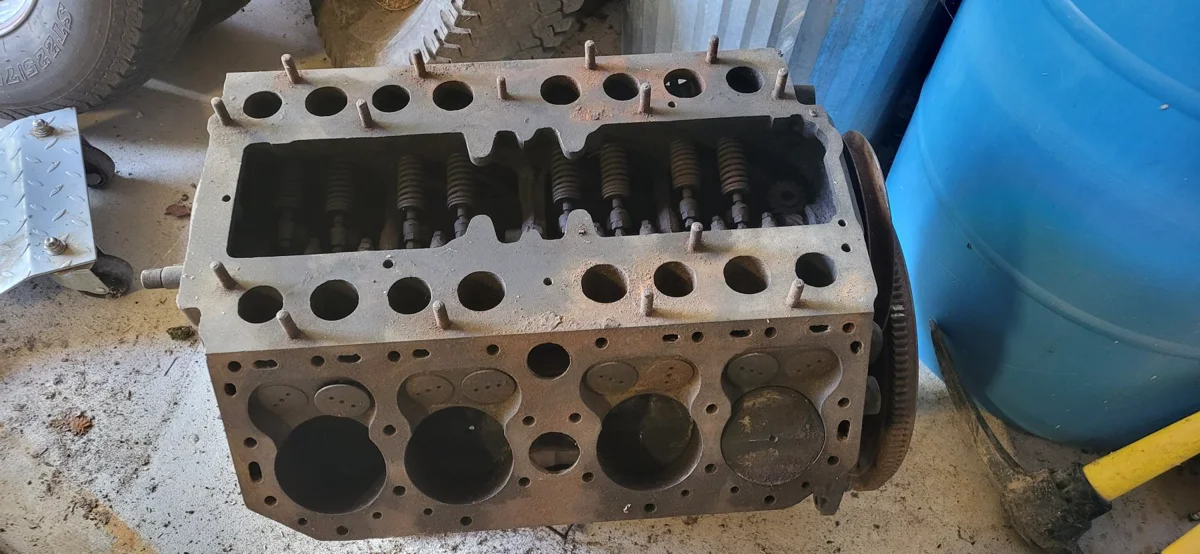
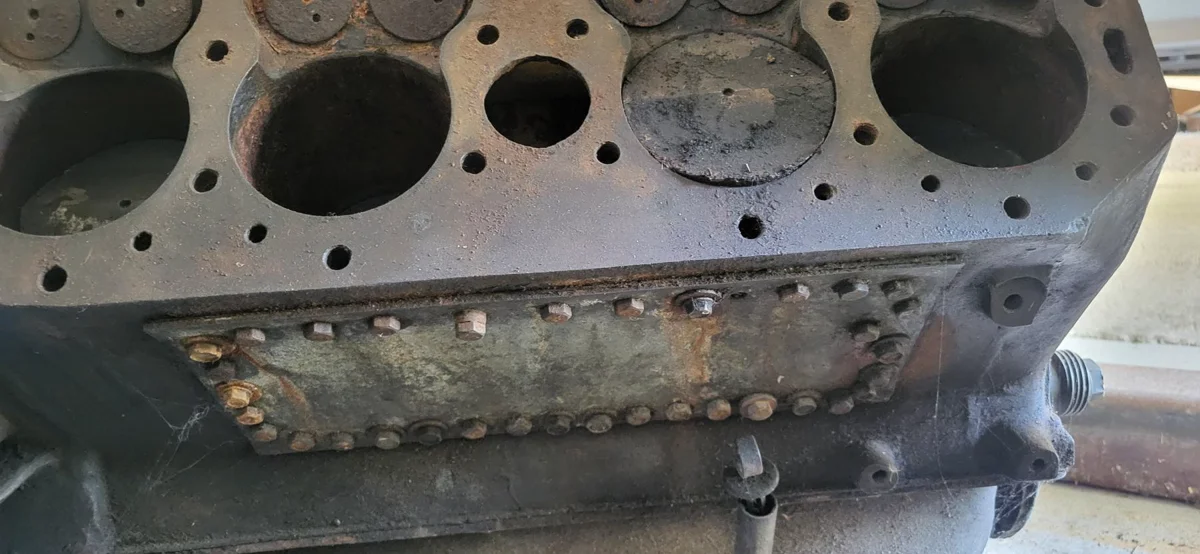
Hi - This block came from a long time Cord owner's stash of spares. As mentioned above, it could be repaired. Engine # FP1335. It had a repair plate on both sides...I had remeoved one to see how bad it was. Let me know if it's what your looking for. thanks - Tony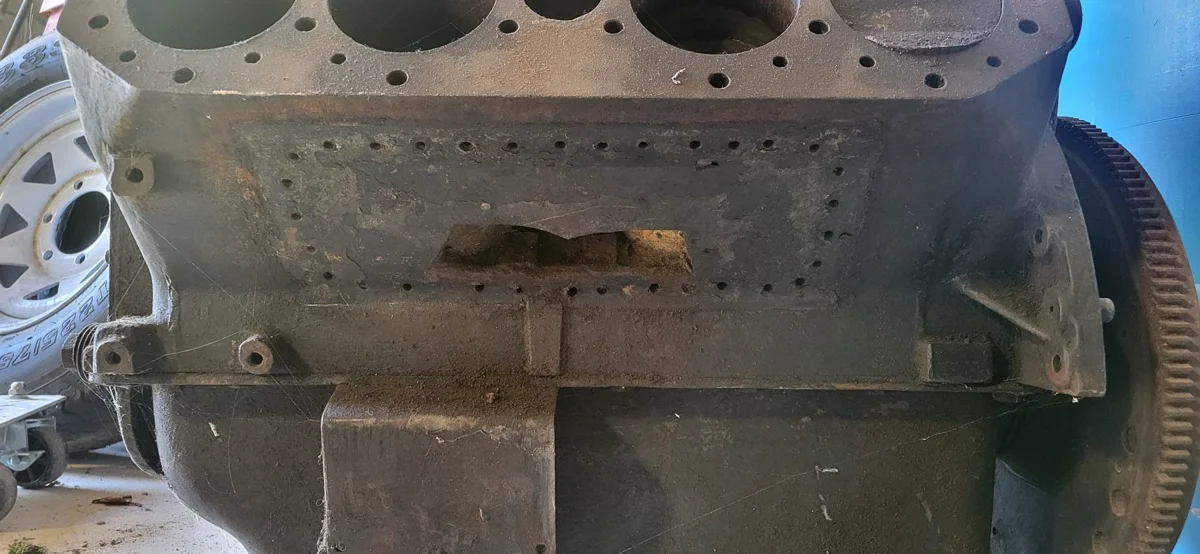
Hi CPGTON,
I have several with minor cracking (no big holes) in the water jacket that could be easily stitched up. Where are you located? I'm in eastern PA.
Jim
I am in New Jersey, Hopewell. See attached Pic of the current block.
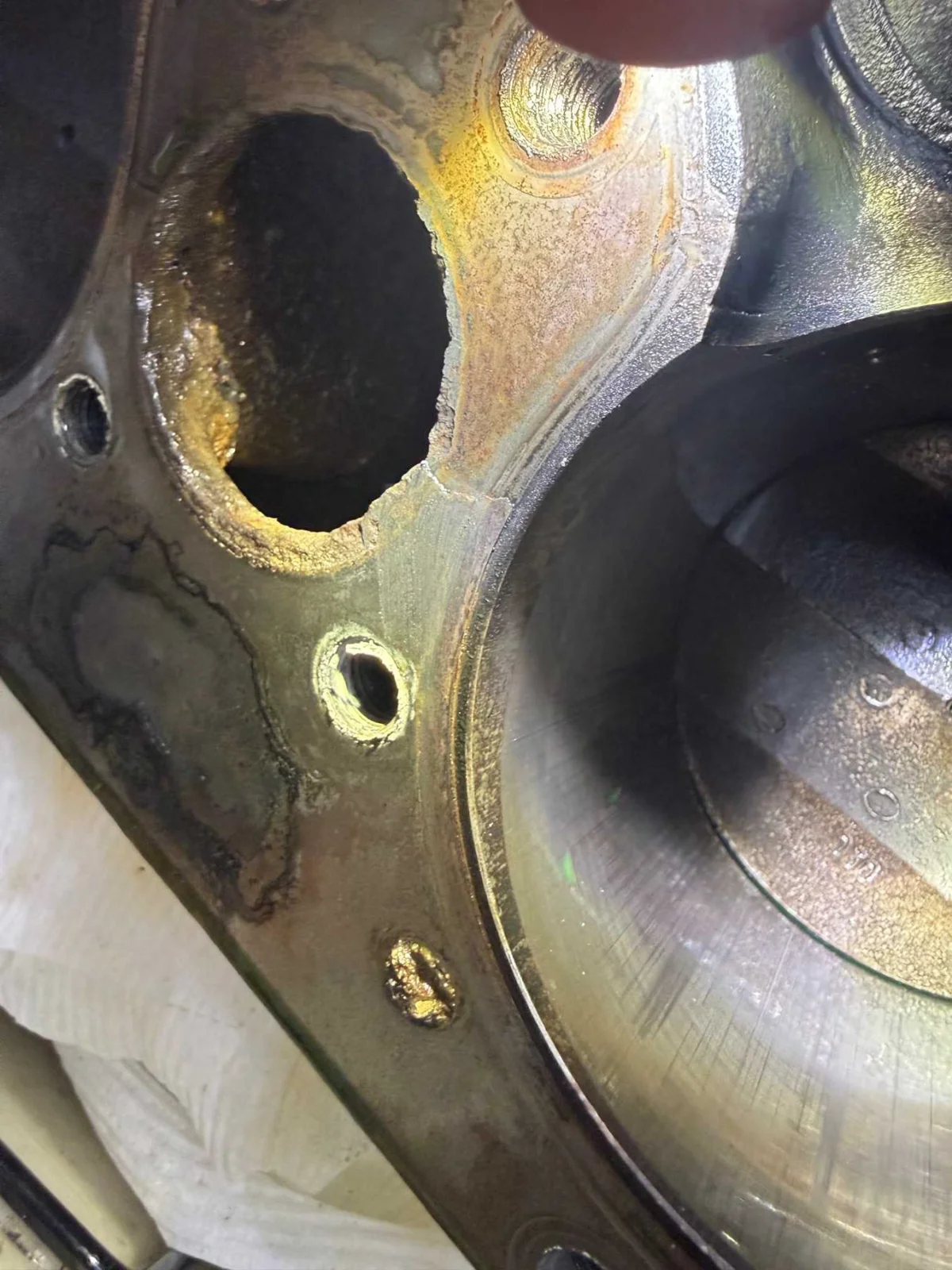
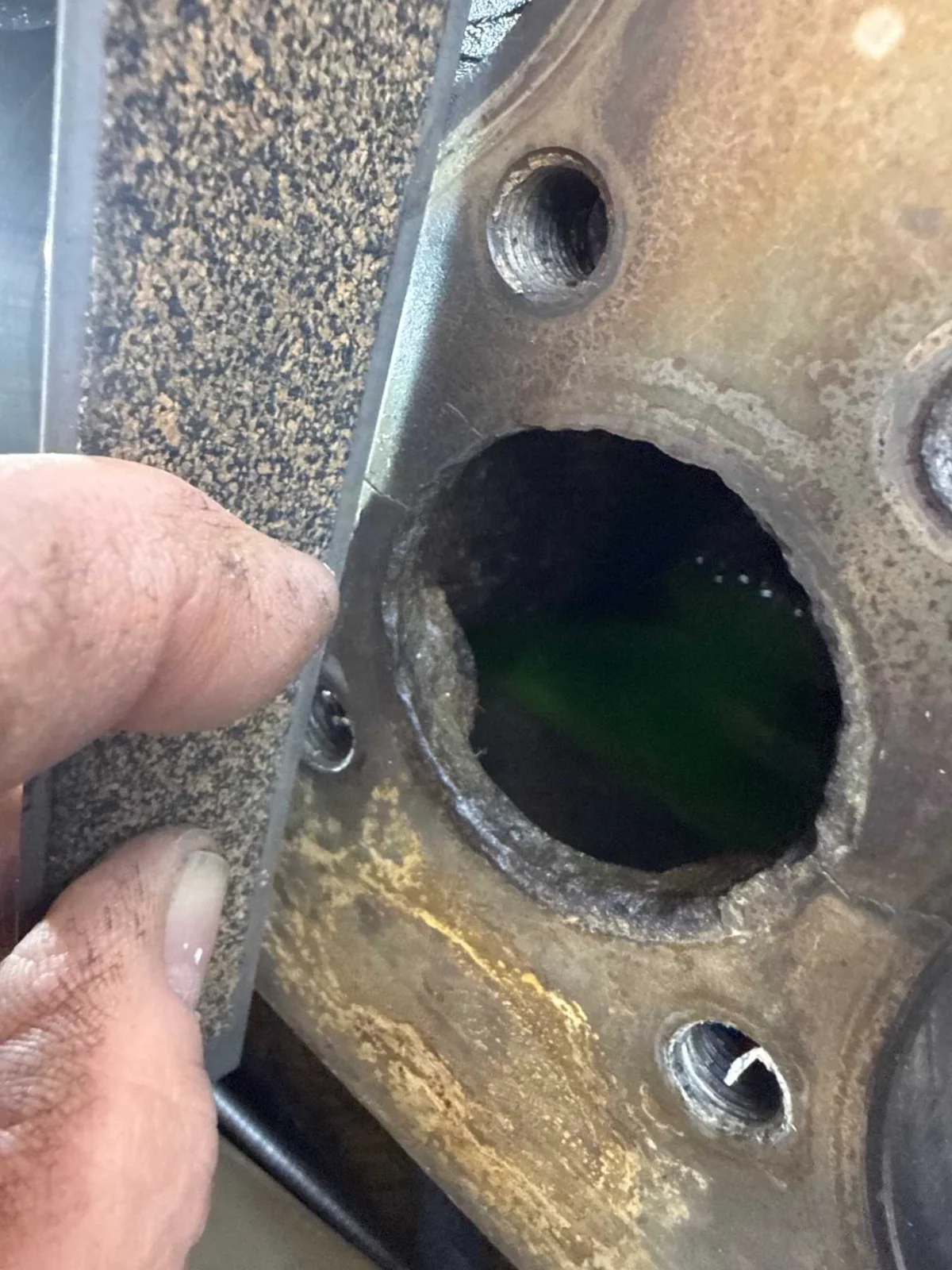
Yes that block is shot! You are about 1.5 hours from me if you want to come over and see what I have.
Jim
Sure. Can you email me some pictures and then I can arrange a visit?
I just sent you a PM.
It looks like that block had been re-sleeved. The resultant interference fit may have caused the cracks.
Terry the block repair you mentioned is called "stitching".... I witnessed this in the huge Edison machine shop I retired from. We used a special contractor for this. The actual tool used was fascinating to watch. A bracket with holes drilled in it was placed over the crack. Then a hole was drilled. Then a plug was threaded in. To make the correct over lapping fit the bracket was moved and that movement allowed the next row of plug holes to be drilled between and into the recently installed plug. No welding and no patching. Just metal drilled in metal with an overlap.
The original posters block does appear to have been sleeved and I bet the press fit was too much for the Cord block. What a shame too.
Gary Parsons
cgpton, are you still looking for an engine block? What is the difference between the 36 and 37?
Old buicks 2Jun 12, 2026 cgpton, are you still looking for an engine block? What is the difference between the 36 and 37?
The 36 blocks were not supercharged ever. The 37 blocks "could" come as supercharged or not. It was the buyers choice when ordering a Cord. With some specialized machining the 36 block could be made a supercharged block too. But the block serial number was the determining designation as to what the engine was. Block numbers are nearly impossible to change.
Gary Parsons
Later production engines had the fuel pump mounted down low at the RHS of the block. Earlier engines had the fuel pump mounted on the inlet manifold.
Terry CockerellJun 12, 2026 Later production engines had the fuel pump mounted down low at the RHS of the block. Earlier engines had the fuel pump mounted on the inlet manifold.
Thanks Terry. I should have mentioned this too. All 36 engine blocks had the fuel pump located on the intake manifold as the early 37 blocks. Later in the 37 year the fuel pumps were mounted on the lower passenger side and the firewall had to be "massaged" with a hammer for proper clearance. This hammered firewall is another way to determine the year of a body that has been stripped of the parts like the stub frame and the serial number tags. In 1937 engines came in several different ways. The early engines had the fuel pump up top. I don't believe any of these early style engines were supercharged but lets hear from the experts on that. Then later on the fuel pump was moved to the lower passenger side and some of those blocks came as supercharged. I sometimes giggle when an expert tells someone all Cords are the same but all Cords are different... It just depended on what parts were available on the line when cars were assembled...
Gary Parsons
Gary the story of what blocks were available is more complicated. Many years ago Stan Gilliland told me the weather during 1936 was extreme. It was very cold to begin with and a lot of snow had fallen across the country. This caused a lot of flooding when the snow melted. The foundary at the Lycoming Engine Plant was destroyed when the nearby river rose 46 feet. EL Cord was aware of the situation and due to the downwards turn in sales since 1931 which was the year of peak production the decision was made not to rebuild the foundary. A finite number of blocks had been cast for the new Cord V8 so the writing was on the wall.
All of the above seemed logical until you realise that towards the end of production the fuel pump was relocated to the lower RHS of the block. These blocks are different from those used in the 810 and early 812 Cords.
So I am now wondering where where these new blocks cast?
Incidentally my early production 810 with Serial Number 1586 A acquired some where along the line an 812 block with the fuel pump low down on the RHS. The Engine Number is FB 3213 and it appears to have come out of a very late production Custom Beverly that had Serial No 812 10264 S
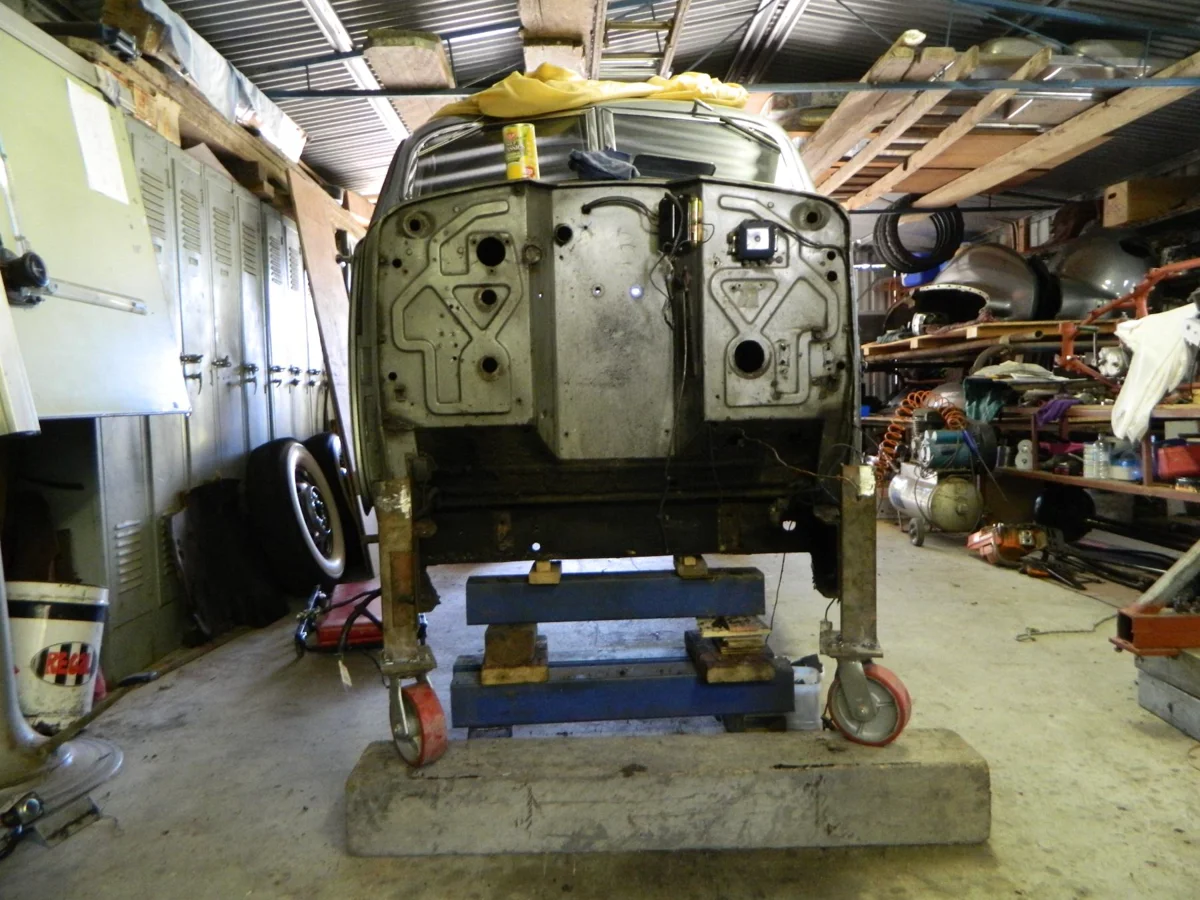
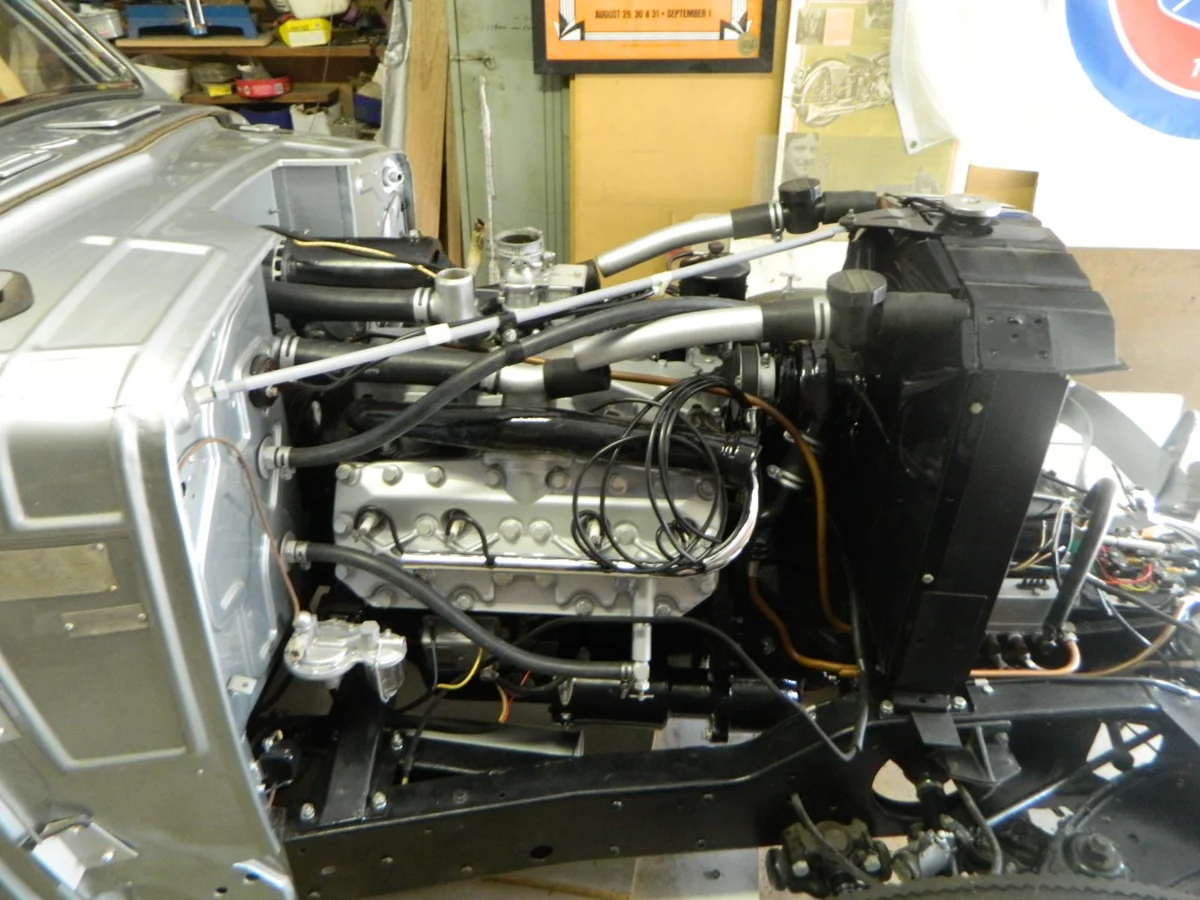
There is NO recess hammered into the firewall of my Cord. I guess the Factory wanted to make sure it would fit on the production line so that accounts for some bashing seen in various cars.
The first picture shows the stripped body prior to restoration.
The second picture shows the fuel pump with a reasonable amount of clearance from the firewall.
I enjoy learing about these magical cars and the people involved.
Terry originally your Cord had a top mounted fuel pump on the engine. So no hammer massaging was necessary on the firewall.
Gary Parsons
Gary ParsonsJun 14, 2026 Terry originally your Cord had a top mounted fuel pump on the engine. So no hammer massaging was necessary on the firewall.
Gary Parsons
Gary you are confusing me. According to the story the Factory made the dent to give clearance for the side mounted fuel pump.
My Cord was subsequently fitted with an engine having the side mounted fuel pump but nobody bothered to hammer the firewall. It fitted ok.
So the question is why did the Factory bother to beat the firewall. It really was not necessary ........................... mine is the proof.
Gary ParsonsJun 12, 2026 Thanks Terry. I should have mentioned this too. All 36 engine blocks had the fuel pump located on the intake manifold as the early 37 blocks. Later in the 37 year the fuel pumps were mounted on the lower passenger side and the firewall had to be "massaged" with a hammer for proper clearance. This hammered firewall is another way to determine the year of a body that has been stripped of the parts like the stub frame and the serial number tags. In 1937 engines came in several different ways. The early engines had the fuel pump up top. I don't believe any of these early style engines were supercharged but lets hear from the experts on that. Then later on the fuel pump was moved to the lower passenger side and some of those blocks came as supercharged. I sometimes giggle when an expert tells someone all Cords are the same but all Cords are different... It just depended on what parts were available on the line when cars were assembled...
Gary Parsons
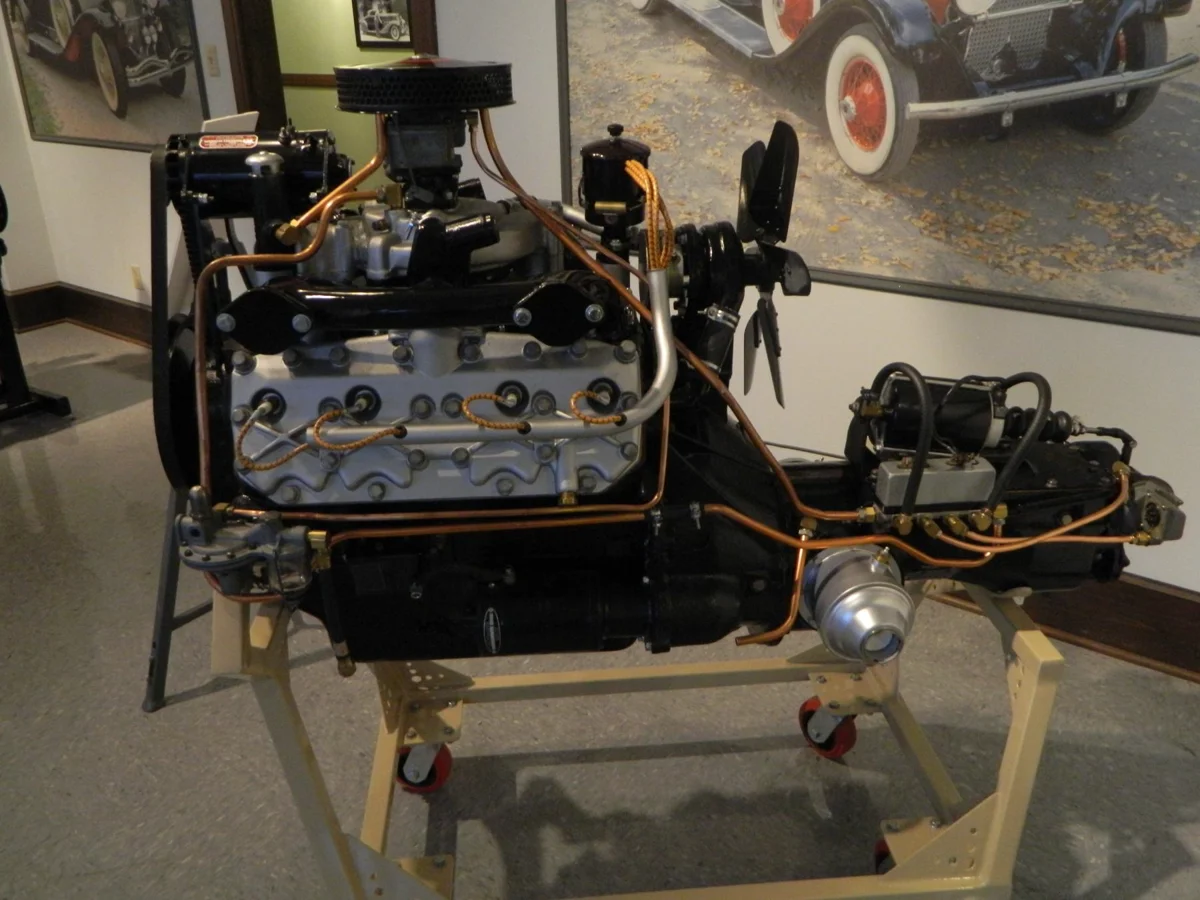
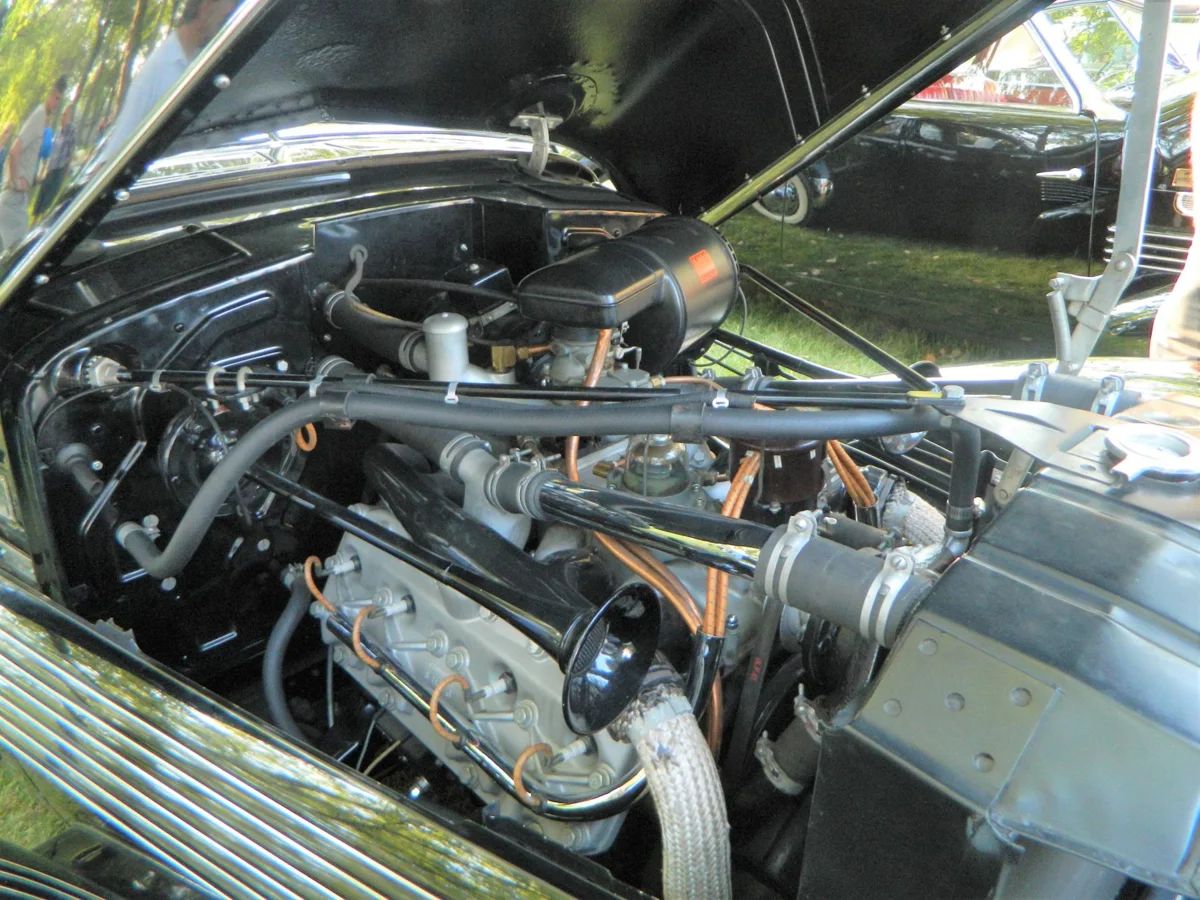
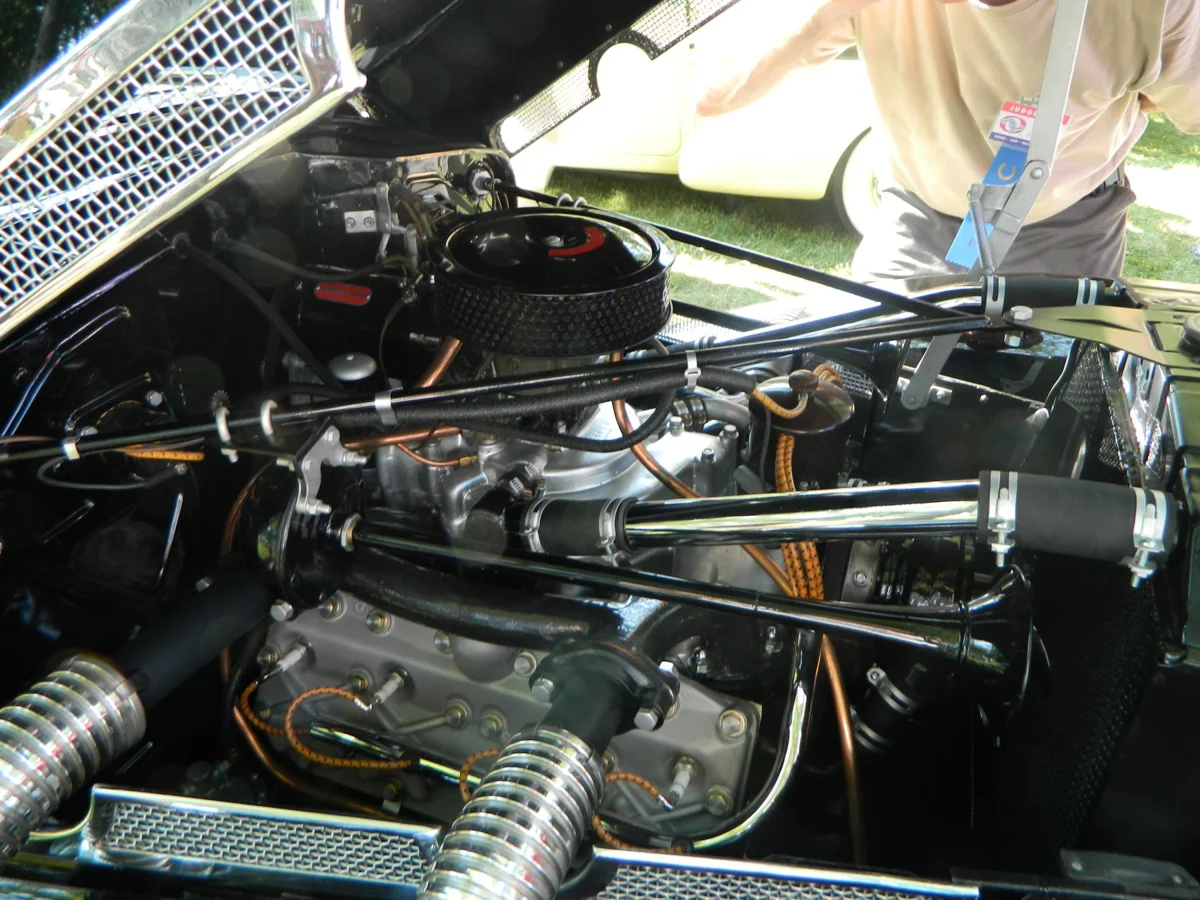
Gary I have been thinking about the super charged engines today and if it was possible for them to have the top mounted fuel pump ............................. and the answer is NO. There is no room to fit one between the supercharger manifold and the distributor. So all supercharged engines from the Factory must have been fitted to blocks with the side mounted fuel pump. The first picture shows a S/C engine in the Auburn Museum. The others were taken in Auburn in 2011. And I do not claim to be an expert but I am continually learning about these wondeful cars.
All of the blacks had the lugs cast into them to accesp a super charger. The Factory held off with the super charger until 1937. The question becomes when was the decision made to mount the fuel pump at the side of the engine?
To join in the conversation, you must be a club member.
You’re welcome to read and like every post. Members can reply and start topics of their own.