
@alsancle
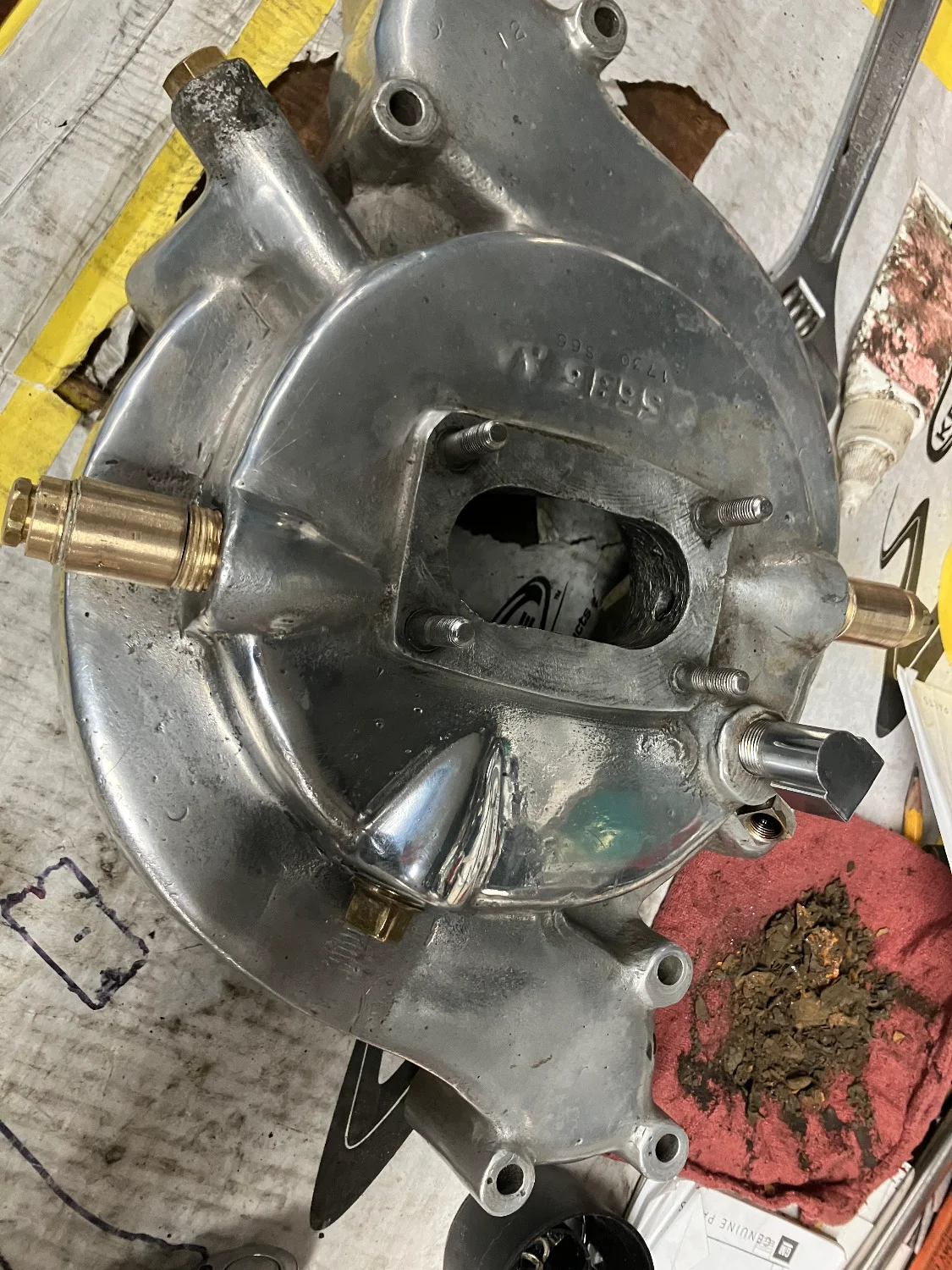
So having given this some more thought, these tubes are the returns. Given that the cooling system is non-pressurized I'm not expecting any pressure on those seals coming up from the block. So closing the in pipes and the outlets should result in a dry blower and eliminate any future corrosion issues from the antifreeze.
 
However, if I'm talking out of my fanny somebody please speak up!
By NOT plugging those coolant ports in the block your taking a chance. these can be easily filled with RTV and in the future it can be removed if you needed to. Just drain down the coolant. Clean the openings with brakeclean. Then wipe clean with alcohol and then plug with a quality RTV like Permatex Copper Plus. Its held in every engine I have built from the mid 1994 time line till present.  Being a zero pressure cooling system you wont be pushing the plugs thru the system. My FB engine will not have any coolant running thru the intake manifold because who knows how close to rotting thru the cooling passages are on these 80 plus year old parts. I learned from Randy Ema that they DO NOT allow coolant run thru the Duesenberg intake manifolds . So if its good for them.. Its good for me...
 
 
Gary Parsons
If the water is eating the aluminum try using true distilled water. It is free of the bad chemicals that attack soft metals and plug up radiators My 89 Ford diesel radiator plugged up twice from the tap water we have in my town. I run distilled water commonly available is most grocery stores. DO NOT use the reverse osmosis water. You want the heated up to steam and then condensed back to clean water.
 
 
Gary Parsons
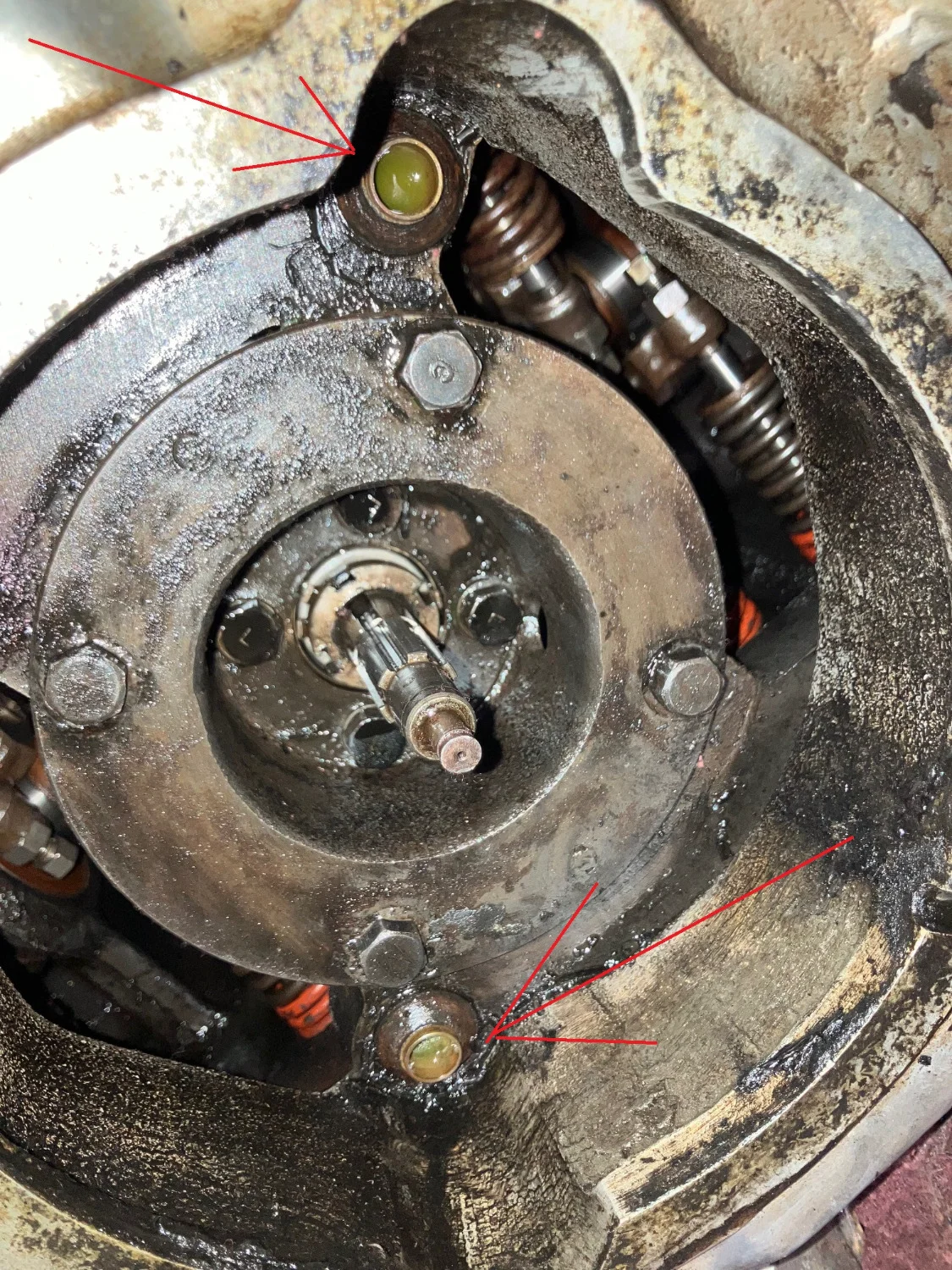
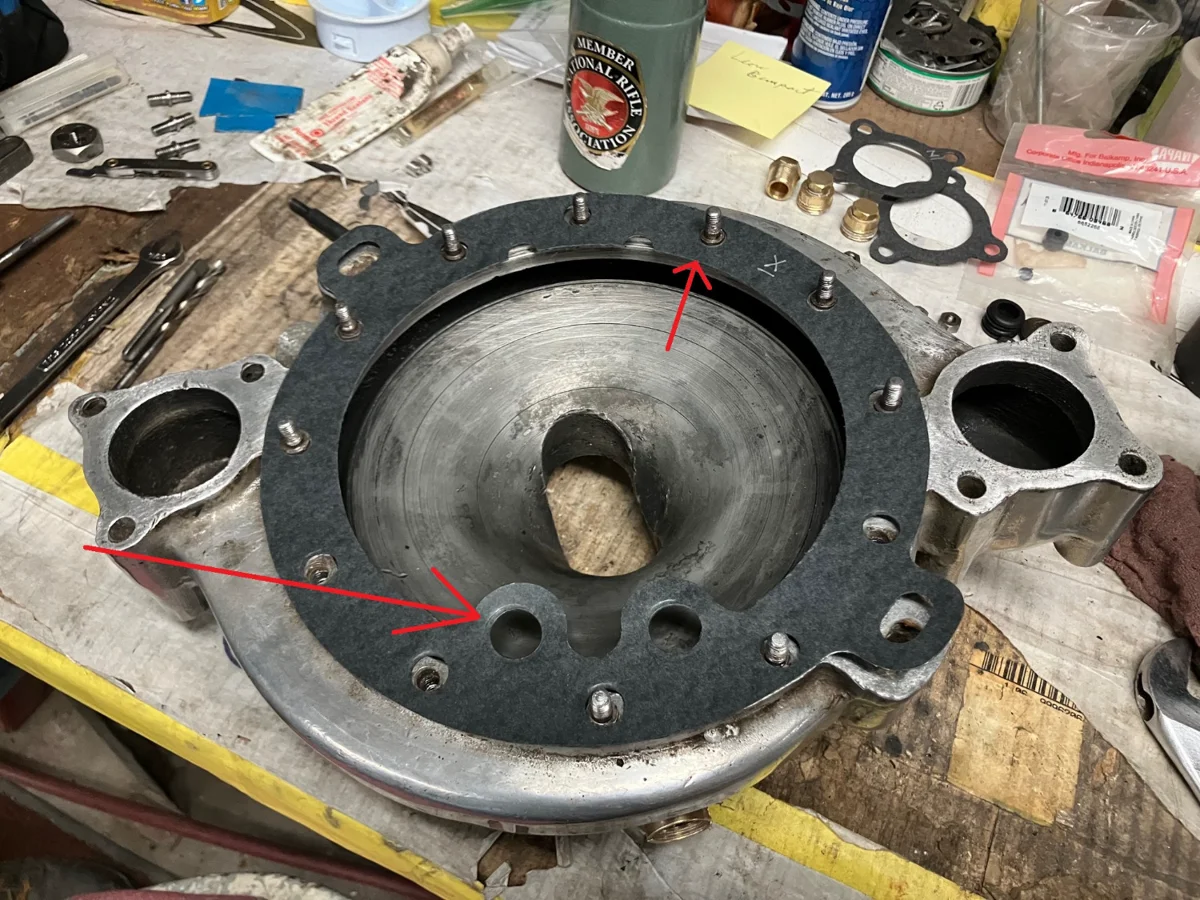
So we are getting ready to reassemble. Looking at the new gasket, it seems like the fan assembly has to come apart and the gasket goes in between where the arrow is in the picture? Is that true? You can see the extra holes and overhang on the gasket. Unless I have the wrong one?
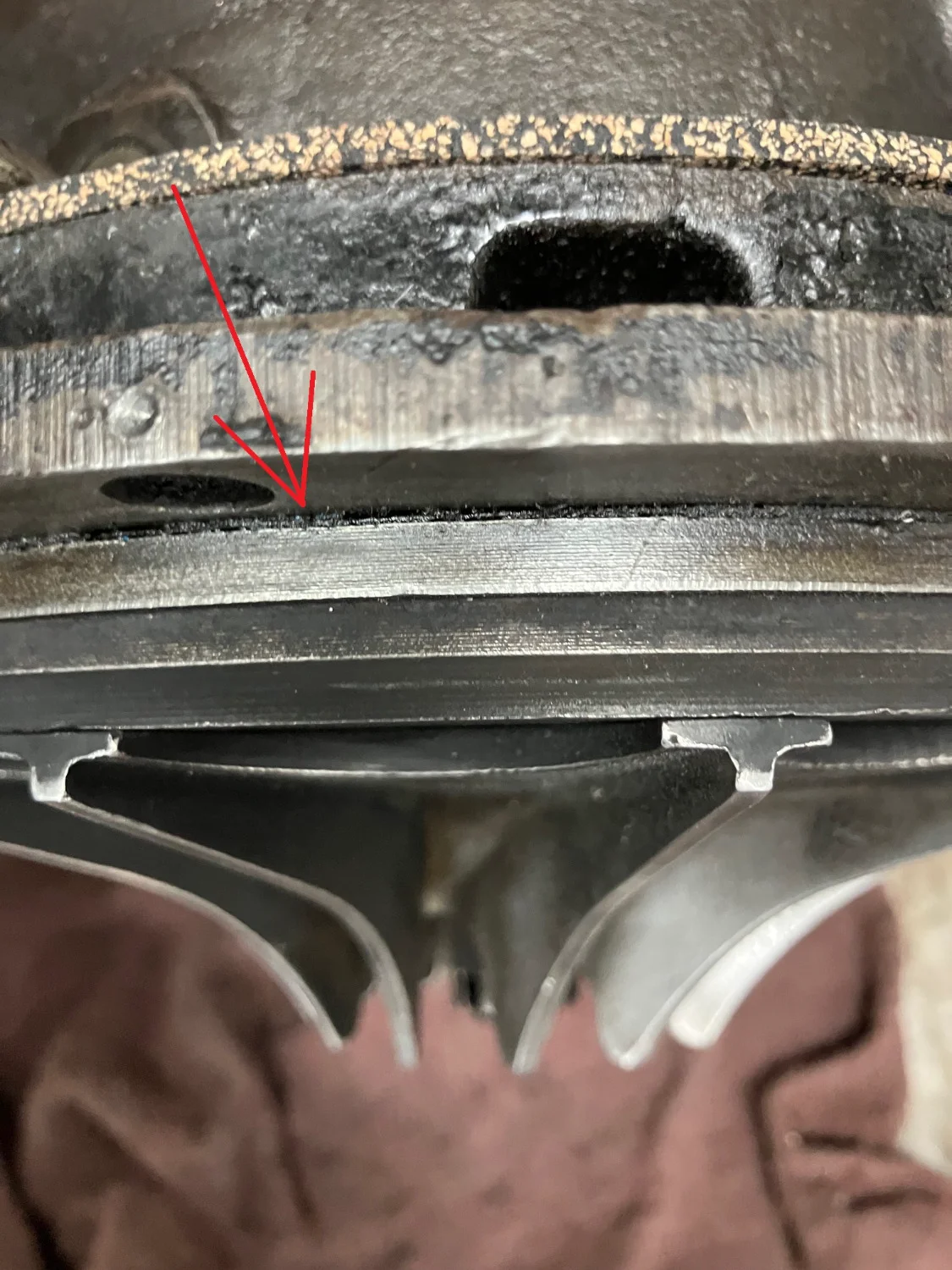
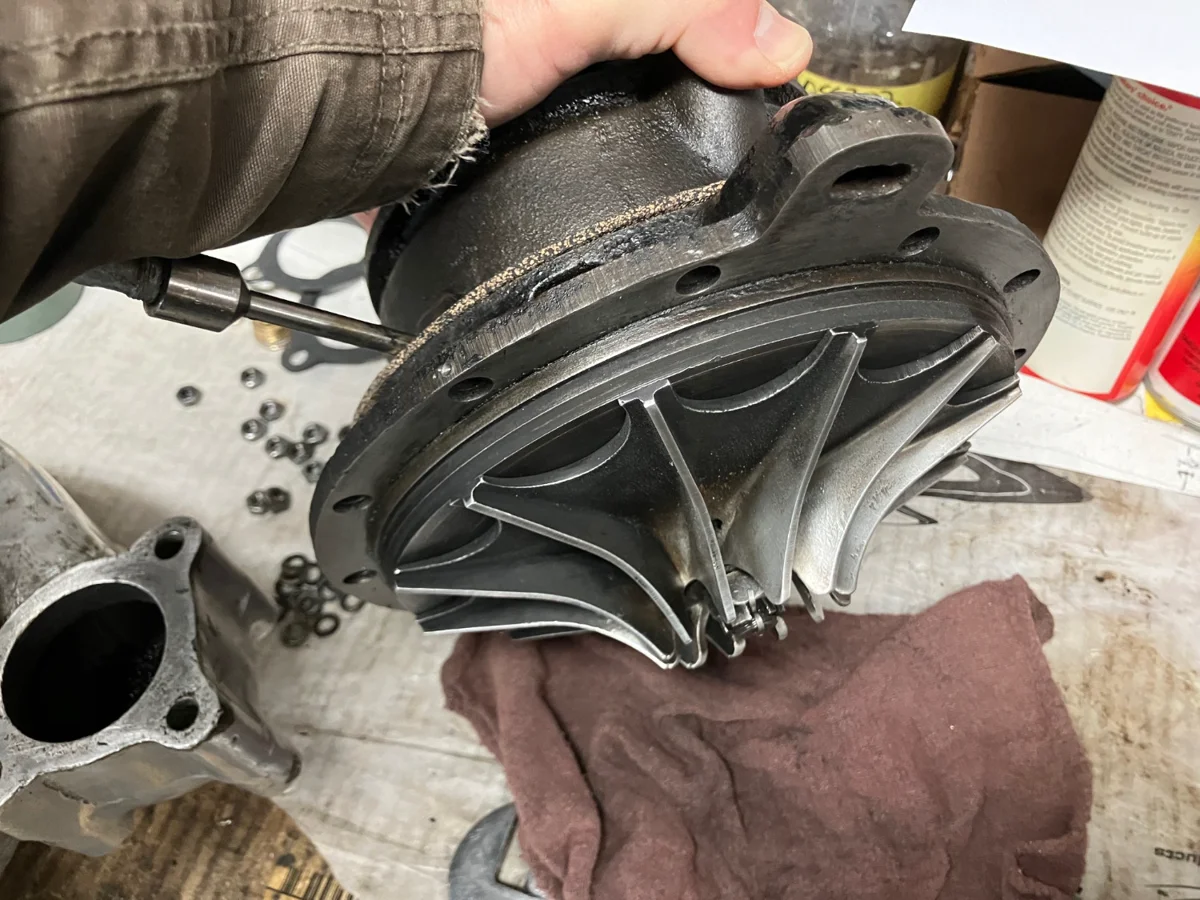
Yes, it looks like you do not have the correct gasket. ┬áAttached is a picture of the gasket that I purchased from OlsonÔÇÖs gaskets during my rebuild. ┬áAlso, there is a felt washer that prevents oil migration from the planetary drive into the impeller area (see the SC unit exploded drawing attached). ┬áIf you remove the impeller you can replace the felt washer before you reassemble the unit.
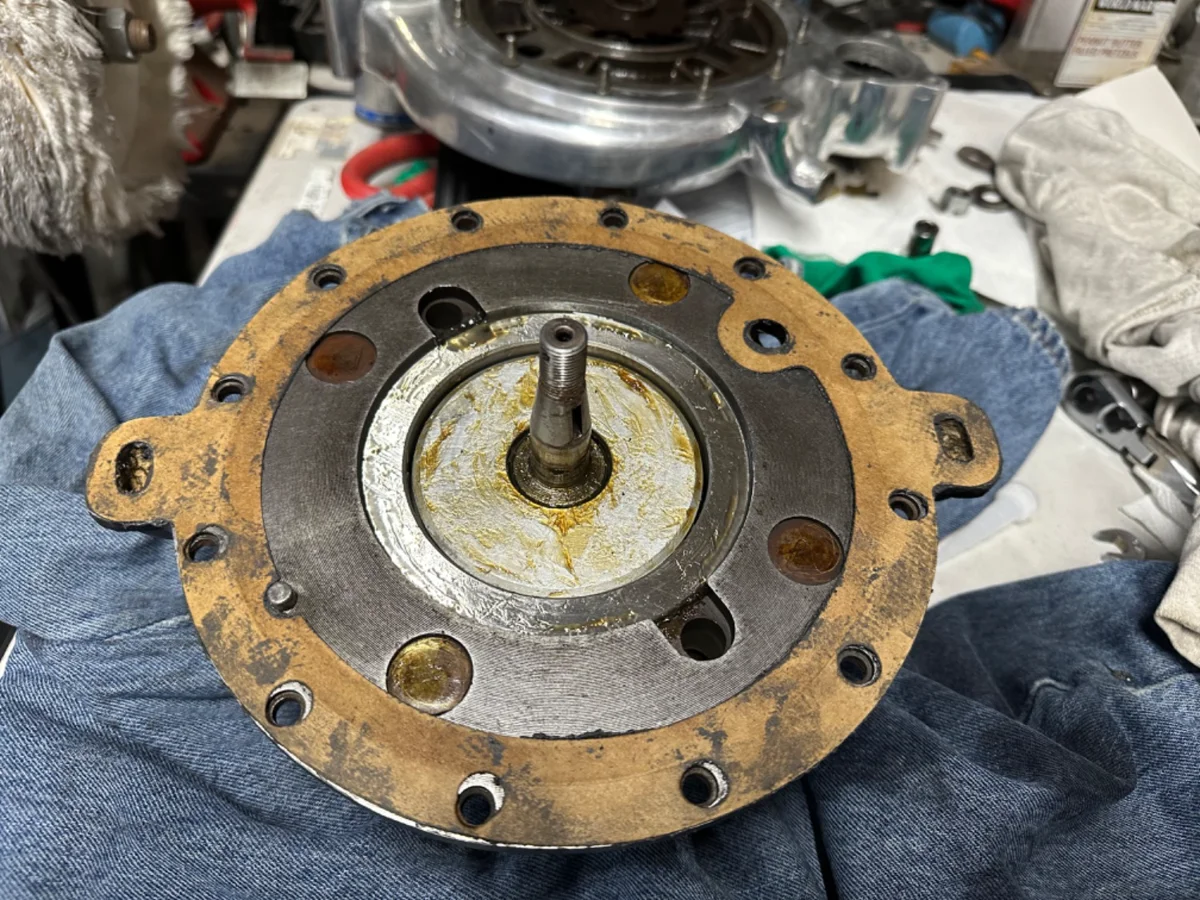
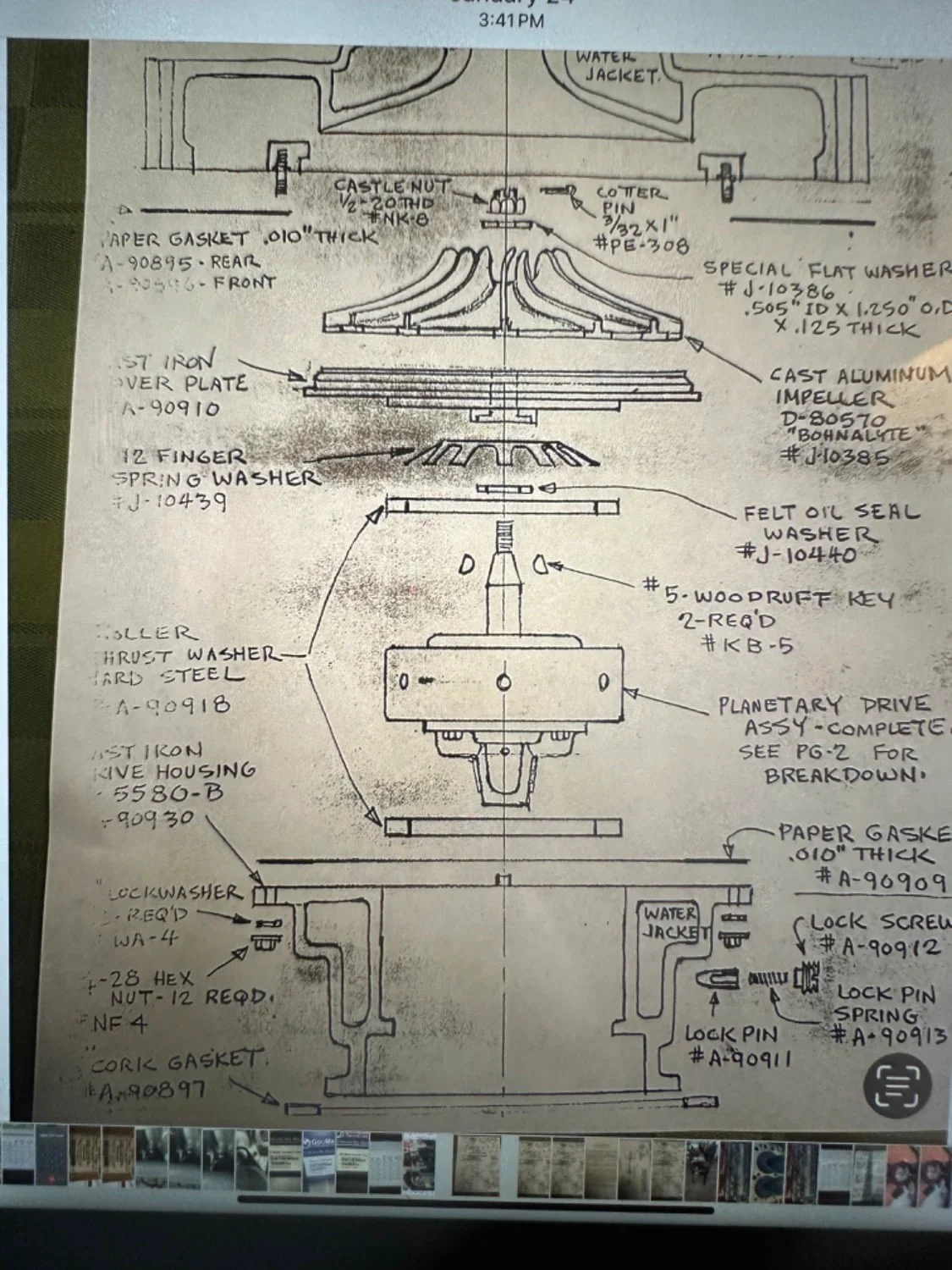
Well, it seems that the answer to your question is ÔÇ£it dependsÔÇØ. ┬áTo put together the unit correctly you will need to remove the impeller so that you can install the gasket under the cast iron cover plate and make the seal for the water connection between the cast iron lower housing and the cast iron cover plate. ┬áAlso, it may be that your gasket will work although I donÔÇÖt know why it has two options for the location of the water connection between the two cast iron components.
 
Since it appears that you are going to block off the water flow to the s/c unit the wafer connection between the lower housing and the cover plate does not really matter. ┬áYou may be able to fit the gasket around and under the perimeter of the cast iron cover plate and install the gasket without removing the impeller. ┬áI see a couple of issues with this approach: ┬á1) you will not be sealing the wafer connection between the two cast iron pieces so it is a bit of a ticking time bomb if anyone restores the water flow to the s/c unit and does not know about the sealing issue, and 2) it is very important that the cast iron cover plate sits very flat on the cast iron lower housing, if you canÔÇÖt get the surfaces clean enough you may wind up with some tilt in the cover plate which will effect your clearance to the impeller.
 
Just to close on this the engine is back together and I've put about 60 miles on it. Thanks for all the help!I would post some pictures but it looks like we have some severe file size limits now.A.J.

To join in the conversation, you must be a club member.
You’re welcome to read and like every post. Members can reply and start topics of their own.