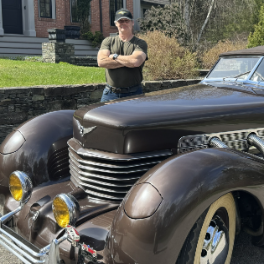
Crazy" wasn’t even the word that popped into my head—it felt more like sheer absurdity. Yet the hype machine clearly worked, because here we are debating it.
Setting the "Musk factor" aside, I've actually appreciate Tesla's cars in the past. Even the Cybertruck—despite its dumpster-chic styling, build quality headaches, reliability gremlins, and cratering resale value—has a weird, utilitarian charm. As for the Roadster? The novelty will evaporate almost immediately. It’s destined to sit in the climate-controlled garages of the ultra-wealthy as glorified, six-figure yard art that rarely touches pavement.
But here’s the real head-scratcher: Tesla is valued at 50 times its legacy competitors while pulling in roughly a third of their revenue, all with a core model lineup that averages nearly a decade old. Musk is looking more and more like a modern-day Preston Tucker—whipping up a media frenzy around the shiny "Car of Tomorrow," but theatrical hype can only outrun fundamentals for so long. Look at BYD: they generate higher gross revenue, deliver roughly three times the volume, and build arguably better, faster-evolving vehicles. Yet BYD's market cap sits around a tenth of Tesla’s valuation.
Full disclosure: I ordered a Slate truck. It’s the complete antithesis of a Tesla Roadster—just a plain-Jane, honest piece of utilitarian transportation. I’ll put more miles on it in a few months than most Roadsters will ever see in a lifetime. Slate carries a private valuation around $1.2B (roughly 1/1,000 of Tesla’s market cap) and projects $2B in revenue by 2027. It’s definitely not a meme-fueled tech darling, and it doesn't have an eccentric billionaire showman—just a grounded product backed by soon-to-be real revenue.
The stock market hype is a hell of a drug, but the math behind Tesla's valuation still makes zero sense.