BA
@Barry Wolk
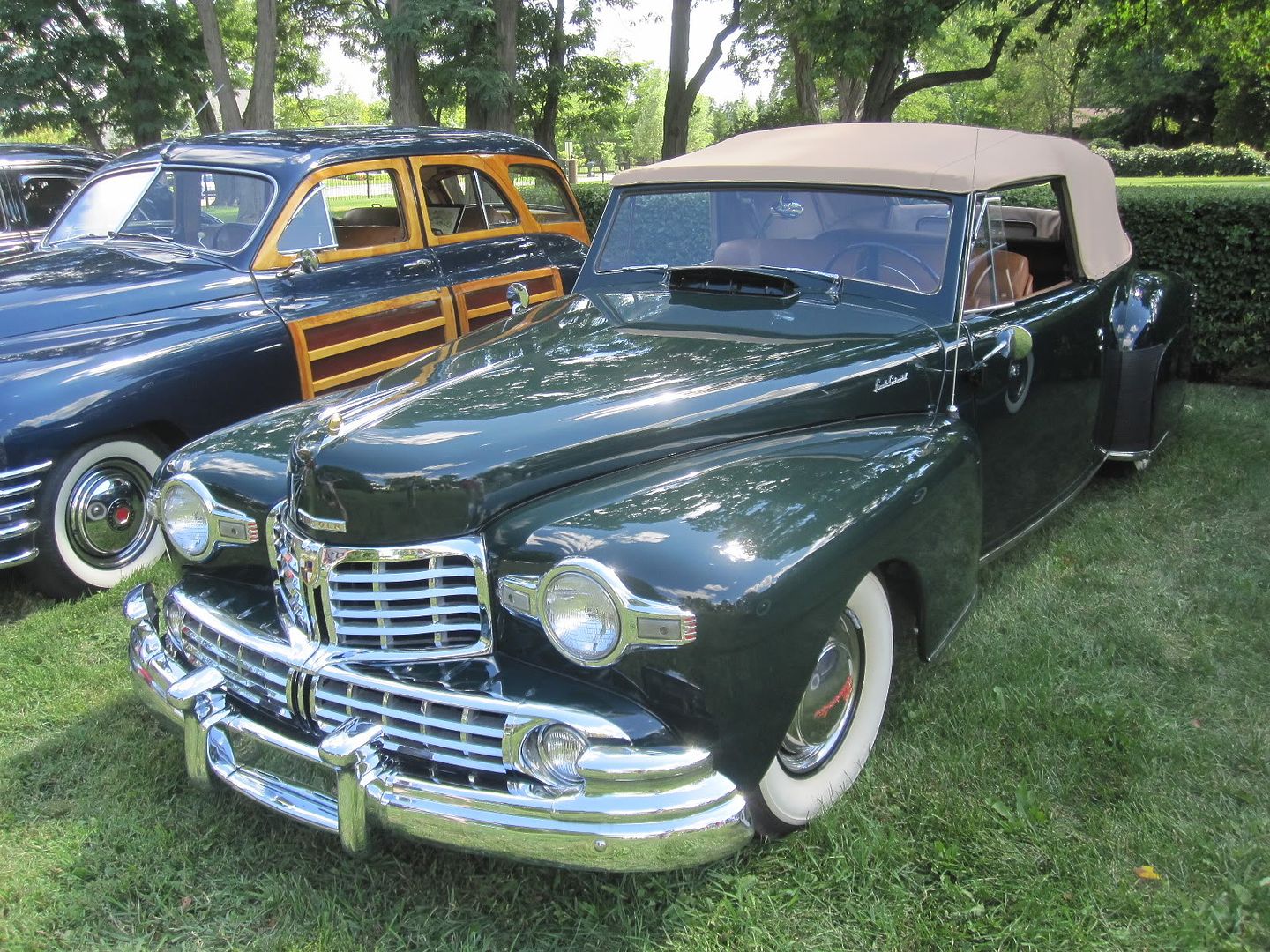
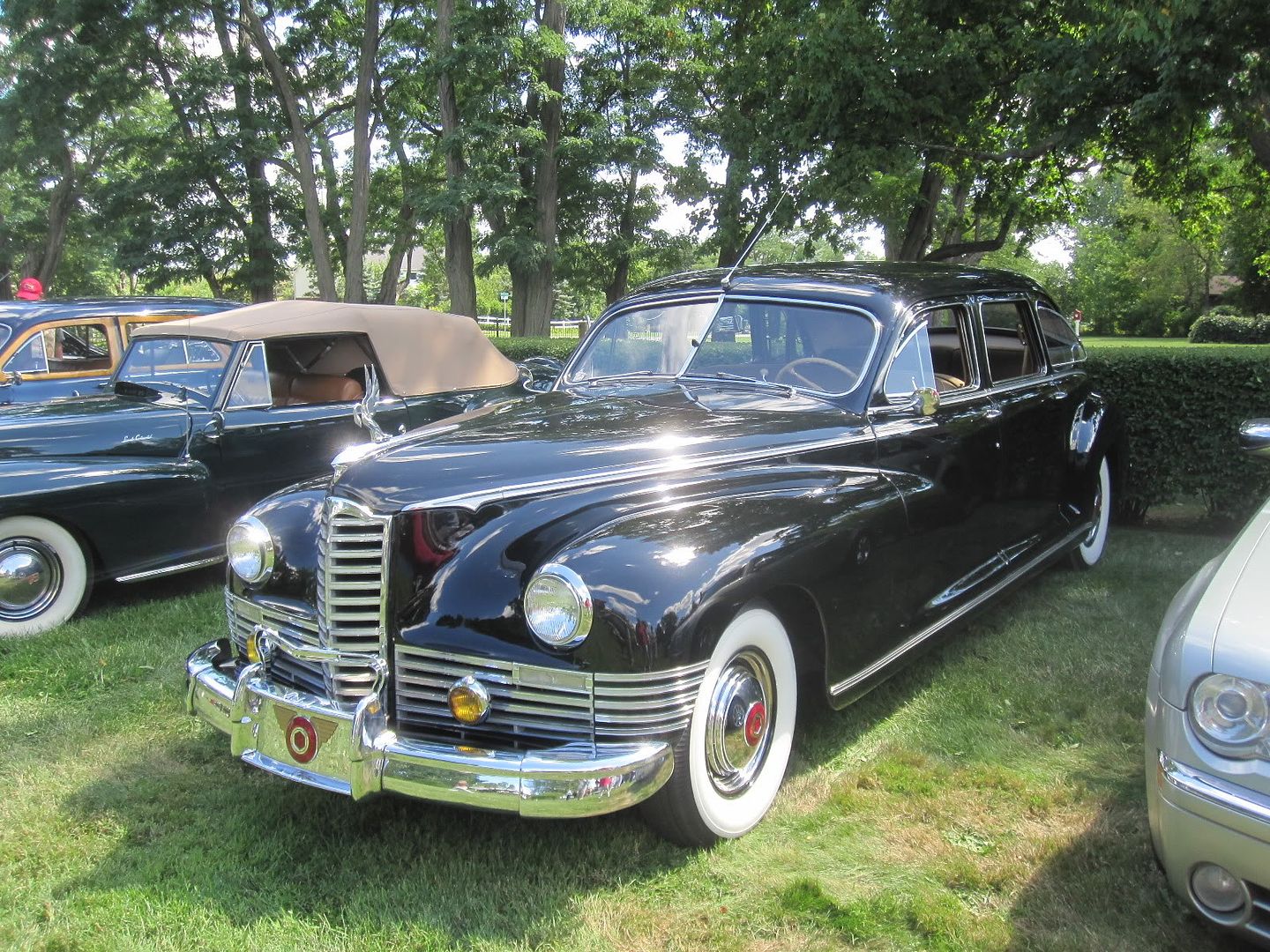
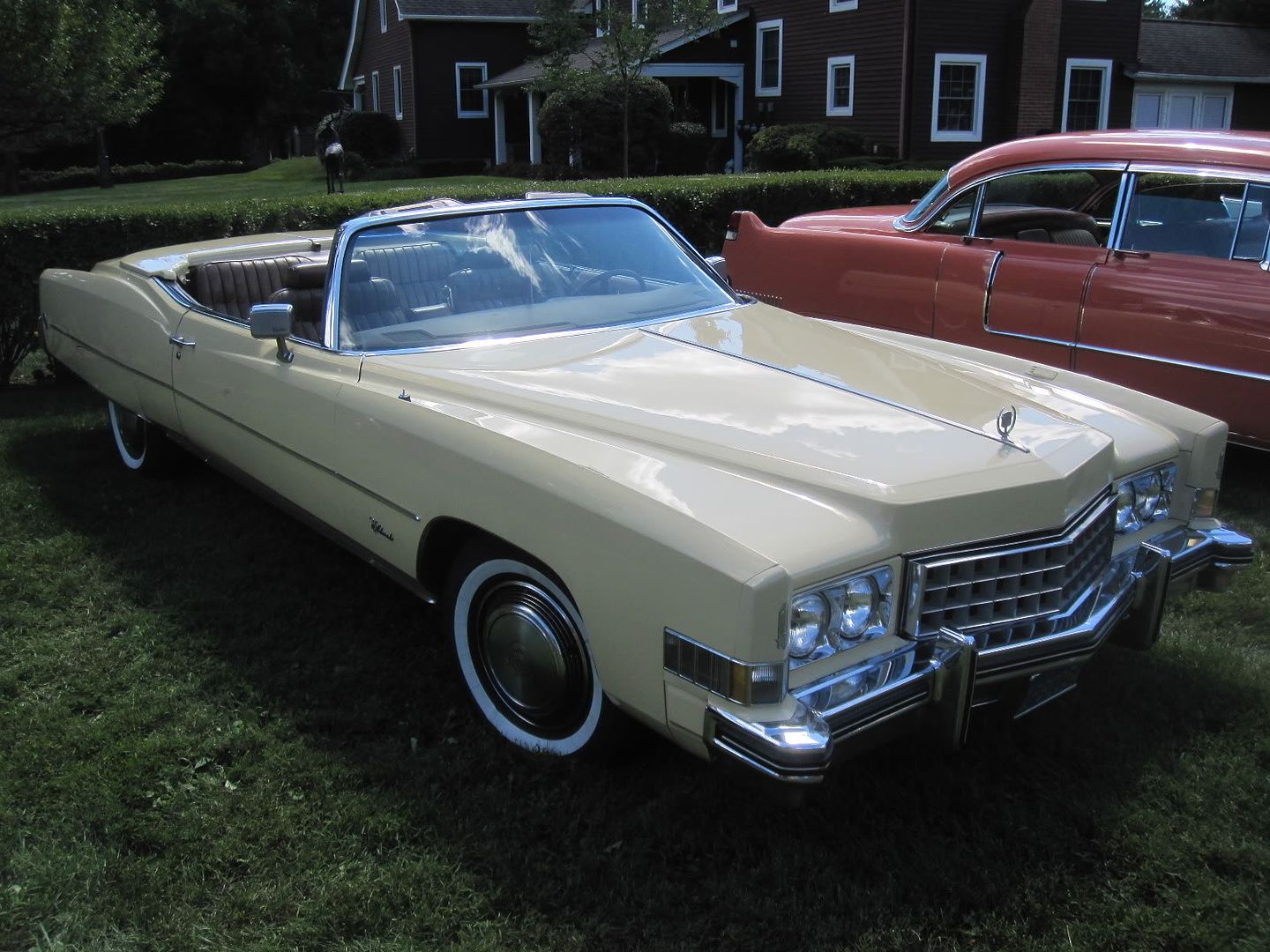
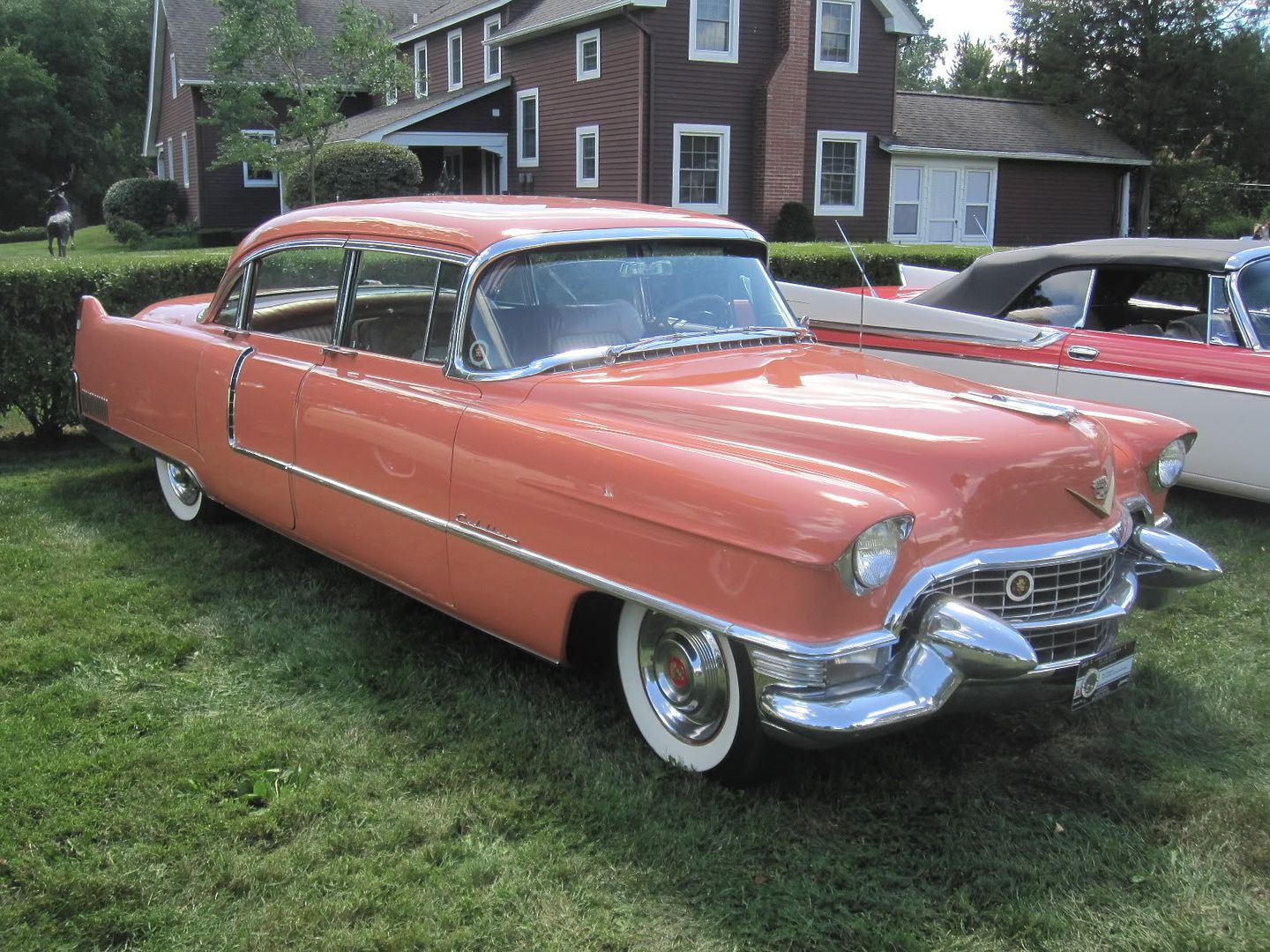
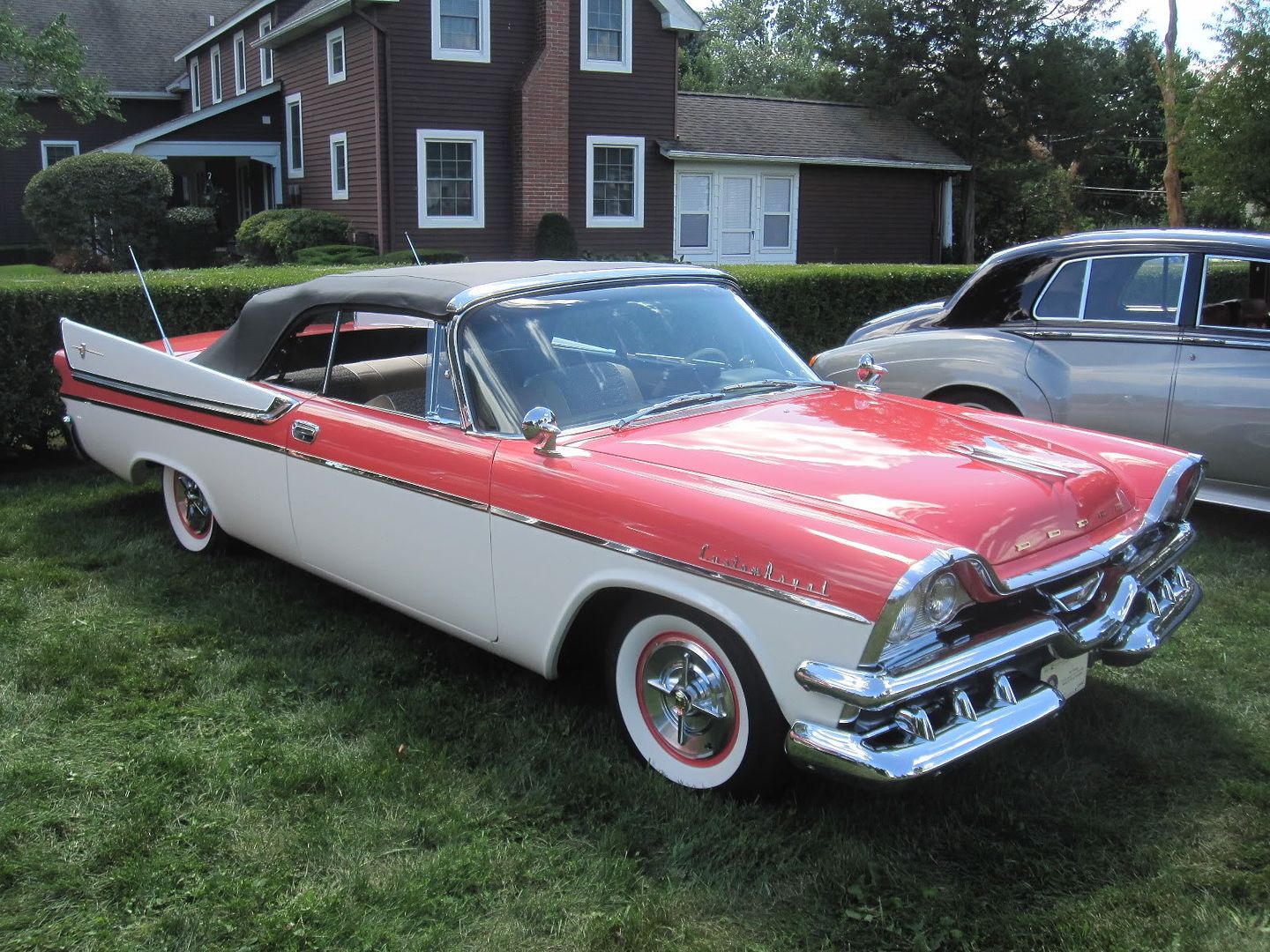
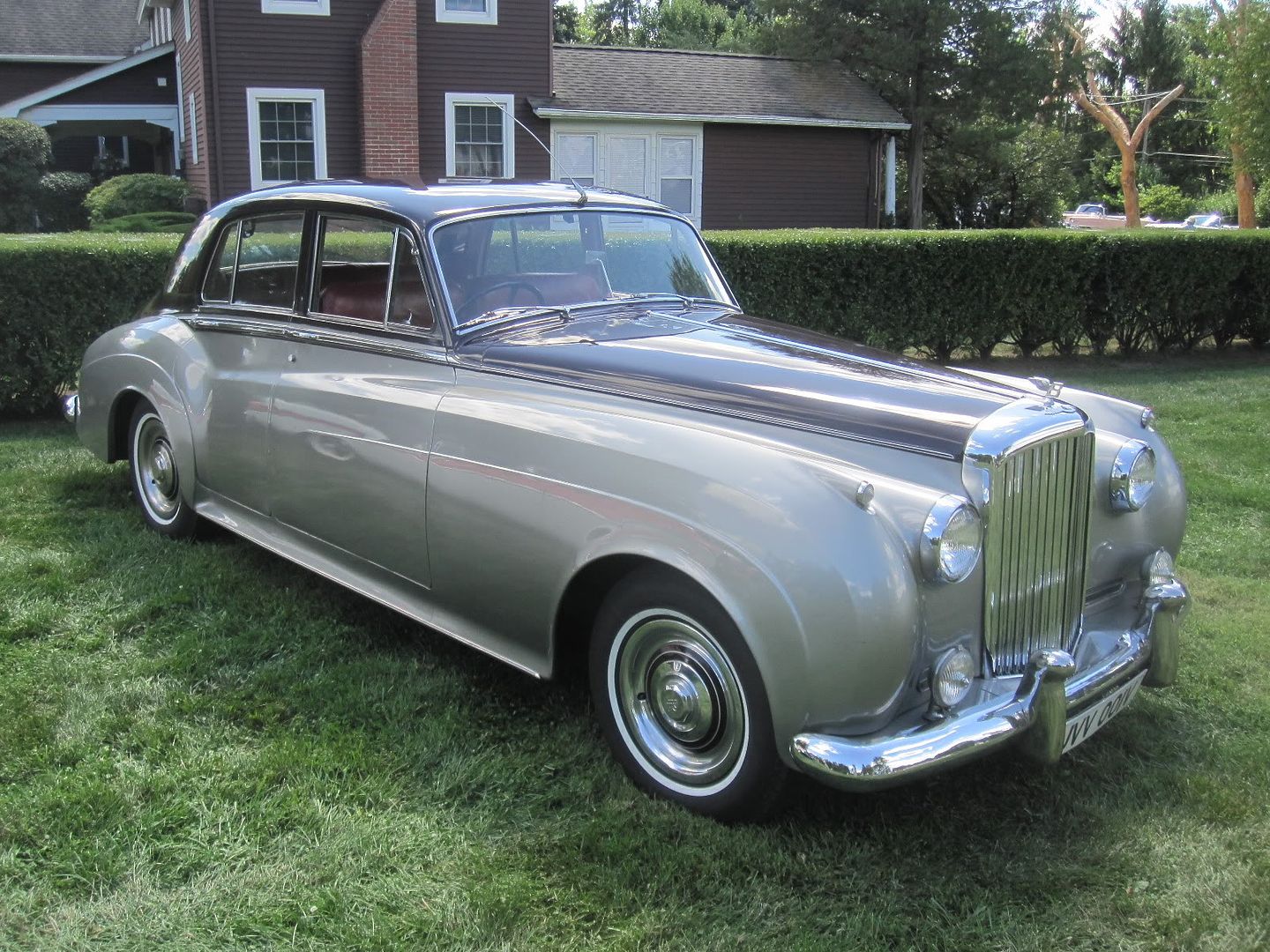
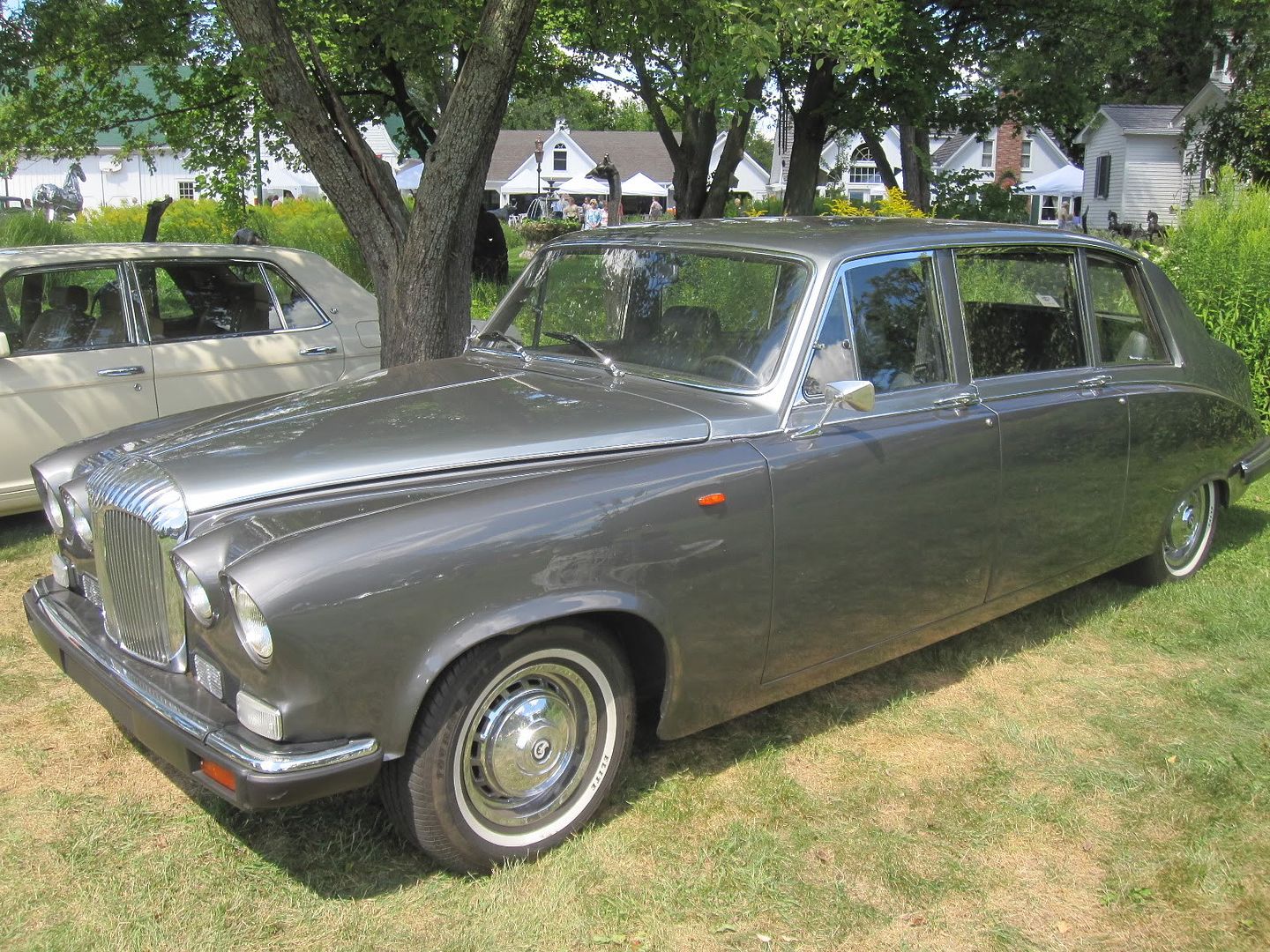
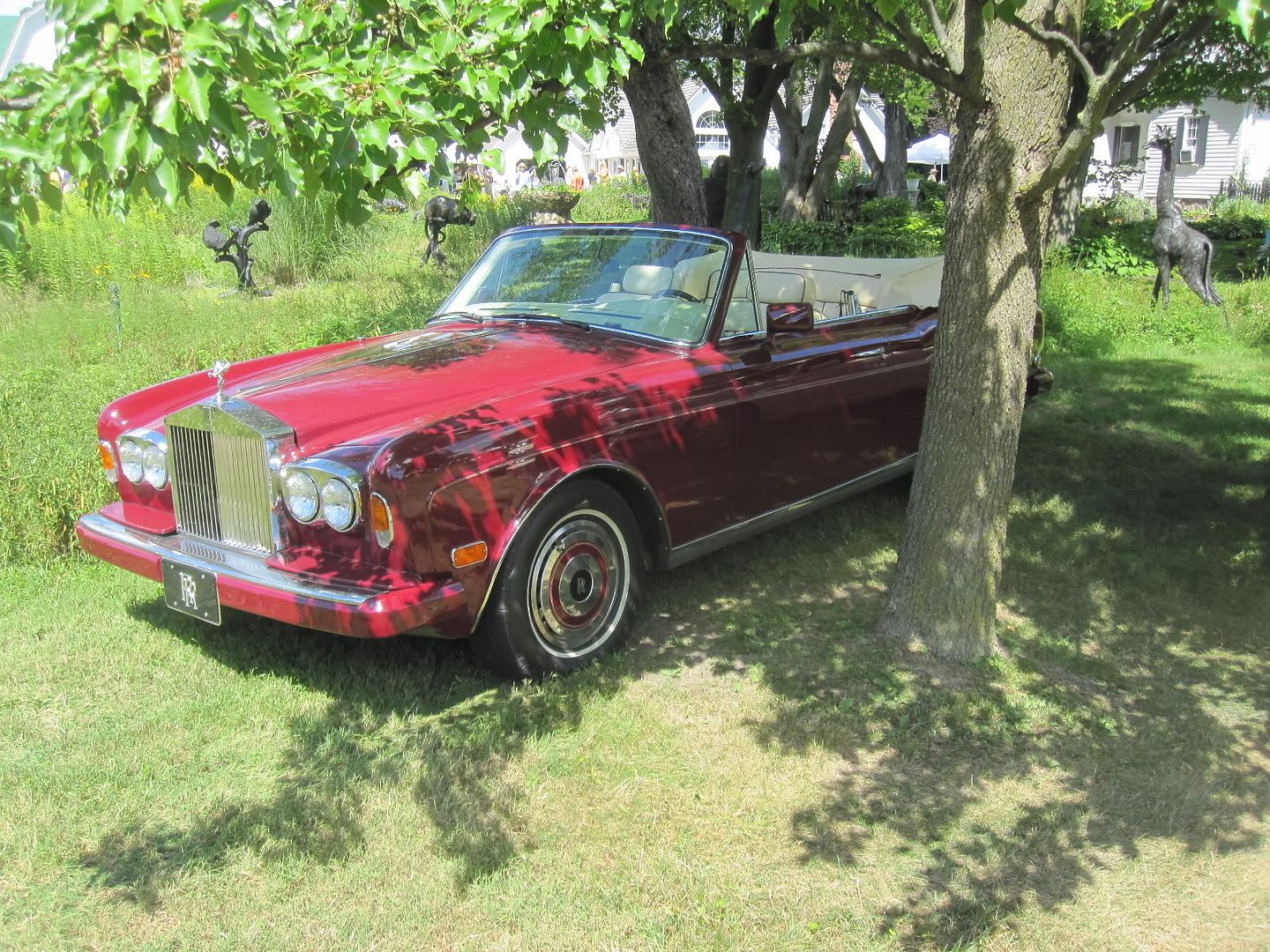
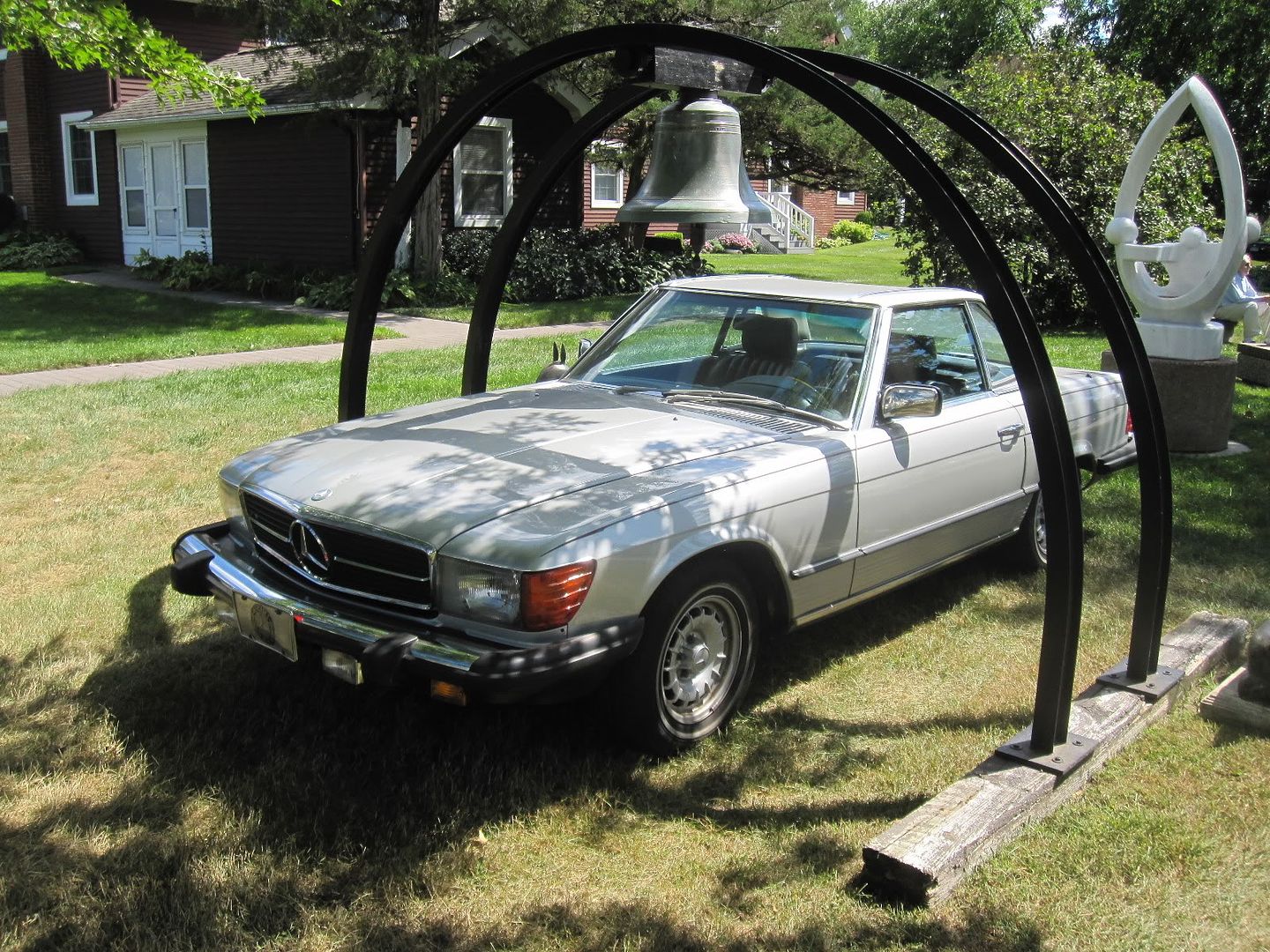
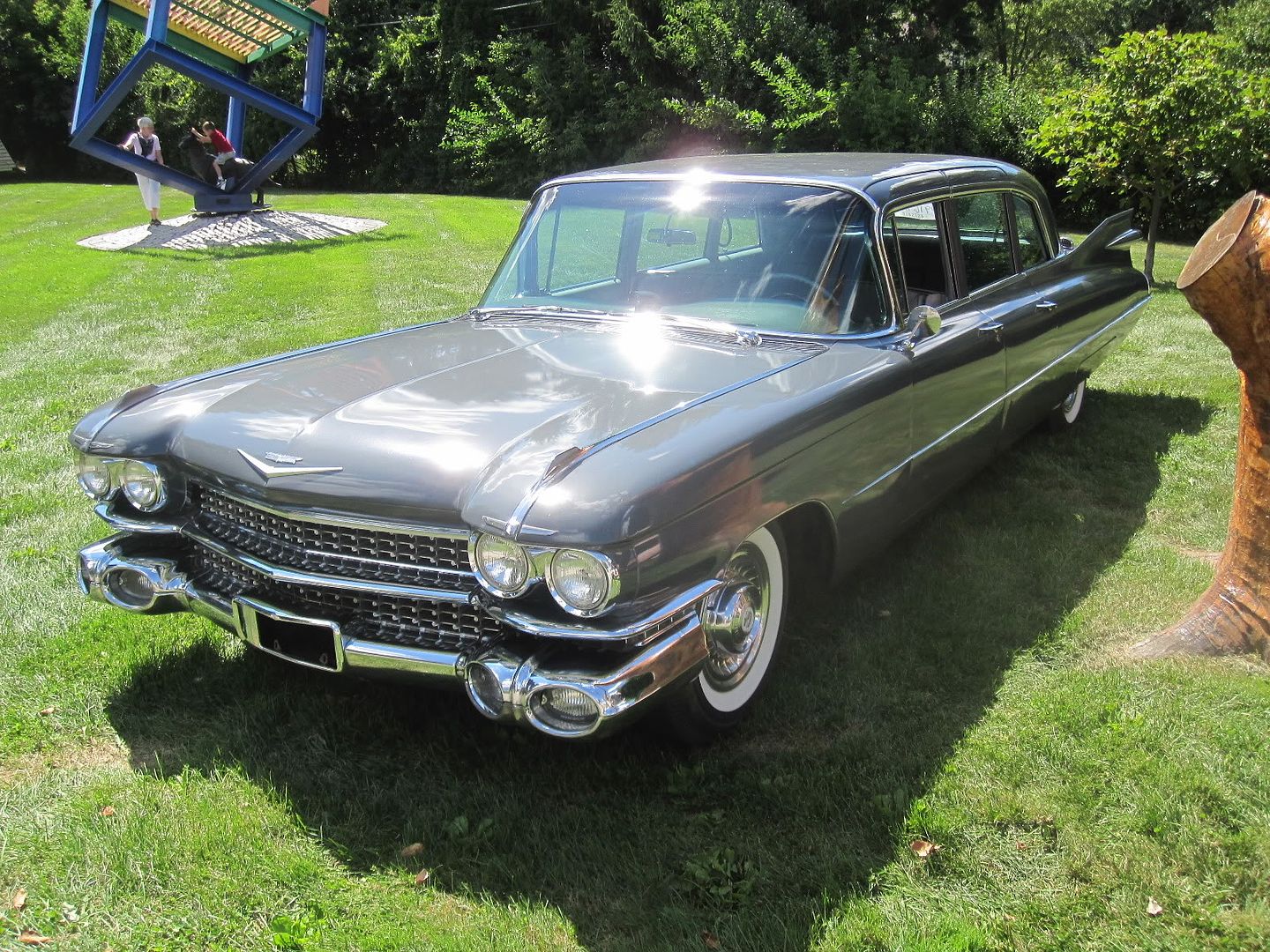
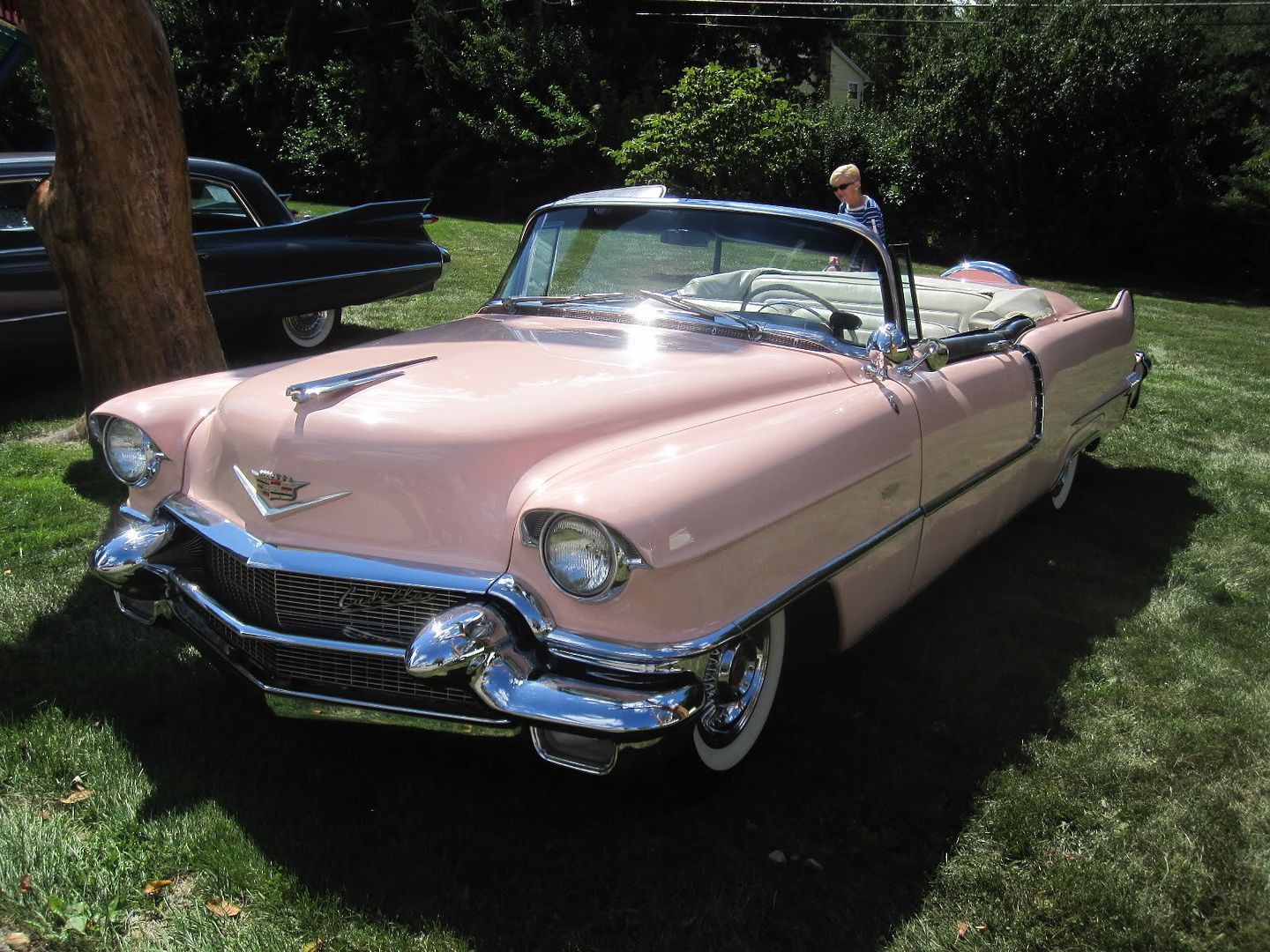
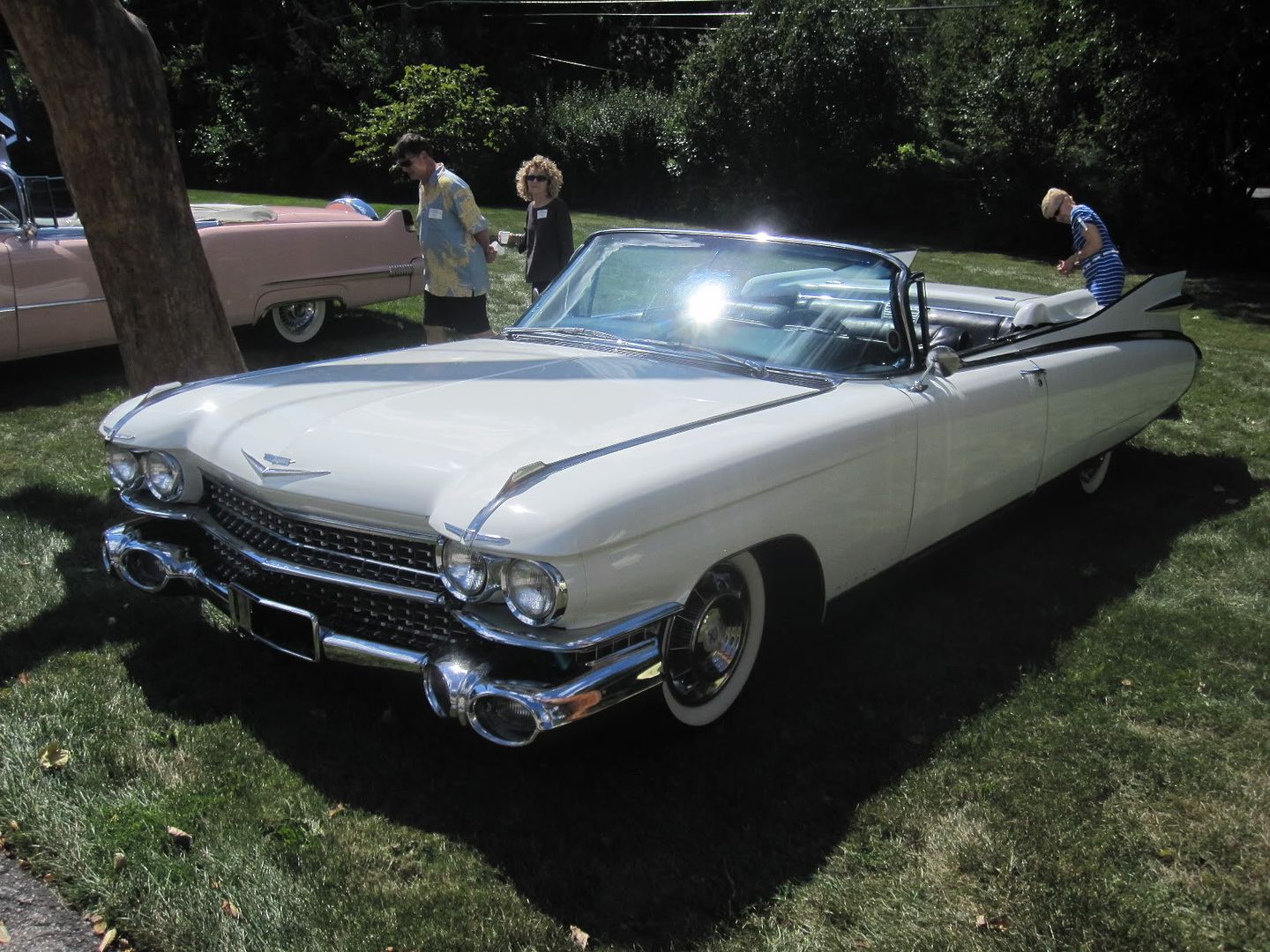
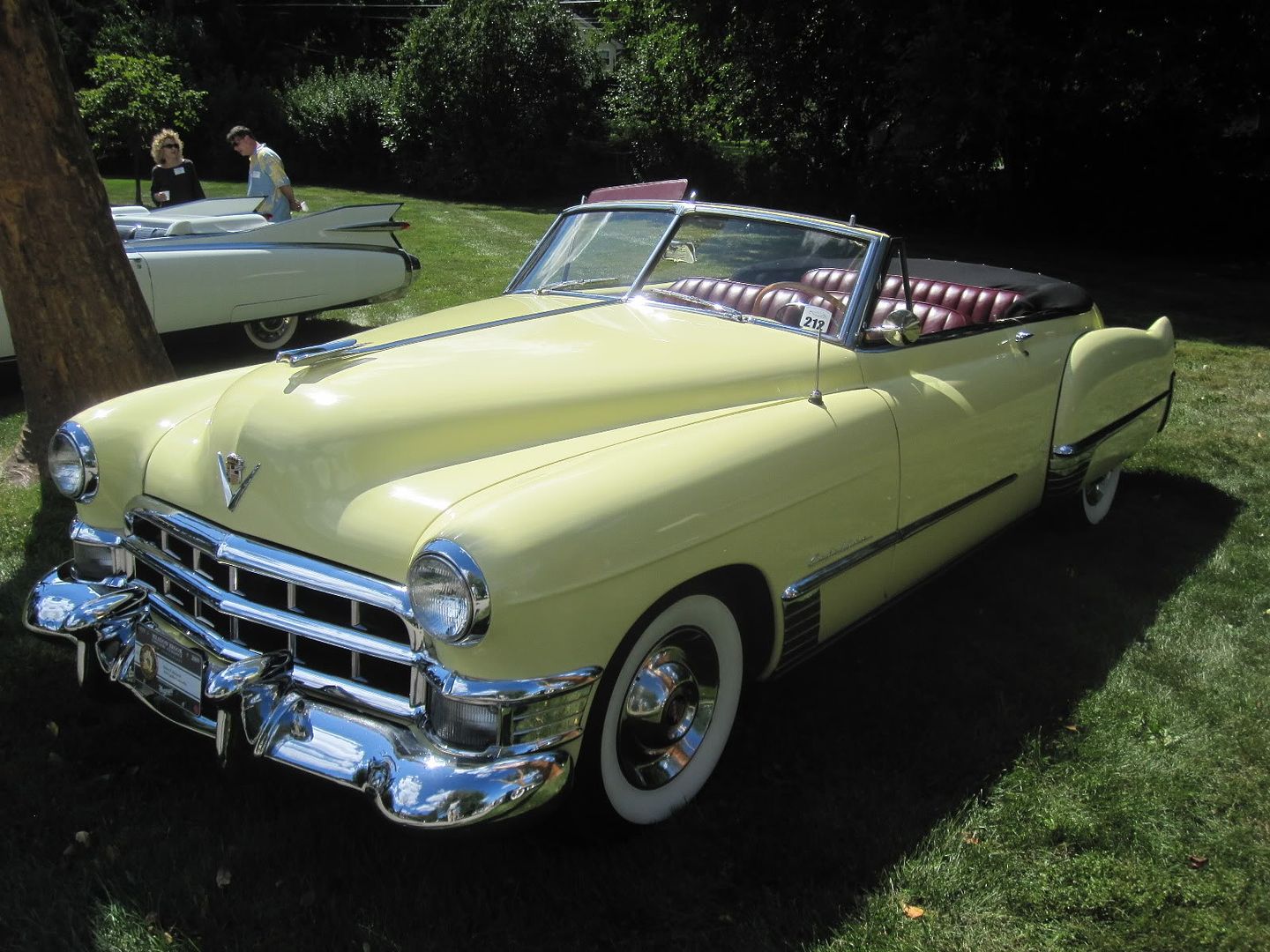
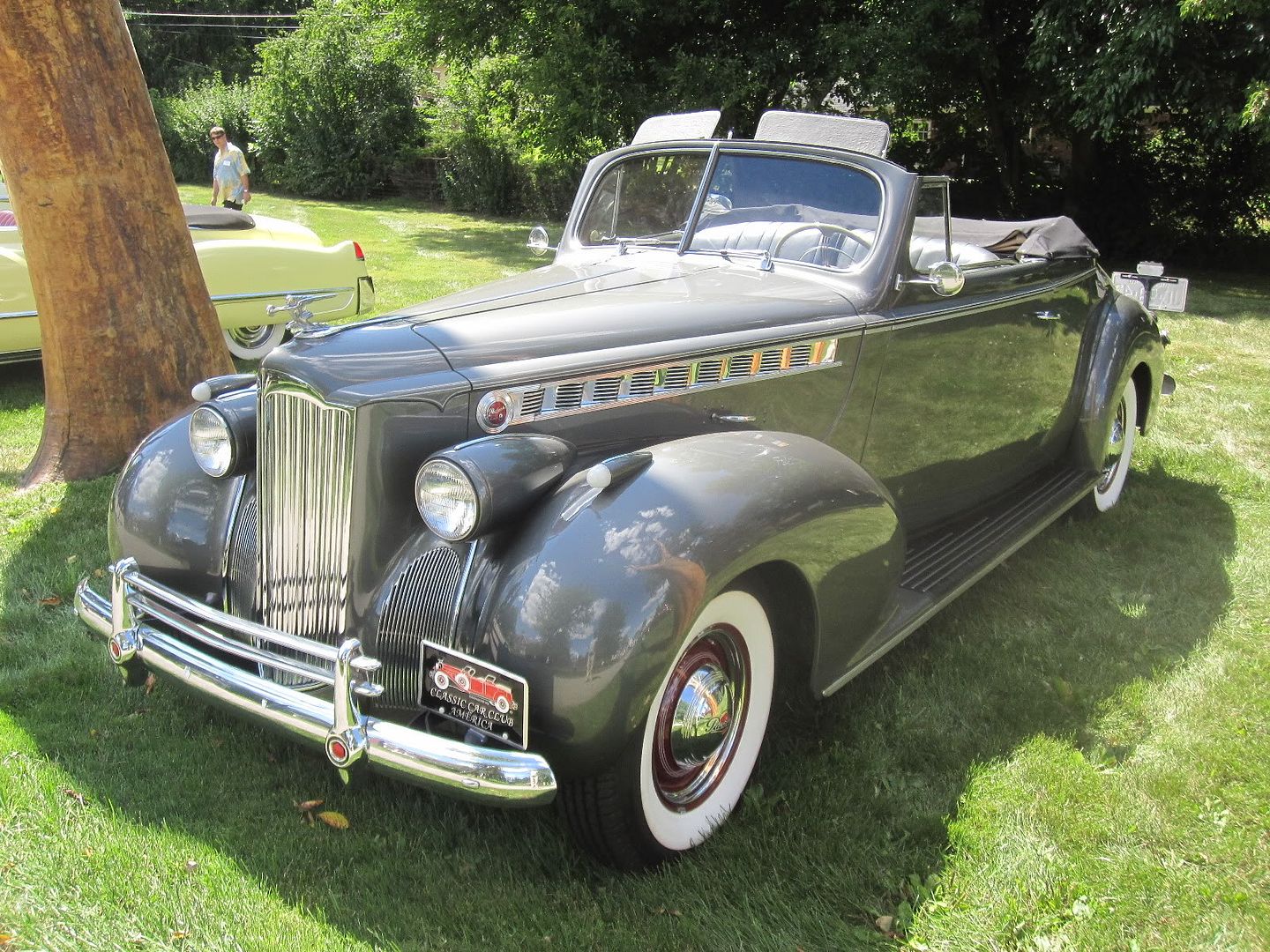
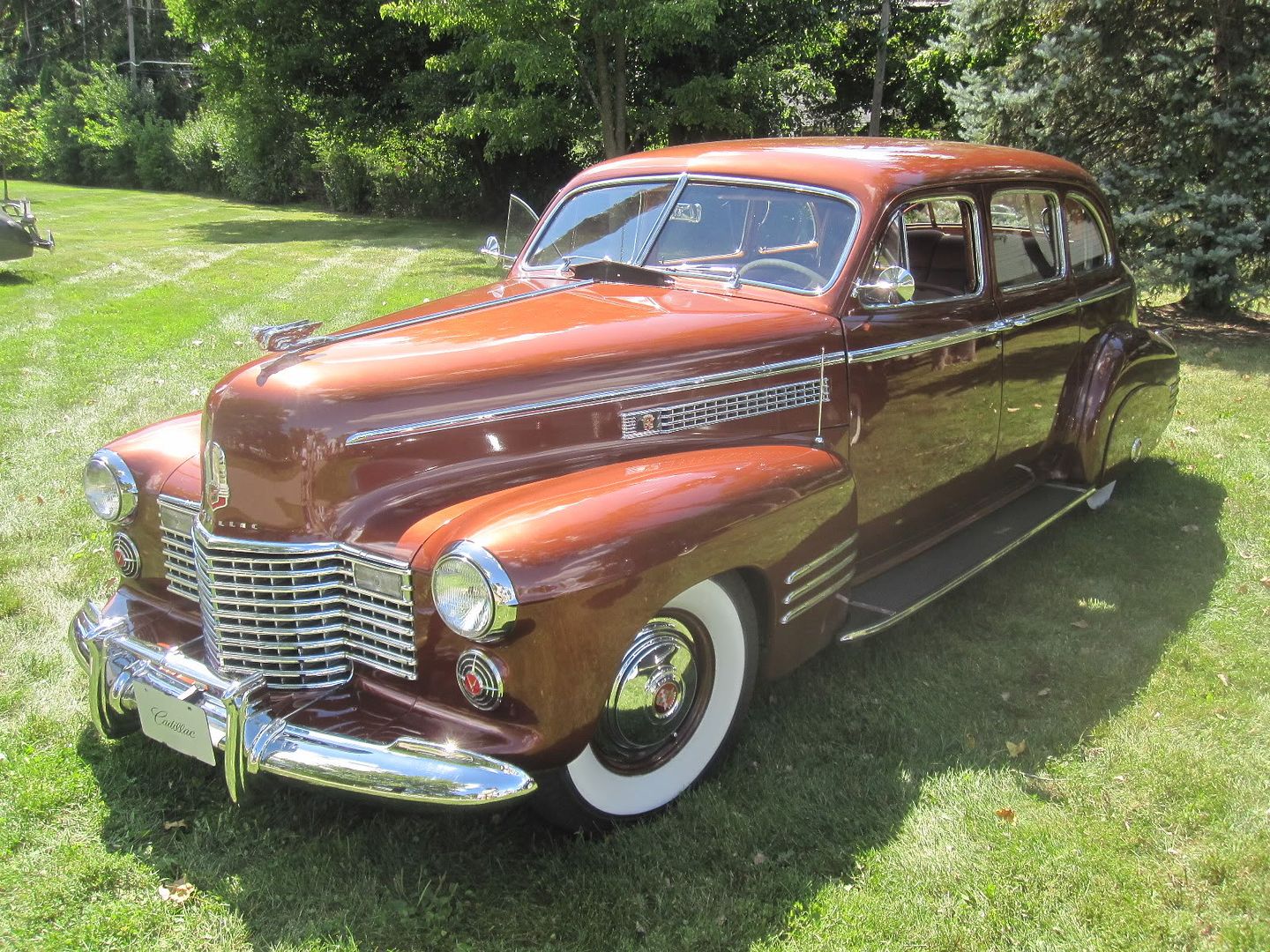
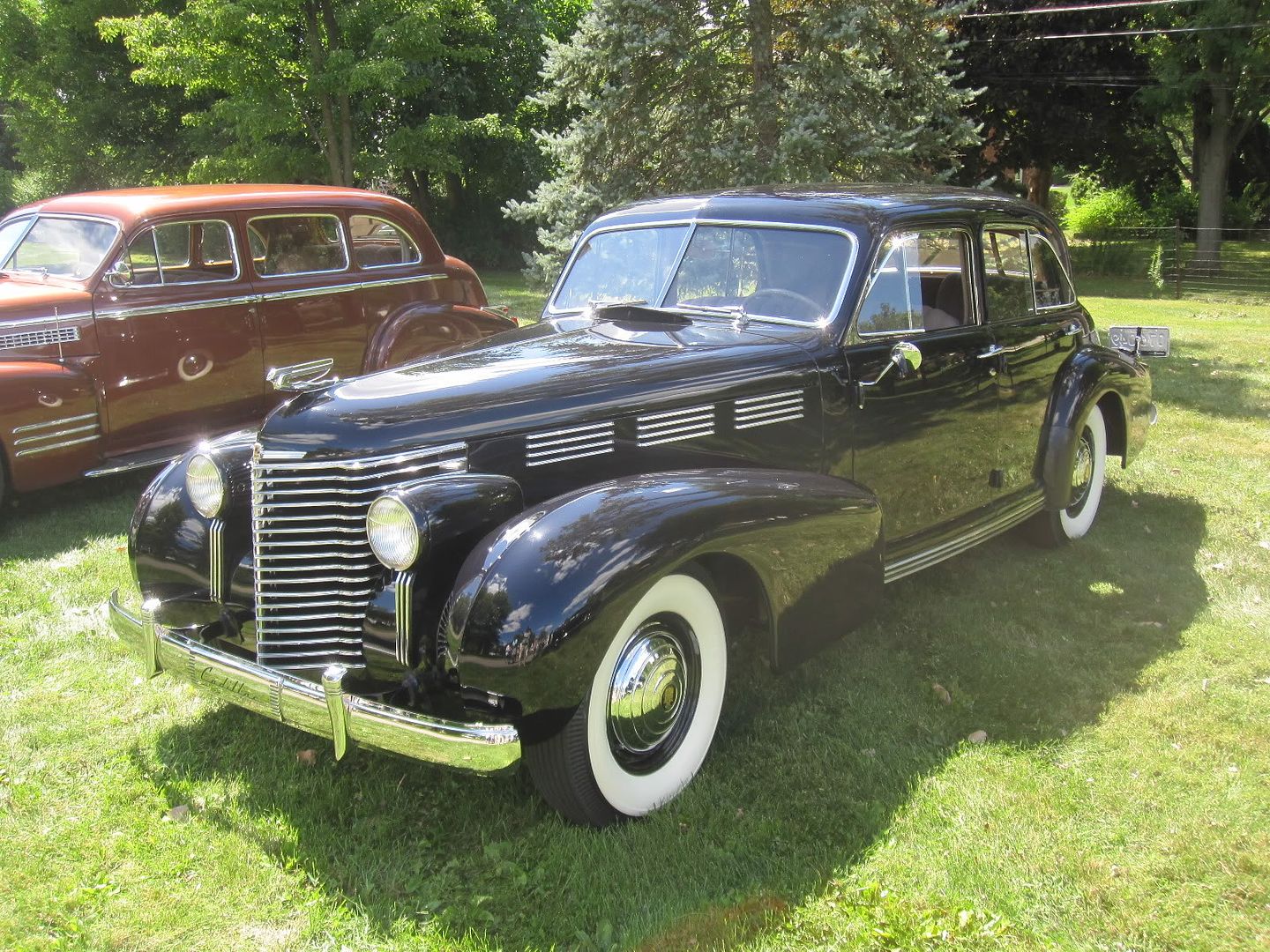
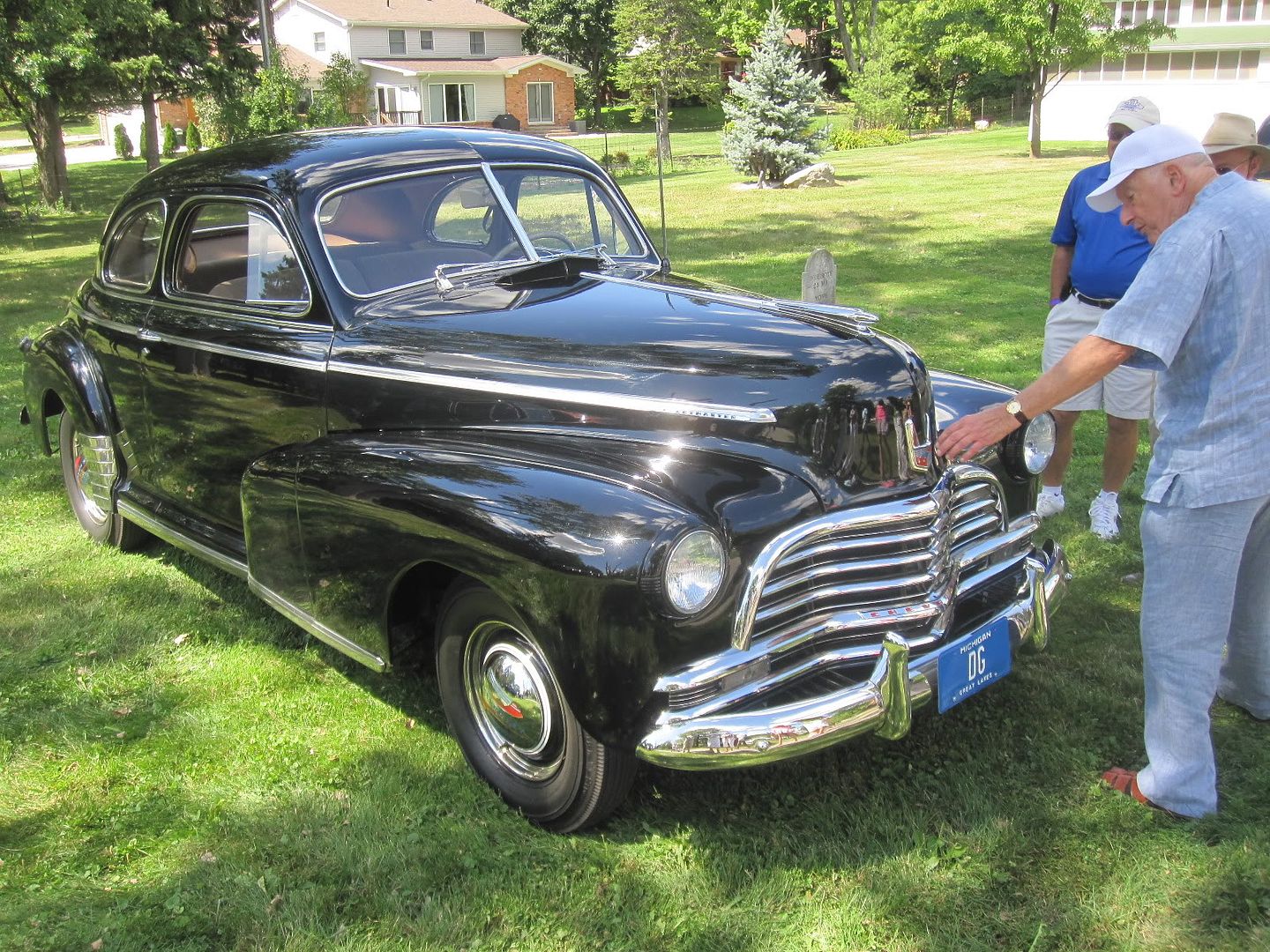
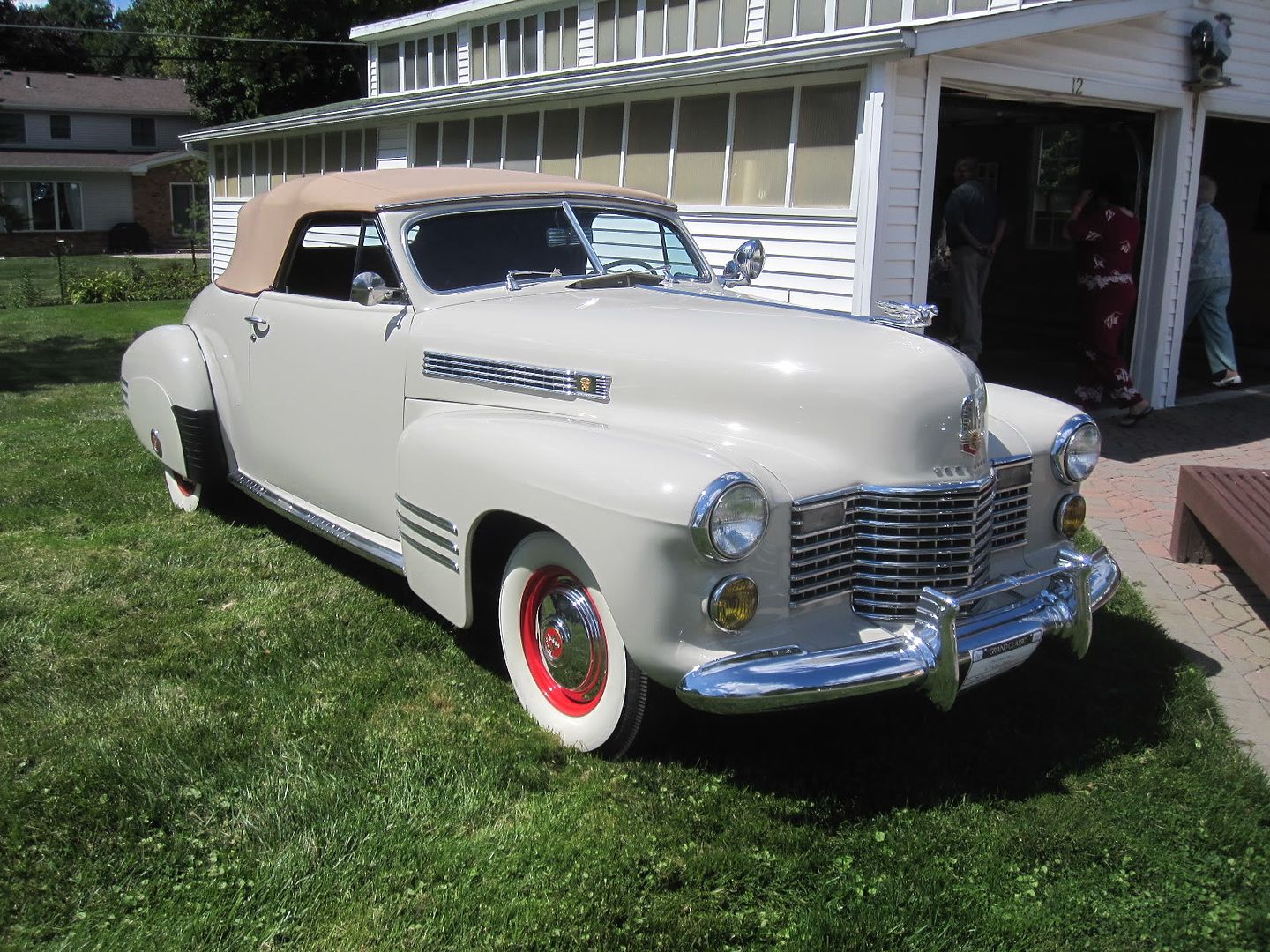
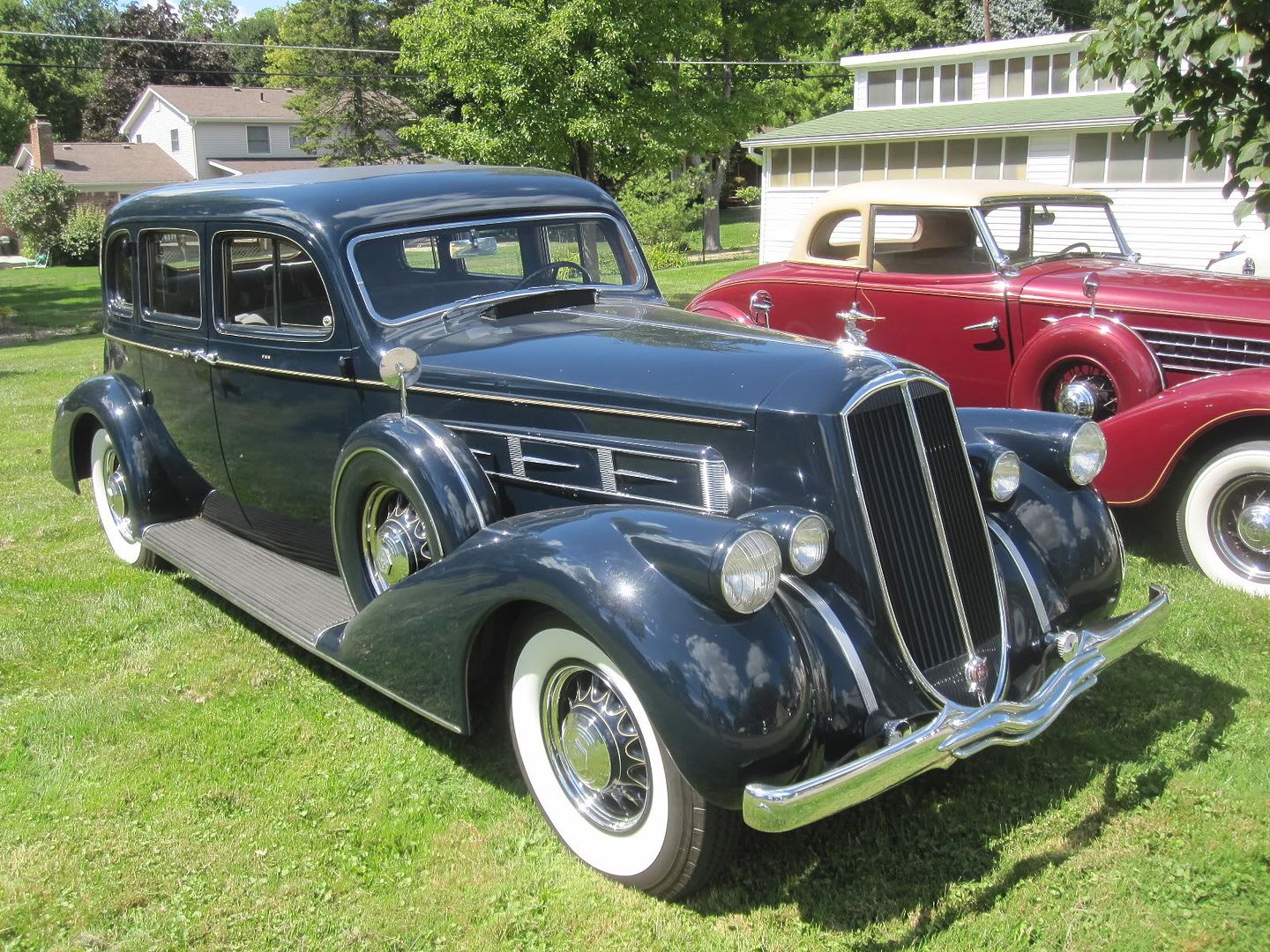
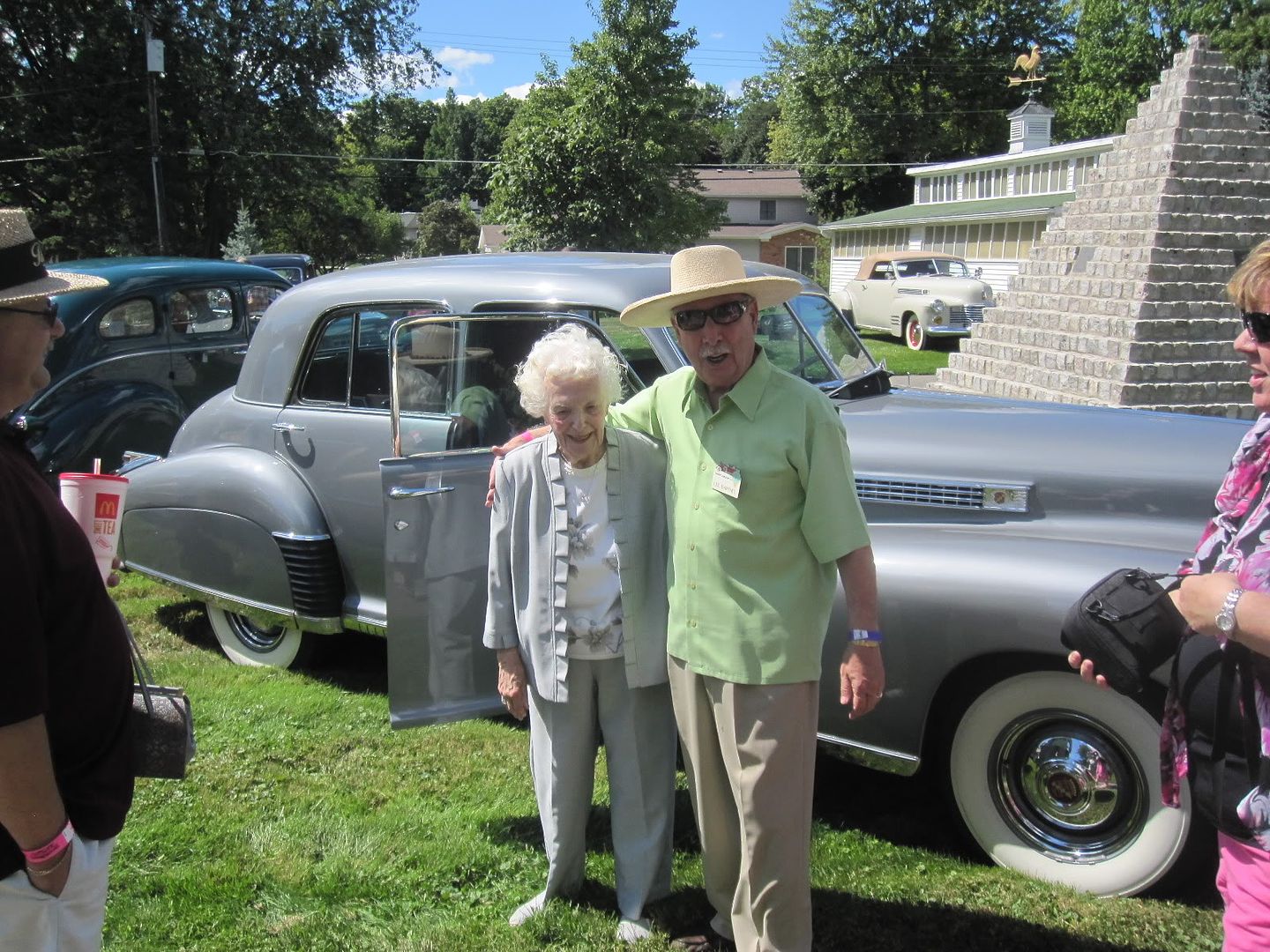
Margaret Denning and the car she bought from my friend Lee, in the hat.
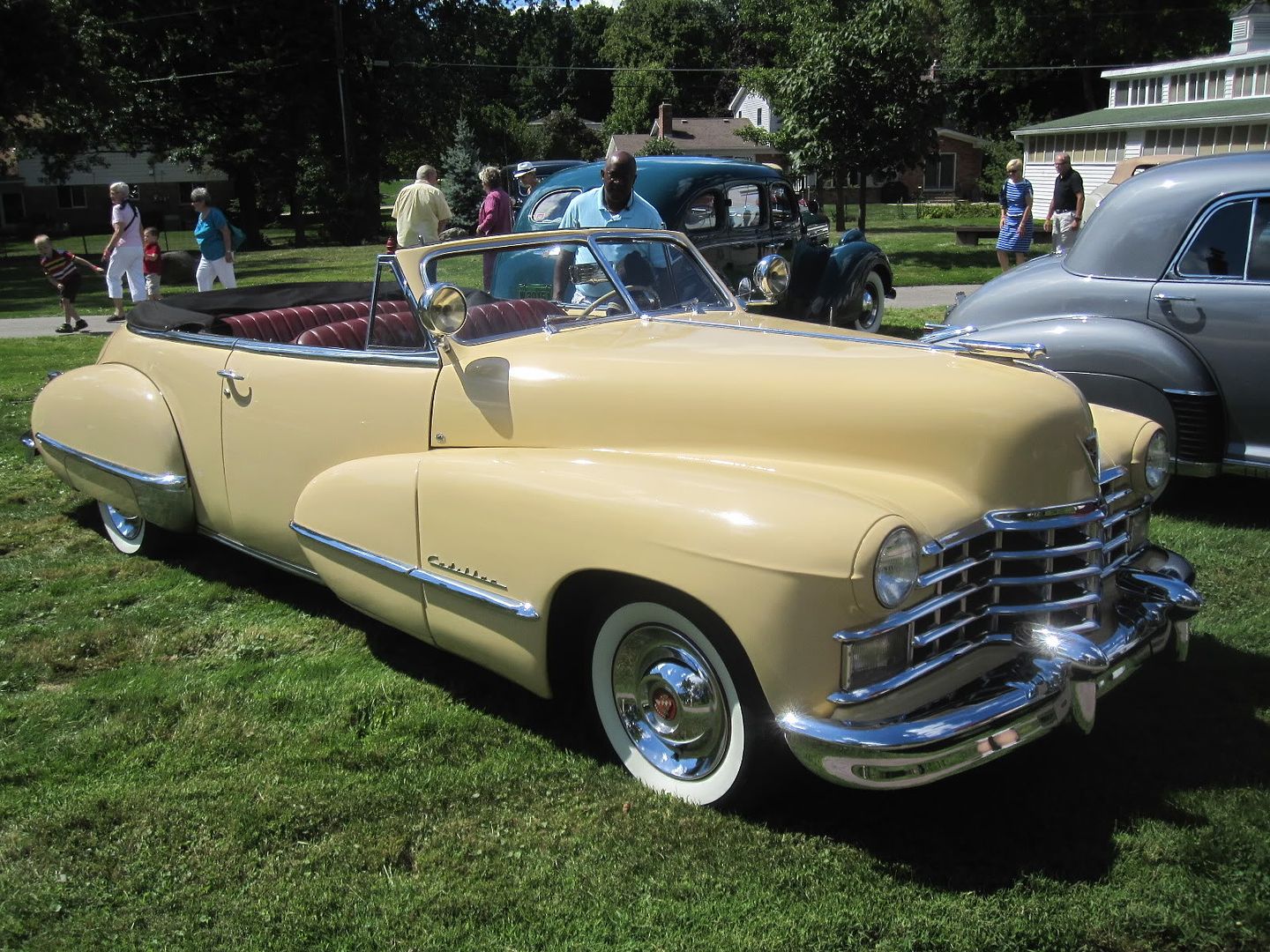
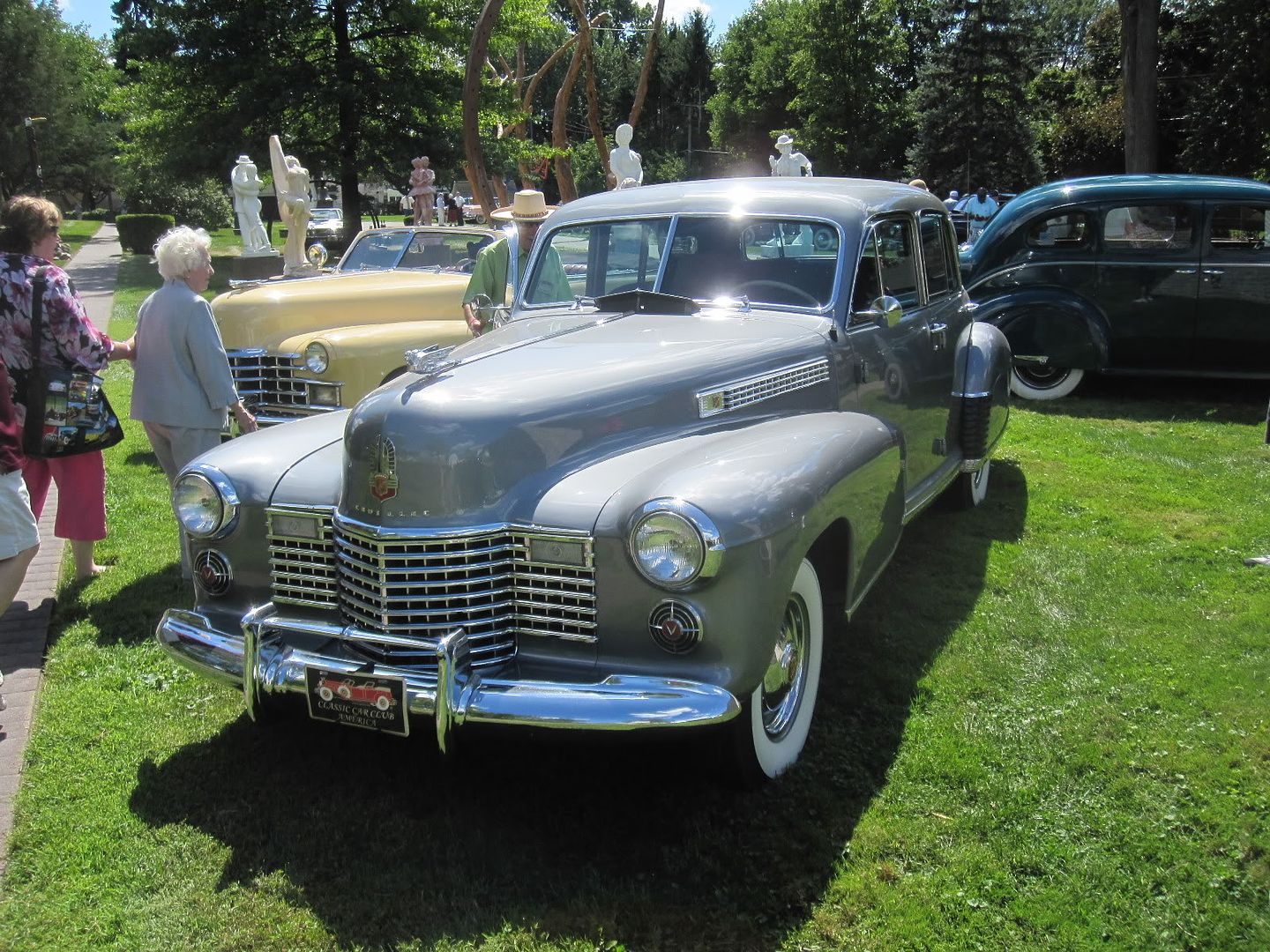
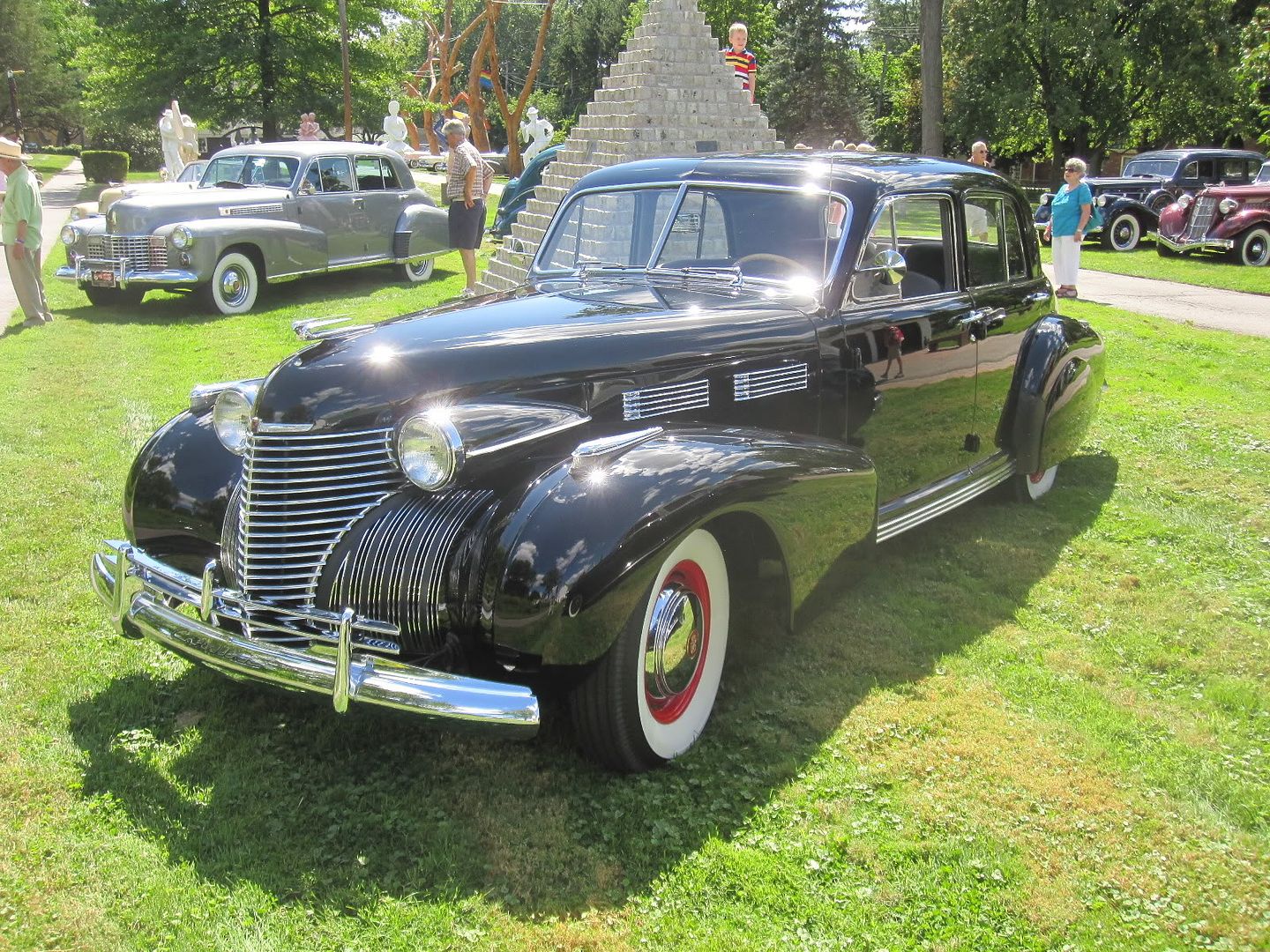
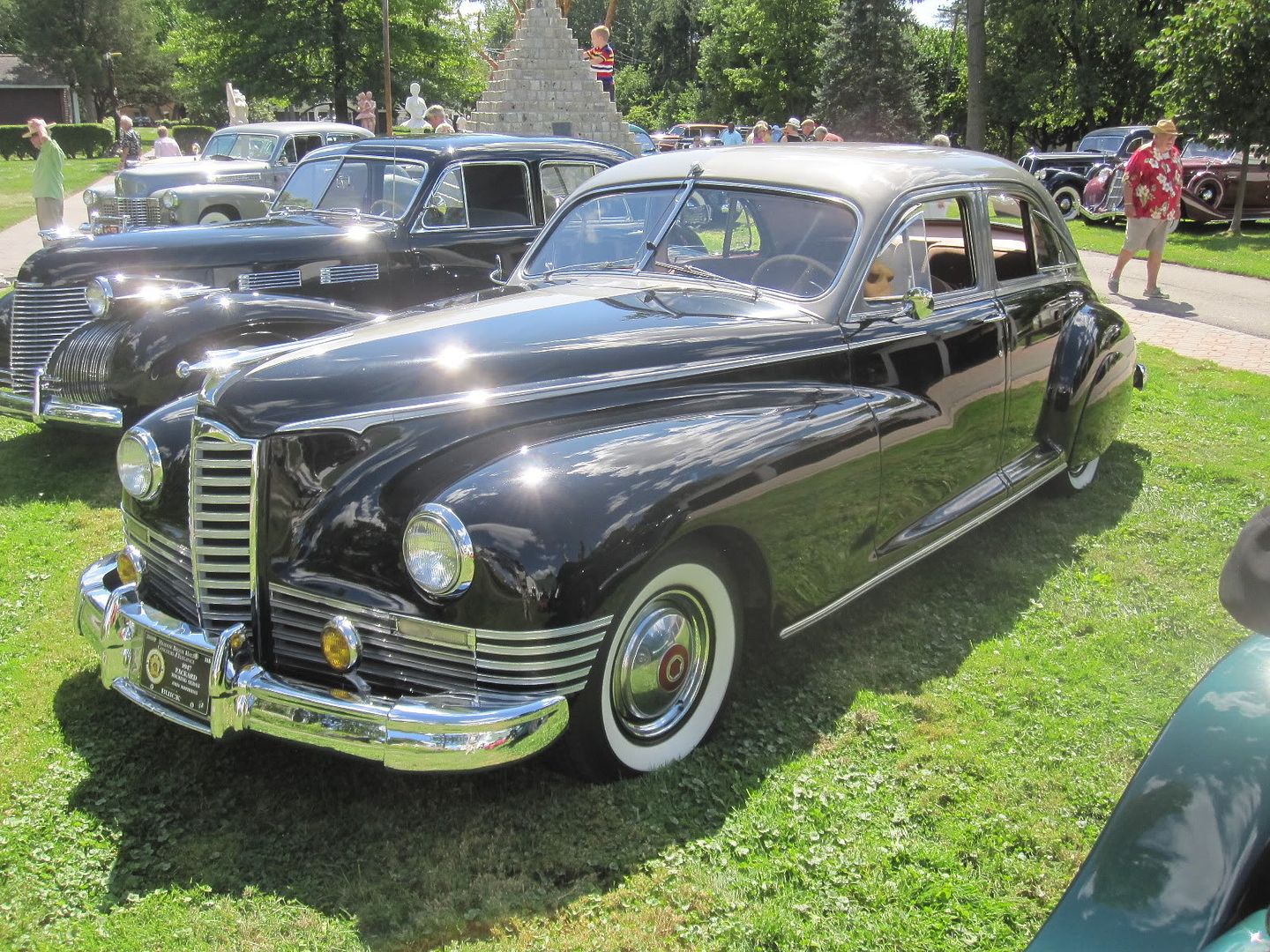
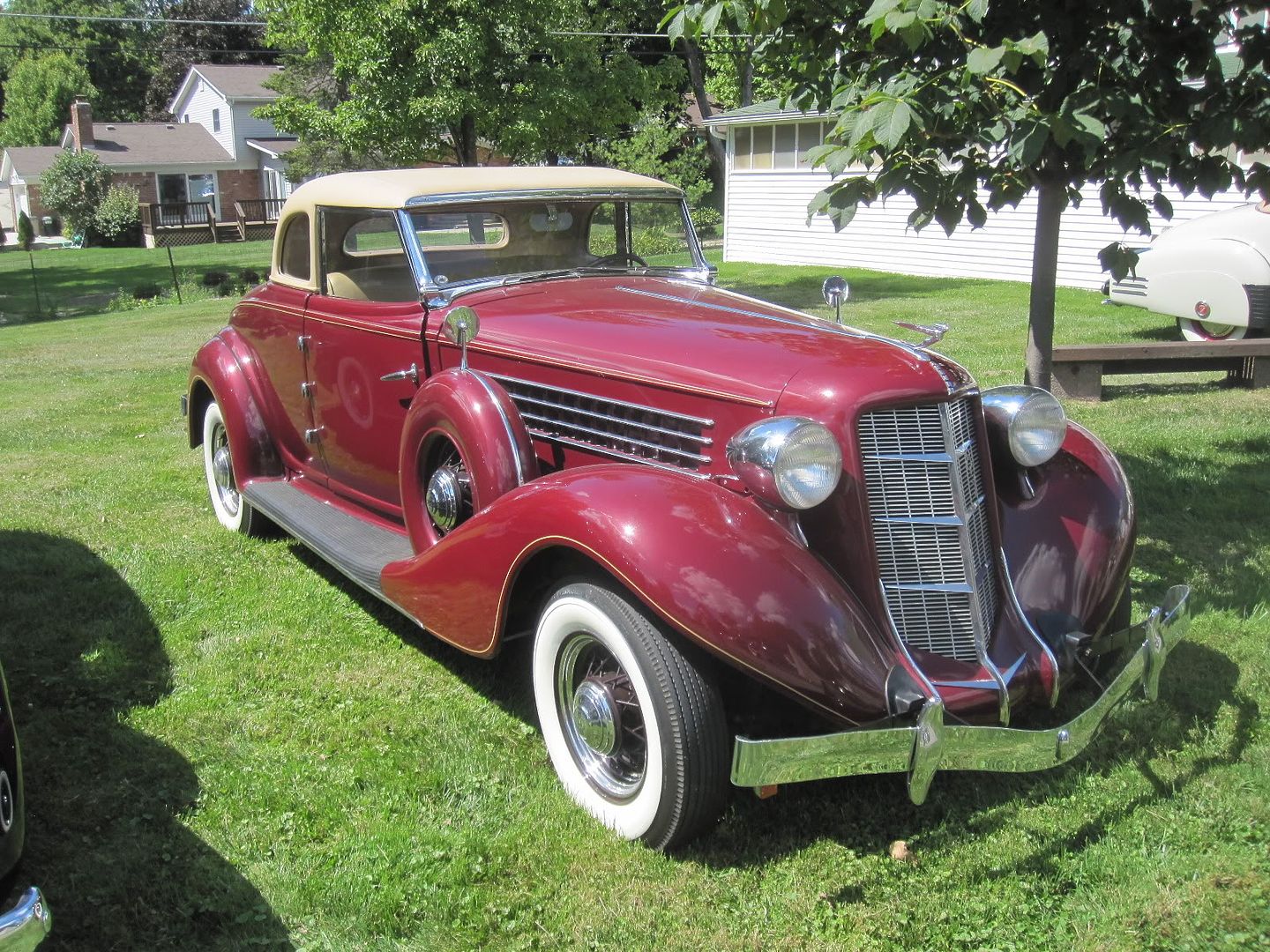
This car is a clone of Lee's first car he and his wife owned as a couple.
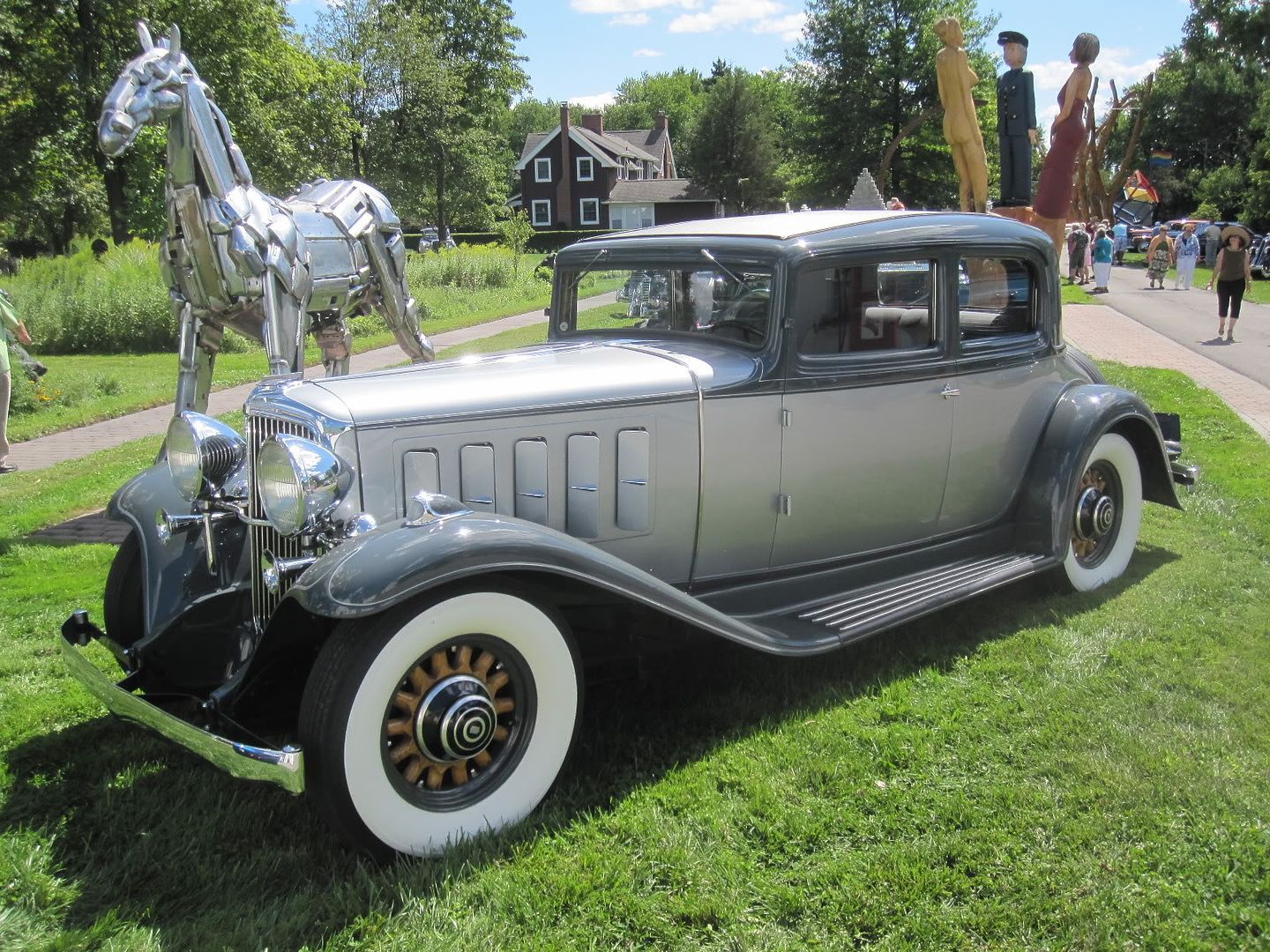
WOW, looks like a great gathering of people & cars.
Is that just friends or were there other local folks & car lover / owners there too ??
Classic Car Club members and their guests.
Very nice array of beautiful automobiles!! Was the sculpture of the horse made by a guy with the last name Thibodeaux? He made sculptures out of bumpers and I remember one that he made of Muhammad Ali that was downtown Detroit.
Very Nice !
Very nice array of beautiful automobiles!! Was the sculpture of the horse made by a guy with the last name Thibodeaux? He made sculptures out of bumpers and I remember one that he made of Muhammad Ali that was downtown Detroit.
I believe you are correct about the sculptor.
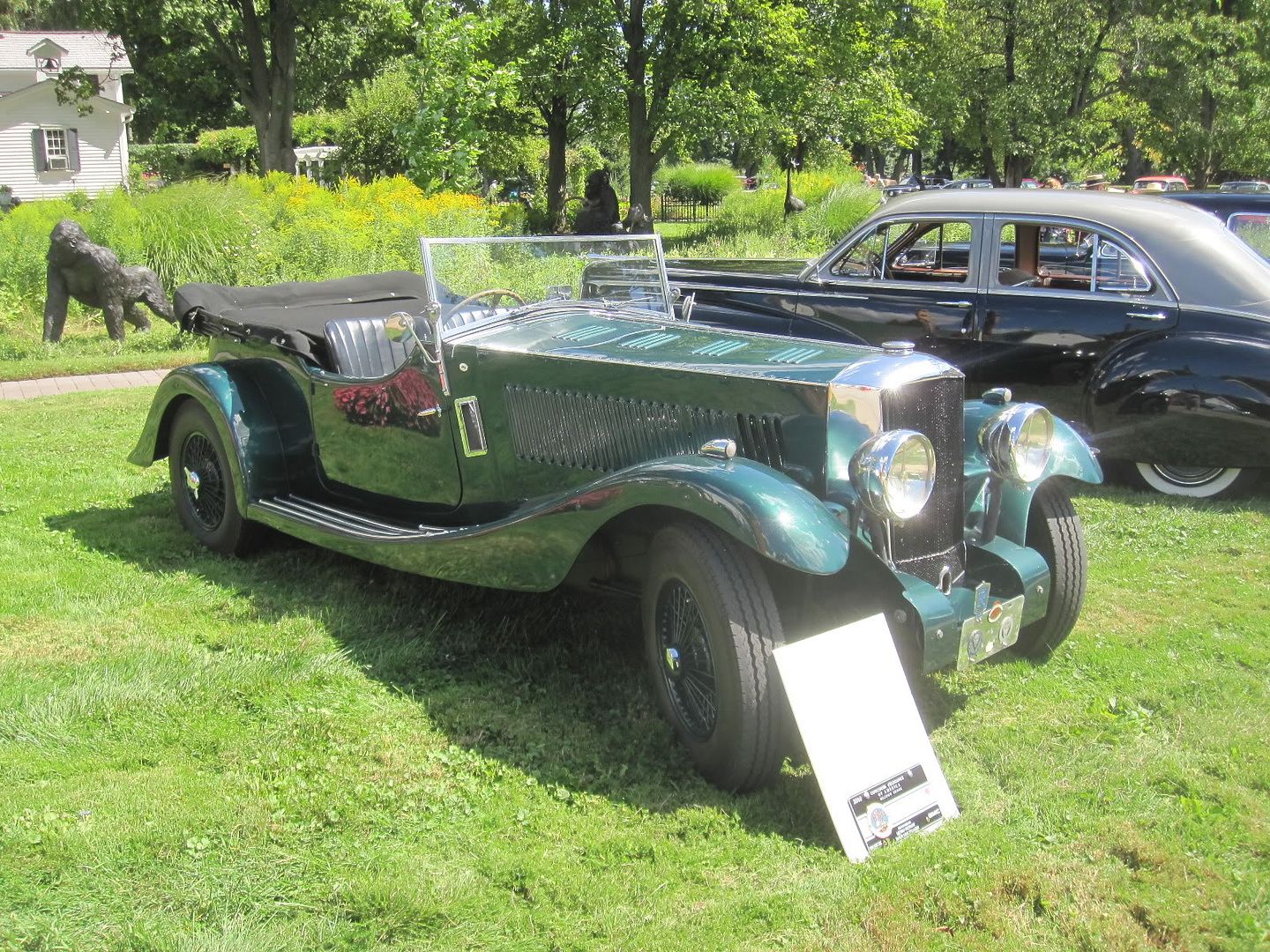
Beautiful cars and location. What is the dark green roadster, 3rd from bottom?
I believe I spoke to the gentleman that brought it, but I can't remember the manufacturer.
Sure looks Bentley-esque.
Sure looks Bentley-esque.
I was thinking Alvis.
That would be Phil's 1934 Railton
Barry....was that your green Continental? Looks nice!
Yes it is. I'm having a lot of fun with it.
Not sure why, but I could not see the pics.
Anyway, Barry not sure if you are a CCCA member or not - on my "do list" even though I do not own a Full Classic. Nice to see CCCA getting some good press here, I have yet to meet a CCCA member who is not down to earth and more than willing to talk cars - the myth that they are not friendly is just that. Plus, who doesn't love ICE CREAM? 
Not sure why, but I could not see the pics.Anyway, Barry not sure if you are a CCCA member or not - on my "do list" even though I do not own a Full Classic. Nice to see CCCA getting some good press here, I have yet to meet a CCCA member who is not down to earth and more than willing to talk cars - the myth that they are not friendly is just that. Plus, who doesn't love ICE CREAM?
The pics are large. They take some time to load. None of my cars qualify for CCCA, so I'm not a member. The hosts always ask us to come, regardless.
From my observations, though, the CCCA does have a problem, IMO. They are so restrictive that the cars that qualify are so expensive that there are no young people to replace the quite old people that own these cars. I felt like a babe in arms amongst that crowd and I'm nearly 60.
Years ago, when I asked the lady that was the head of the CCCA why the Mark II didn't qualify (it was due to YOM, only) I was told that the club would never change in her lifetime. Well.....................................they haven't called me yet.
Like any club, or life itself, a few bad apples can make a huge impression. Everyone with whom I socialize in CCCA or AACA are more than willing to help, invite, or take the shirt off their back for you. I've witnessed the "bad apples."
I can not disagree. I found the group friendly.
In regards to letting in cars that do not follow the club's guidelines, rarely are non-Classics prevented from participating in club outings or gatherings. The place non-Classics are not allowed is in their magazine, on CCCA national tours, and on the Grand Classic judging field.
That's all the fun stuff. I'll pass.
Not in my opinion. The less formal stuff, such as the event you've posted here, is the fun stuff.
To each his own. I'll still pass. Nothing like getting invited to the playground and being excluded from the sand box.
Aww, come on Barry. The sandbox above certainly looks welcoming to everything. I don't see seperate parking or anything.
Sorry to send this in this direction Barry, but allow me to play Devil's advocate for one minute - if CCCA was a marque specific group you had interest in, but no car yet, would you consider joining? I look at it that way - if I was invited by some friends to an LCOC event with my Packard, I really would not expect them to feature my car in their newsletter, say, but I might join especially if considering buying a Lincoln at some point.
(BTW, did the thought ever cross your mind that a Lincoln Continental would fit your "Continental" collection, and give you something to bring to the CCCA folks' sandbox?? )
if CCCA was a marque specific group you had interest in, but no car yet, would you consider joining?NO
(BTW, did the thought ever cross your mind that a Lincoln Continental would fit your "Continental" collection, and give you something to bring to the CCCA folks' sandbox??
That could happen.
On my short list of possible future acquisitions as well. I would only add that while there are a lot of very expensive cars in CCCA, many eligible cars are in the $20 - 50K range. Not that exclusive compared to what many much more mundane cars go for...
Sounds like it is not about the people in your case, Barry, it is kind of an either I am fully in or I am not thing - if that is the case I get it.
Why would I join the SDC if I don't own a Stude? Some of my best friends own Studes, but that's no reason to join their club.
I guess I'm just totally turned off by the CCCA's attitude, not their members. Many agree that the Mark II should be included as the only thing it doesn't qualify on is that it wasn't made pre-1948, a seemingly arbitrary date.
ahh - a philisophical difference. Unfortunately the Milestone Car Society, kind of a postwar answer to CCCA never really made it off the ground, kind of sputtered along for a few years there not sure when it died but I think it may have been at least 10 years ago. Somewhat different criteria though, as I think a '55 - '57 Chevy Nomad would be a milestone as well as your Continental; i can imagine a much less cohesive group than if they took a "best of the best" mentaility as CCCA does. I would agree there are a few cars - yours especially that fit the spirit of CCCA in every aspect except year of manufacture.
But in answer to the Stude question - if you were seriously interested in owning one then you may find it makes sense to join? If you appreciated them but just happened to have a couple close friends with Studes I agree, pass.
But I will go just about anywhere that has ice cream.... 
Of course I would join the SDC if I were in the market, but I'm not.
Frankly, I have little use for the Lincoln or the 356 national organizations, but I have to join them to belong to local regions. I greatly dislike points-judged shows, so I never subject myself to that kind of venue. I like people telling me what they like about my toys, not what's wrong with them, so I fit nicely in the Concours scene.
Again, to each his own.
I don't think 1948 is an arbitrary date at all. The CCCA is basically a pre WW II car club. The only post war cars let in are ones that are nearly identical to the 1942 models. There isn't one car in the CCCA that originally came with a modern type OHV V8 engine with power steering and modern type power brakes.
IMO, 1942 is an arbitrary date.
In reality, the Classic Era ended in the late 30's with the Packard Twelve, Lincoln, K, V 16 Cadillac, and V 12 Pierce Arrow. Those are the last of the American "over built, larger than life, super cars." Another way to look at it is the custom body business. I believe the only American body builder to make it through the war and still do car bodies in the late 40's early 50's was Derham. And after the war, most (but not all) of Derham's work was adding padded tops to cars. The custom body business (building a one of a kind body from scratch) is a hallmark of what some people call the Classic Era of the 1920's & 30's.
I guess arbitrary is relative, but I agree that there is a definite difference between prewar and postwar cars. The CCCA's initial intent, as K8096 pointed out, was to highlight the cars of the Classic Era, which pretty much ended by 1939. I think they probably did "arbitrarily" choose 1942, just because it was an easy breaking point of prewar vs postwar.
If I remember correctly the original cut-off was pre-1942. Kinda hard to hit a moving target.
After the dust cleared, the cut-off was 1942, with the exception of Lincoln Continentals, which were included through 1948. That, in my opinion, was the camel's nose.
The founding father's were more interested in having a club JUST FOR the cars that all but the most wealthy one percent of us could afford. Cars that would be in the $300,000 category today. So bringing it into today's world, I guess the analogy would be somone with a Cadillac wanting to break into a club meant for Bentleys and Maybachs.
I may be wrong, but I don't think that the wealthiest 1% are the ones buying $300,000 cars today. I believe the percentage is much smaller.
You should join the CCCA if only to get the publications which are fantastic. Btw, I'm a member of about 12 clubs including the Nash, REO, Marmon, Hupp clubs, plus a few other for which I own no cars.
I may be wrong, but I don't think that the wealthiest 1% are the ones buying $300,000 cars today. I believe the percentage is much smaller.
You're more than likely right. Go with my second analogy. Cadillac does not produce a car today that would fall within the guidelines of what the original CCCA founders had in mind. If they decided to produce that "Sixteen" that was developed a few years ago... that would fit.
No, but a couple of the mid-'50s Caddys and the Mark II would certainly meet their criteria. I'm not suggesting that modern cars be allowed. I don't consider drum brakes and carbs to be modern.
Like I said, their rules are exclusionary, which will eventually kill the club through attrition.
If so, just barely. Certainly the 1959-60 Cadillac Pininfarina Brougham would. I don't think the Continental would, though. Again, I'm referring to the original founders thoughts. Certainly the Connie and the high-end Cadillacs fall into today's criteria, with the exception of the cut-off date.
Edit: I meant to say, "possibly" the 1959-60 Pininfarina Broughams. While they were certainly extremely limited production, even with a price of $13-14,000 that's not the rare-air limits that the Classic Era cars were hitting. Classic cars (with a huge capital "C"), cost 10 times or more as much as a standard workman's automobile. The high-end cars of the 1950s were only about 4 times as much.
1930 Packard speedster ~ $6,000 vs Ford at ~ $500
1957 Continental ~ $10,000 vs 1957 Chevrolet Bel Air at ~ $2,500
Like I said, their rules are exclusionary, which will eventually kill the club through attrition.
You can buy this car today for 7500. Spend a few bucks to get it running and you can drive right on to a Grand Classic show field. Explain to me how that is exclusionary? Not to pick on you Barry because your attitude is common, but there is a kind of reverse snobbery thing that goes on against the CCCA.

This argument/discussion repeats itself every 6 months. The biggest mistake the club ever made was going past 1942. It opened up a can of worms.
Reverse snobbery? That's funny.
If so, just barely. Certainly the 1959-60 Cadillac Pininfarina Brougham would. I don't think the Continental would, though. Again, I'm referring to the original founders thoughts. Certainly the Connie and the high-end Cadillacs fall into today's criteria, with the exception of the cut-off date.Edit: I meant to say, "possibly" the 1959-60 Pininfarina Broughams. While they were certainly extremely limited production, even with a price of $13-14,000 that's not the rare-air limits that the Classic Era cars were hitting. Classic cars (with a huge capital "C"), cost 10 times or more as much as a standard workman's automobile. The high-end cars of the 1950s were only about 4 times as much.
1930 Packard speedster ~ $6,000 vs Ford at ~ $500
1957 Continental ~ $10,000 vs 1957 Chevrolet Bel Air at ~ $2,500
That argument doesn't fly. Auburns were not 10 times the price of a worker's car.
My, how times have changed.
1956 Motor Life Magazine :cool:


This Classic beast is for sale in the Marmon forum for only $12,000. This would be a great family car. Nothing exclusionary here.
I went to the Grand Classics when it was in Novi. I saw nothing in that condition. The price of admission was a full restoration.
The logic of what is included and what is not is not full proof. I would bring either the marmon or the auburn to a grand classic. Of course I would put them in for exhibition and not judging. They would get plenty of attention if that is your concern.
I went to the Grand Classics when it was in Novi. I saw nothing in that condition. The price of admission was a full restoration.
Like the AACA, the CCCA promotes original cars and has a display/judging class for those original cars at their Grand Classics. It is the car owner’s choice to either restore their car, or keep it original, just like in the AACA.
<O:p</O:p
In the many years I have been a member of the CCCA they have included pictures of original unrestored cars displayed at the Grand Classics many times in the club’s Classic Car magazine. Yes, the CCCA does embrace original cars, it is the owners who choose to restore them.
<O:p</O:p
My car, a 1929 Studebaker President Brougham, is not restored, it is a work in progress, and may never be completed, however, it is just as welcomed at CCCA events as any car that is restored.
I took pictures of every single car at that show and there wasn't an unrestored car amongst them. None of them look like what has been pictured here.
You seem to be missing my point. It was never about the price of admission to the club, just the arbitrary cut-off date.
I'm not here to pick a fight. I love the niche that I show my cars in. I merely stated that the Club seems to not have many young members, and that will be their undoing, in my opinion.
I'm 37
40 years ago everyone in the club was over 60 (with a few exceptions) and it's still that way.
Every car club, regardless of what they embrace, has a standard of admission, the CCCA is no different. Because it is impossible to get everyone to agree with what that criteria may be it is why we have literally hundreds of unique car clubs in this country. Some clubs are small, some large, each one serving a specific niche.
Every car club that recognizes cars that pre-date power steering, high compression V8 engines, air-conditioning, stereos, and interstate capable, is suffering from an aging membership. If we are to believe these clubs will never be able to replace their aging membership we will have to wait and see which clubs are still around 20 to 30 years from now.
That argument doesn't fly. Auburns were not 10 times the price of a worker's car.
I never said it was. And even in the watered-down version of what became the Classic Car Club, the Auburn is an anomoly because it was so inexpensive. The only reason it is in is because of the flamboyant design and they offered a 12-ylinder. The Zephyr crowd can't get in because their styling was not Auburn-like (my opinion).
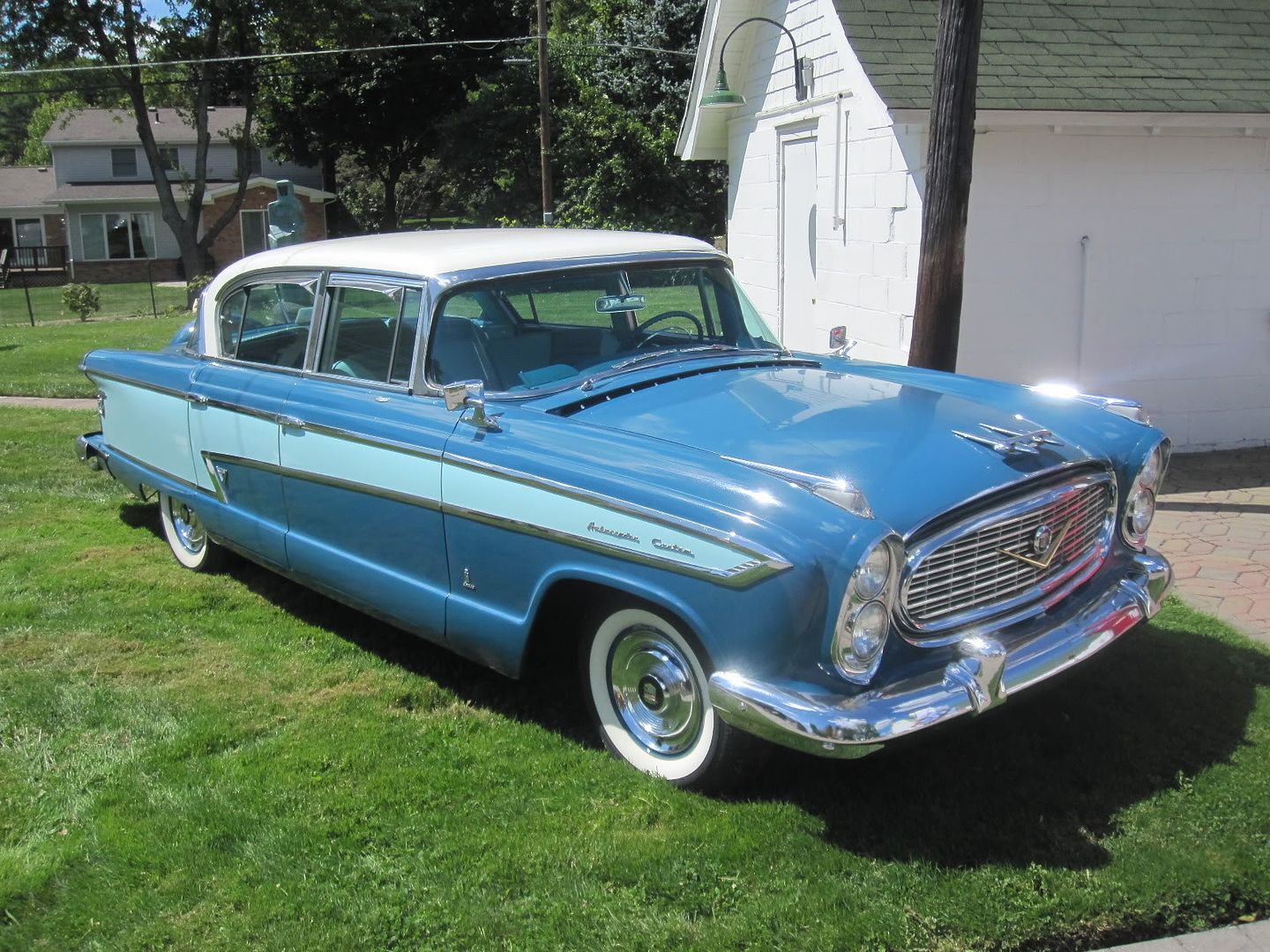
Lee and Floy are wonderful people, and gracious hosts. The 1957 Nash they have (pictured) belonged to Richard Kughn, they always wanted that car, as it is identical to the car they went on their honeymoon in. Dick sold them the car in 2003, we did the brakes on it before delivering it to Lee and Floy. It's a very nice car.
Lots of non "full classics" at that event, and in the end, we all like cars, and we better stick together or we'll hang together.
............and we better stick together or we'll hang together.......<!-- google_ad_section_end -->
Exactly and that is why we host other clubs on this forum, and we are even open to help support them in other ways in the future.
A unified front is mandatory if we are to survive the future!!!
Wayne
Barry, first apologies as I hope you do not feel "picked on" as I kind of got this thread (originally about your sharing pics fromw hat was obviously a fun event) on this tangent.
I also get your point of view in terms of being dissapointed about the years CCCA covers. Adding one more comment because this whole notion of an arbitrary cut off got me to thinking. The more I think about it the more I think the Classic Era was a one time deal, mainly because these high end cars were produced largely by hand, and largely by independents who were able to remain profitable by charging such a steep premium for their products. Packard may have been the largest but prior to the non-Classic Jr. line their production processes were similar to those of say, Pierce, Mrmon, Peerless, etc. I tend to agree the Classic era was pretty much closed out by '39 - as manufacturing techniques changed such that not only were the old ways no longer superior, it was evident the surviving independents and coachbuilders would not survive in these new times. The demise of the remaining independents after the war proved that out. How could Packard, for example, compete against premium offerings of the "Big Three" when they could use synergy and economies of scale in a rapidly changing marketplace - lots of technical advances.
Also, times changed, the postwar period of cautios optomism gave way to the rock & roll 50s and muscle 60s - etc. not really what one thinks of when thinking about the Classic Era. I think there would be very few candidates for such a club postwar, which is probably why the milestone car club failed eventually - not enough common bond to keep very diverse cars together. CCCA cars, though, share a bond regardless of marque.
Anyway, that is kind of my thought on the reason for the particular era. Since the postwar period we have been steadilly following a different path to premium cars. The Continental, I think helps prove that - a largely handbuilt car if I am not mistaken, but not profitable for Ford, only a major company looking for a flagship could fund an entire division and ultimately that did not work out for them. High tech, and eventually computer and robot assistance is really where things were going even well back into the past say, 50 years. Today, a handbuilt car would have a tough time competing with say, an entry Benz or even a current Lincoln product. I think the Classic era was a one time deal. One need only look at "neo classics" to confirm that, there is no room for the little manufacturer given the safety requirements and market demands today.
Anyway, those are some thoughts as it relates to the era more so than the club, thought this was a good place to put them out there.
Actually, Continental, in the end, did not lose money for Ford. The assets of Continental had great value that were folded back into Lincoln and Ford, most notably the Pilot Plant. The development of the retractable hard-top led to huge profits for Ford when it was used in the Skyliner and later, sans sheet metal, in the slab-side convertibles.
I don't feel picked on at all. I just think it's funny that some so steadfastly defend an arbitrary cut-off date when it's clear the from the other posts that the period ended 10 years before the cut-off.
The other defenses are just as funny. My Auburn example was met with "But, but, but......." To every rule there will be exceptions. Inflexibility has broken many organizations just like the CCCA.
I'm not sure anyone here is defending 1948 as I agree with Steve that it should be 1939, but I could see 1942 because it's clean cutoff at WWII. 1948 makes no sense.
It only appears to accommodate the post-war Lincolns, no? Personally, I think they're butt-ugly compared to the '40-'41. Wonder why they bowed to that one car being added?
Interestingly, what if we had never entered WWII, automobile-wise?
It only appears to accommodate the post-war Lincolns, no? Personally, I think they're butt-ugly compared to the '40-'41. Wonder why they bowed to that one car being added?Interestingly, what if we had never entered WWII, automobile-wise?
Somebody older than me can probably give the history with more precision but I think it was all about the Cadillacs. Nice cars but not exactly what you think of when you consider the Classic era. Once the 41/42 were in, the 46-48 are identical, hence the continuation after the war for any car that was admitted prior. By 1949 everybody had something new.
The body shell from the doors back is about the same as 1940 - 41. It's mainly the front sheet metal and bumpers that changed. Remember, that style you don't like actually came out in 1942 - and the 1946 - 48 was a continuation of that. Same with Cadillac. 1942 was a new more streamlined style, 1946 & 47 was a carryover. Also, Packard introduced the Clipper design right before the war and carried it over for 1946 - 47. I don't disagree that the 1940 - 1941 Continental is more appealing than the 1942 - 48.
The 1940 - 1947 Cadillac 62 and 63 series were let in in 1986. The model 75 limousine and the iconic Sixty Special sedan had already been in for quite some time before that. Much of the arguement was that if the 160 Packard is in, why not the Caddy which was its direct competitor. The first two decades of the CCCA were very "Packardcentric." I know a guy who bought 1930 Caddy V 16 club sedan in the late 50's and brought it to a CCCA meet and the general response was "nice old car, too bad it's not a Packard." There are definate pros and cons to allowing the 62 seried Caddy in.
Do you understand why the uninitiated think that the whole rule package seems arbitrary.
It appears that someone or some faction lobbied to change the rules. Where did that attitude go?
In my opinion, the looks of the back of the Lincoln Continental was improved greatly with the 1942 model. Even the car's designer, Bob Gregory, didn't like the back of the 1939-41s, saying in print that he thought the rear end looked like a cowering dog with its tail tucked between its legs.
Good (or bad) styling is not quantifiable. We each like what we like. There are some who think the horse sculpture at the beginning of this post is butt ugly as well. It's all in the eye of the beholder.
Do you understand why the uninitiated think that the whole rule package seems arbitrary.
Yes, absolutely. But that could be said about anything. With an open mind, the uninitiated can understand the historical background as to what led to current rules.
As I alluded to earlier, the initial intent of CCCA organizers was for cars that were produced in numbers that could be counted on one hand. It was not going to be a club for production cars AT ALL. It has evolved into something entirely different, and started so from the get-go. They even had (perhaps they still do) seperate classes for Custom cars and Production, which was probably a compromise by the original guys. They REALLY wanted just the custom cars. Since full customs were being built right up to WWII, that's probably why the 1940-42 models were accepted.
Some might say "money talks, nobody walks". Still trying to wrap my head around why the T&C was accorded Full Classic status while a 1949 James Young full custom Sedanca Coupe' (hand built aluminum body, full wood body structure) doesn't measure up. The cut off date seems even more arbitrary than the qualifying criteria. CCCA certainly has the right to admit whatever they wish, just as the Shakers had the right to disavow human reproduction. Sadly I fear the ultimate outcome might be the same.
Some might say "money talks, nobody walks". Still trying to wrap my head around why the T&C was accorded Full Classic status while a 1949 James Young full custom Sedanca Coupe' (hand built aluminum body, full wood body structure) doesn't measure up. The cut off date seems even more arbitrary than the qualifying criteria. CCCA certainly has the right to admit whatever they wish, just as the Shakers had the right to disavow human reproduction. Sadly I fear the ultimate outcome might be the same.
Which is why the uninitiated get so confused.
They don't help their own cause. It might help to explain all of the rationale on ther web site, but I don't see it.
Every time the subject is brought up, the rationale is explained. Including this thread.
Sorry, I haven't seen any rational thinking. It seems like whoever was in charge at the time favored whatever faction griped the loudest, as in most organizations.
Well... I didn't say the rationale was rational.
You're such a wordsmith.
I think the club still has over 5k members and close to 6k. The 1948 cut off is arbitrary but moving to another later and just as arbitrary date to let in the very few cars that may qualify would be worse. 6 months later a different group would be saying, why is the cut off 1954 when such an such a car from 1956 is just as qualified. Eventually you would have a club that stands for nothing.
but there is a kind of reverse snobbery thing that goes on against the CCCA.
Not like the snobbery within the CCCA?
Diving in - will report how an enthusiastic but non Classic owner is treated in time, as I do plan to attend at least some functions.
I wonder if it is appropriate to ask for a "youth discount"??
Actually, Steve, don't tell them your age or they may not serve you at events.
The 1948 cut off is arbitrary but moving to another later and just as arbitrary date to let in the very few cars that may qualify would be worse. 6 months later a different group would be saying, why is the cut off 1954 when such an such a car from 1956 is just as qualified. Eventually you would have a club that stands for nothing.
Agreed, sounds to me like sour grapes that the Mark II is not allowed in. The 1948 date makes perfect sense to me. The CCCA is basically a prewar club. The only exceptions should be for cars on the list that are basically the same as prewar, except for a minor grille change such as the Continental or Clipper. A Mark II is nothing like the prewar cars. If that were to be let in, then why not the 1957-60 Eldorado Brougham, and then others. Then the club is nothing like what was originally intended once you start letting in 1950's-60's cars.
What if there was a club for cars of the 1950's? People would complain that their 1949 is identical to 1950, and even some 1948's. Then others will compalin that their 1960-62 is almost the same as 1959. And maybe someone will argue that their 1970 VW Beetle is built to the same standards as the 1950's ones. Not much of a 1950's car club then if you allow a 1962 Metropolitan or 1970 Beetle in.
The point is, anytime you have a club that is anything other than a marque specific club where it either is or isn't that marque, someone is going to be unhappy they are excluded or others were included.
Agreed, sounds to me like sour grapes that the Mark II is not allowed in.
Sounds like your typical response on every site you post on. Grow up.
One reference to their eligibility which seems incongruous is the advent of power steering. As I understand it, the first car fitted with power steering was an early 1920's T-head Pierce Arrow, owned by the inventor Francis Davis while he was still a Pierce Arrow engineer. Apparently P-A were not greatly interested in the concept, even for trucks. By contrast Charles Kettering told Davis that he would personally be happy to pay a substantial premium for a new car with power steering.
What a great gathering and an eclectic mix of some really spectacular hardware! Finding a good group of car people to hang around with at events like this is by far the most enjoyable part of the hobby for me.
I'm 41, and I'm ALWAYS the youngest guy at the CCCA gatherings, but then you realize that everyone's the same underneath. We all love the cars and enjoy the same things. While there's a bit of a generation gap, I enjoy the friendship and knowledge I get from the older owners. I've learned a great deal from the guys I've been getting to know this summer.
Over the past few months, I've gone to every event within 200 miles and drove the Cadillac's doors off. I've done AACA tours, the CLC National meet, and a bunch of CCCA stuff and to date, the CCCA events have always been top-flight. They're ALL good events, but the fact that the CCCA limits years and insists that the cars be driven makes the events so much better, in my opinion.
For instance, I did a local AACA day tour, and my car was BY FAR the oldest there. I believe the next oldest was a 1956 Cadillac. Everyone else had late '50s through '80s hardware. This was problematic because A) the old girl couldn't keep up with the pack and was always last to arrive with her tongue hanging out, often just as the first folks were packing up and moving on to the next stop, and  who the heck wants to look at a 1982 Ford Fairmont on tour?
On the other hand, I've done three CCCA Caravans this summer, and my car fit in perfectly with the rest. No, it's no match for, say, a 1947 Cadillac, but it'll hang with any pre-1935 car and nobody's running and gunning very hard on these tours. I'm never first nor last, and the pace is always comfortable, not hurried as happens when there's newer iron on the tour.
Another case in point: last Wednesday, Sept. 7, was the Wayne T. Darling memorial car tour. For those of you who don't know, my car was owned and restored by Wayne and spent two decades touring with him and his friends. He died seven years ago, but each year on his birthday, twenty or so of his buddies get together, rain or shine, and do a day tour in their old cars, visiting all his favorite hang-outs around his home town of Salem, Ohio. This year there was my '29, a '36 Cadillac convertible sedan, a '38 Packard Super 8 convertible sedan, a '39 LaSalle, a '41 Cadillac convertible, a '47 Cadillac sedan, a '48 Lincoln Continental, plus some newer cars driven by his sons, who don't own Classics (oddly, they're not really car guys). At any rate, if these are the pretentious CCCA guys you're talking about, I'd be shocked. It was an honor and a heck of a lot of fun.
Anyway, sorry to ramble, but my point is that I've found that the CCCA is one of the best places to go if you want to drive an older car on tour, specifically because of the year limitations. Yes, now that I'm a member, I certainly appreciate the rules, but I also respected them when I was "outside looking in" for this very reason. I'll also note that my cost of admission was less than the price of a new Ford Taurus, so it isn't necessarily a rich man's game. And honestly, there's really nothing more amazing than trundling along listening to the hum of eight, twelve, or even sixteen cylinders all around you.
Barry, I'm inclined to agree with Steve: pick up an early pre-war Continental, which will fit into your collection and get you invited to some of these events. It's never, ever about money or who has the nicest car, it's about driving your old cars with friends. I'd love to tour with you sometime.
Hope to see you guys at Glenmoor. Please come find me, my car will be on display both days. I look forward to shaking all your hands.
My wife will be singing the NA at Glenmoor and I'll be close by. Look for the tallest guy in the crowd. We'll also have the '33 Continental there, too.
Matt, was the 39 LaSalle Dan Hanlin's metalic tan/green coupe?
Yes, it was. Kind of a light brown coupe. A nice little car. The Hanlon collection is one of the most impressive in the area, and he loves to drive his stuff. When I first met him, he handed me the keys to his 1930 Cadillac V16 and said, "Let's go!" All his hardware is top notch and ready to run at a moment's notice.
I used to own that 39 LaSalle coupe. I saved it from the fate of a hot rodder's tourch. When I bought the car the front clip was off. The headliner and some of the interior panels had been ripped out and the roof pillers were marked, ready to be chopped. I did a frame up restoration on the car. The car was originally "Cavern Green", which is a dark green, almost black. I didn't like it so I painted it that tan color which is an authentic 39 Cadillac/LaSalle color. I always liked that car. A little coupe with a peppy V8 and good brakes. I drove it around town a lot in the summers after I restored it.
One time when I had it out a guy by the name of Lang D'Atri stopped me to tell me that he had a car just like it only his was dark green. It was his first car that he got from his aunt when he was in high school in the 1940's. His aunt bought it new. He described a few dents he put in it and the more we talked we determined it was his car. I ended up selling the car back to the second owner. A few years latter Lang traded the LaSalle to Dan for a T-Bird. Dan happens to live in Lang's aunt's century home so the LaSalle is actually back in it's original garage now. Small world.
...the Auburn is an anomoly because it was so inexpensive. The only reason it is in is because of the flamboyant design and they offered a 12-ylinder. The Zephyr crowd can't get in because their styling was not Auburn-like (my opinion).
The Zephyr actually has a couple things going against Classic status, but styling was not one of them. First, it was clearly positioned as a mid-priced car, as seen in the advertising and the fact that it was given a hyphenated name to distinguish itself from the senior K line. Also, if one looks at horsepower and price, the Auburn 8 was higher on both counts. For example, a '36 Auburn supercharged phaeton sold for $1725 and had (if I remember ) 160 hp. In contrast, the top-of-the-line '37 Zephyr town sedan had only 110 hp and sold for $1425.
The irony is that from a business perspective the Zephyr was more successful because it was built to cost, but what made it successful then is why it isn't now -- and never should be -- a certified Full Classic.
To join in the conversation, you must be a club member.
You’re welcome to read and like every post. Members can reply and start topics of their own.